
The Haldex system in the Golf R is an electronically controlled all-wheel-drive coupling that manages torque distribution between the front and rear axles in real time. Known formally as the 4Motion AWD system, it defines how the Golf R handles corners, launches, and low-grip surfaces. Understanding the role of Haldex in Golf R ownership means understanding why this car feels so planted yet efficient. The fifth-generation unit fitted to current Golf R models represents the most sophisticated version of this technology Volkswagen has deployed on a transverse-engine platform.
How does the Haldex system work in the Golf R?
The Golf R operates primarily as front-wheel drive but can transfer up to 50% of engine torque to the rear axle within milliseconds when conditions demand it. That on-demand behaviour is what separates Haldex from a permanent mechanical AWD setup. The system sits between the front and rear axles and uses a multi-plate wet clutch pack to engage the rear wheels only when the electronics call for it.
The multi-plate clutch and electro-hydraulic pump
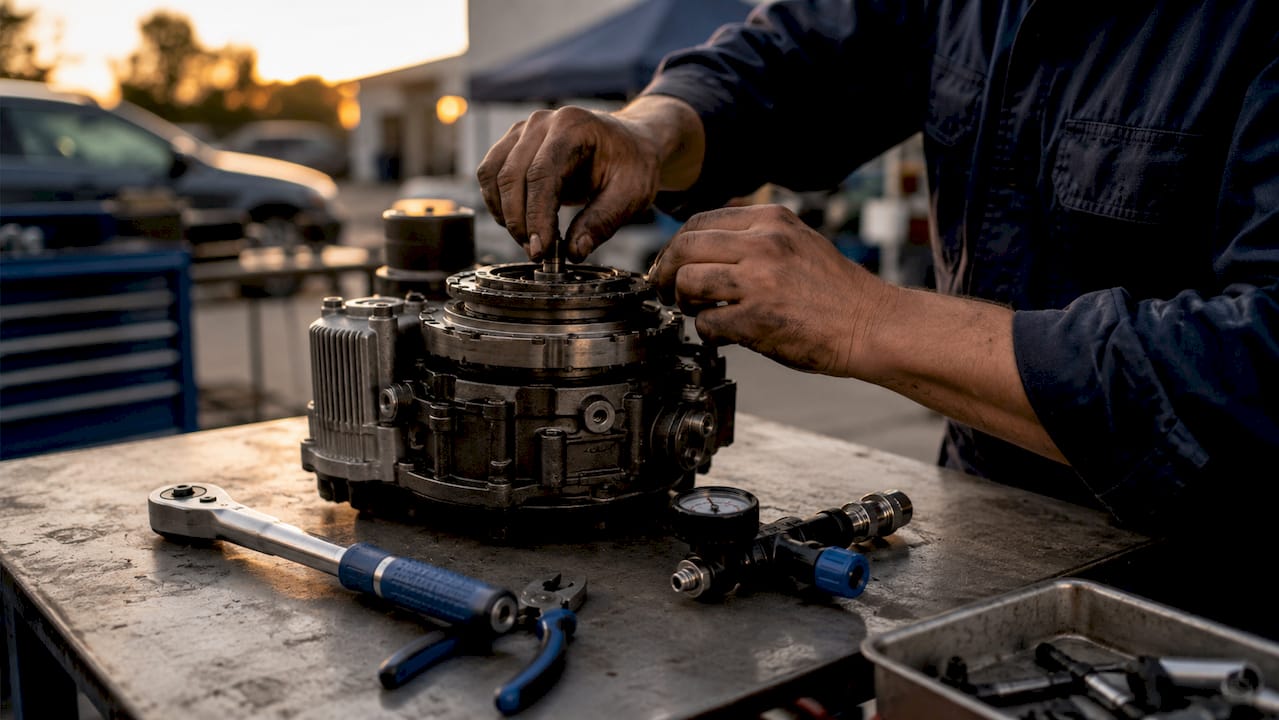
The clutch pack is the mechanical heart of the system. An electro-hydraulic pump builds pressure to clamp the clutch plates together, transferring drive rearward. In the Gen 5 unit fitted to the Golf R, this pump is electrically driven and controlled directly by software, which means the system can pre-load the clutch before slip even occurs.
Sensor inputs and torque logic
The control unit reads wheel speed sensors, steering angle, throttle position, and lateral acceleration continuously. When the software detects an imminent loss of traction, it commands the pump to pressurise the clutch pack before the front wheels actually slip. This predictive behaviour is the defining characteristic of Gen 5 and the reason the Golf R feels so composed on wet roundabouts or during hard acceleration out of a corner.
The Haldex system enhances cornering by sending more torque to the outer rear wheel via two electronically controlled clutches, allowing the car to pivot around the apex rather than push wide. That active torque vectoring effect is what gives the Golf R its rear-biased feel despite sitting on a front-heavy MQB platform. Paired with the DSG gearbox, the system can shift torque between rear wheels independently, mitigating understeer in a way that no simple open differential could achieve.
Pro Tip: Switch the Golf R into Race mode before a track day. The software remaps torque distribution to keep the rear axle more consistently loaded, sharpening turn-in and reducing the tendency to understeer under power.
How has Haldex technology evolved across Golf R generations?
The original Haldex coupling, introduced in the late 1990s, was a purely reactive device. It waited for front-wheel slip before hydraulic pressure built and the rear axle engaged. Drivers occasionally felt a brief hesitation on launch, the infamous “Haldex kick,” where the car initially felt like front-wheel drive before the rear axle woke up.
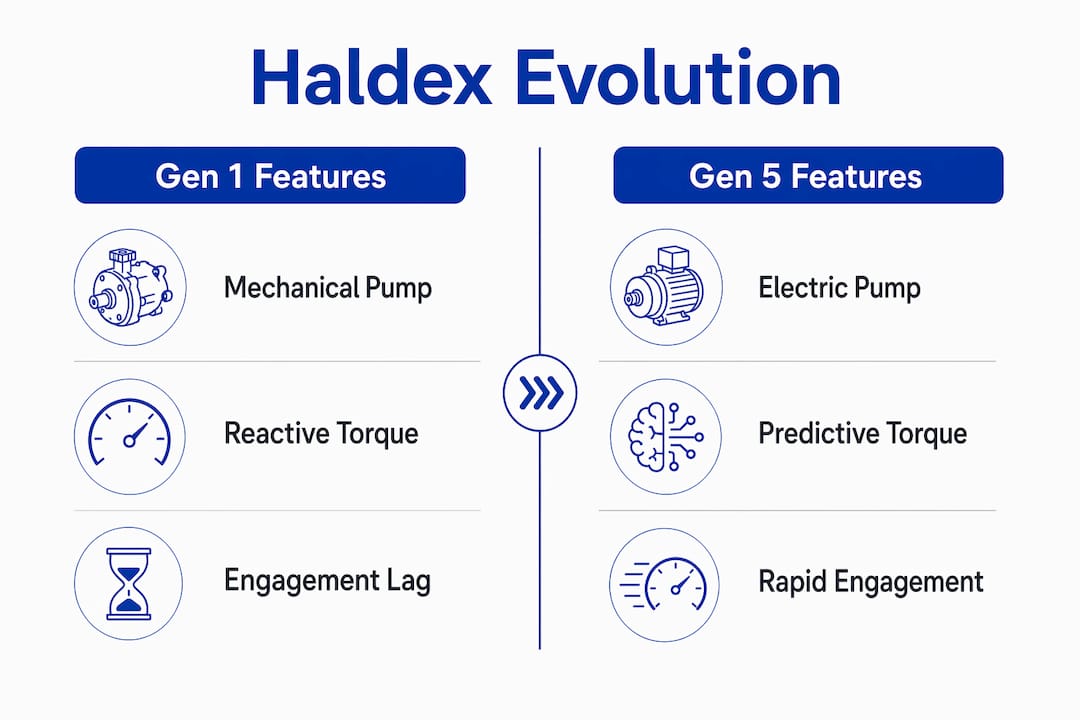
Early Haldex systems had a slight engagement lag during launches; newer systems use software-predicted engagement to eliminate this entirely. Each generation addressed the lag problem more aggressively. By Gen 4, an electric pump replaced the mechanical unit, cutting response time dramatically. Gen 5 went further by integrating the pump control with the car’s broader stability and traction management software.
Gen 1 vs Gen 5: what actually changed
| Feature | Gen 1 Haldex | Gen 5 Haldex (Golf R) |
|---|---|---|
| Pump type | Mechanical, driven by axle rotation | Electric, software-controlled |
| Engagement trigger | Reactive to wheel slip | Predictive, pre-loads before slip |
| Torque vectoring | None | Dual-clutch rear differential |
| Fuel penalty | Higher (mechanical drag) | Lower (disengages when not needed) |
| Integration | Standalone coupling | Linked to DSG, ESC, and steering sensors |
The shift from mechanical to electric pump control is the single most important change across the generations. It removed the physical dependency on axle rotation to build pressure, meaning the system can engage the rear axle at standstill or at any speed without waiting for slip to develop.
Haldex suits transverse engine platforms where a permanent mechanical centre differential is physically impossible to package. The Golf R’s MQB architecture places the engine transversely, leaving no room for a Torsen-style centre diff. Haldex delivers AWD capability within that constraint while adding the fuel efficiency benefit of disengaging the rear axle during normal cruising.
What maintenance does the Golf R Haldex system need?
A well-maintained Haldex system can last between 160,000 and 240,000 kilometres. Neglect it and the pump burns out, the clutch material degrades, and the repair bill climbs sharply. The system is not self-maintaining. It relies on clean fluid, a clear pump intake screen, and periodic inspection to stay reliable.
The correct fluid specification matters enormously. Volkswagen specifies G060175A2 fluid for Gen 5 systems. Using the wrong viscosity or friction modifier profile accelerates clutch wear and causes inconsistent engagement. Many owners use generic ATF or the wrong generation fluid, which is one of the most common causes of premature failure.
Key maintenance points for Golf R Haldex owners:
- Fluid change interval: Replace the Haldex oil every 40,000–60,000 kilometres or every three years, whichever comes first.
- Pump intake screen: The Gen 5 unit has no traditional filter. It uses a fine mesh screen that clogs with clutch material debris over time.
- Clutch wear inspection: Worn clutch plates reduce rear torque capacity and cause the car to feel progressively more front-wheel-drive under hard acceleration.
- Electronic control unit: The ECU and pump motor should be checked for fault codes at every service, as software faults can mimic mechanical failure.
- Fluid contamination: Dark, metallic-smelling fluid is a sign of clutch material breakdown. Change it immediately rather than waiting for the next scheduled interval.
Cleaning the pump intake mesh screen during every service extends pump life significantly. Most independent garages skip this step and only drain and refill the oil. That approach leaves debris in the screen, which starves the pump of fluid flow and causes it to overheat. Enthusiasts who track their Golf R should clean the screen every 20,000 kilometres.
Pro Tip: When servicing the Haldex unit, always replace the drain plug washer and inspect the pump connector for corrosion. A corroded connector causes intermittent pump faults that are difficult to diagnose and are often misdiagnosed as pump failure.
For a broader view of why Haldex parts degrade over time, the pattern is consistent: fluid breakdown leads to screen clogging, which leads to pump starvation, which leads to clutch slip. Every failure mode traces back to fluid condition.
Haldex AWD vs permanent AWD: which suits the Golf R?
Haldex provides on-demand AWD engagement, offering fuel economy and weight advantages over permanent mechanical systems. That trade-off is deliberate. Volkswagen chose Haldex for the Golf R because the MQB platform demands it, but also because the efficiency gains are real and measurable in everyday driving.
| Characteristic | Haldex (Golf R) | Permanent mechanical AWD (e.g. Torsen Quattro) |
|---|---|---|
| Normal driving mode | Front-wheel drive | All four wheels always driven |
| Fuel efficiency | Higher (rear disengaged) | Lower (constant mechanical drag) |
| Torque vectoring | Yes, via dual rear clutches | Depends on diff type |
| Platform suitability | Transverse engine layouts | Longitudinal engine layouts |
| Response to slip | Predictive in Gen 5 | Immediate (always engaged) |
| Weight | Lower | Higher |
The criticism most often levelled at Haldex is that it is “not real AWD.” That argument applies to Gen 1 and Gen 2 systems. Haldex is not inherently worse than permanent AWD but is designed for specialised performance in transverse engine vehicles. Gen 5 maintains clutch pre-load so consistently that the driver rarely perceives a front-to-rear transition.
The dual-clutch rear differential actively distributes torque between the rear wheels to counter understeer, a key trait that contrasts sharply with the front-heavy MQB platform’s natural behaviour. This is the feature that makes the Golf R feel genuinely rear-biased in corners, something a simple open rear differential with Haldex coupling could never achieve. The combination of Haldex coupling and rear torque vectoring is what separates the Golf R from lesser AWD hot hatches. You can read more about controller tuning options if you want to adjust how aggressively the system pre-loads the clutch.
Key takeaways
The Haldex system in the Golf R is an electronically controlled, predictive AWD coupling that delivers rear torque on demand, enabling torque vectoring, traction control, and fuel efficiency within the constraints of a transverse engine platform.
| Point | Details |
|---|---|
| On-demand AWD operation | The system runs as front-wheel drive normally, engaging the rear axle only when sensors detect traction demand. |
| Gen 5 predictive engagement | Software pre-loads the clutch before slip occurs, eliminating the lag felt in earlier Haldex generations. |
| Torque vectoring capability | Dual rear clutches distribute torque between rear wheels independently, actively reducing understeer in corners. |
| Fluid and screen maintenance | Using the correct G060175A2 fluid and cleaning the pump intake screen prevents the most common failure modes. |
| Lifespan with proper care | A well-serviced Haldex system lasts 160,000–240,000 km; neglect causes pump burn-out and costly repairs. |
What I have learned driving with Haldex every day
I have spent years driving and working on Golf R models, and the Haldex system still surprises me with how transparent it is when it is working correctly. You do not feel it engage in normal driving. You only notice it when you push the car hard into a wet corner and realise the rear is helping rotate the car rather than just following the front.
The mode selection genuinely changes the character of the system. In Comfort, the rear axle stays largely disengaged and the car feels like a refined front-wheel-drive hatch. Switch to Race and the software keeps the clutch pre-loaded almost continuously. The car feels planted, rear-biased, and willing to rotate. That transformation happens entirely in software, which tells you how much of the Golf R’s character is defined by the Haldex control logic rather than the hardware alone.
My honest observation on maintenance: most Golf R owners service the Haldex unit far too infrequently. I have seen cars come in at 80,000 kilometres with original fluid that looks like dark treacle. The pump screen is clogged, the fluid smells burnt, and the clutch engagement is sluggish. A £60 fluid change and screen clean at 40,000 kilometres would have prevented all of it. The common causes of Haldex failure are almost entirely avoidable with routine attention.
The system is also more tuneable than most owners realise. Aftermarket Haldex controllers let you adjust pre-load pressure and engagement aggression. For track use, a more aggressive pre-load transforms the car’s cornering behaviour. For daily driving, the stock calibration is well judged. Knowing that the software is the primary variable gives you real options for tailoring the car to your use case.
— Mindaugas
Keep your Golf R AWD system in peak condition
The Haldex system delivers everything the Golf R promises, but only when it is properly maintained. Haldexparts stocks a full range of Golf R service kits including the correct Gen 5 fluids, pump components, and seal repair sets, all to OEM specification. Orders over £150 qualify for free shipping, making it straightforward to stock up on the parts you need for a thorough service. Whether you are a DIY enthusiast or a professional technician, Haldexparts provides the correct Haldex oils and replacement pumps to keep your AWD system performing as Volkswagen intended. Do not wait for a fault code to appear before you act.
FAQ
What does the Haldex system do in the Golf R?
The Haldex system acts as an electronically controlled coupling that transfers up to 50% of engine torque to the rear axle on demand, giving the Golf R its AWD capability while running as front-wheel drive during normal conditions.
How often should I service the Golf R Haldex unit?
Change the Haldex fluid every 40,000–60,000 kilometres and clean the pump intake mesh screen at the same interval. Using the correct VW G060175A2 fluid is non-negotiable for Gen 5 systems.
What are the signs of a failing Haldex system?
Common signs include sluggish rear engagement under hard acceleration, a noticeable front-wheel-drive feel in corners, fault codes related to the AWD pump, and dark or metallic-smelling Haldex fluid.
Is Haldex AWD as capable as permanent mechanical AWD?
Gen 5 Haldex is designed for transverse engine platforms and matches permanent AWD in most performance conditions. Its predictive software engagement and dual-clutch rear differential make it highly capable, though permanent systems have a slight edge in continuous high-load scenarios such as prolonged off-road use.
Can I tune the Haldex system on my Golf R?
Yes. Aftermarket Haldex controllers allow adjustment of clutch pre-load pressure and engagement aggression. This is popular for track use, where a more aggressive pre-load improves cornering rotation and reduces understeer.