
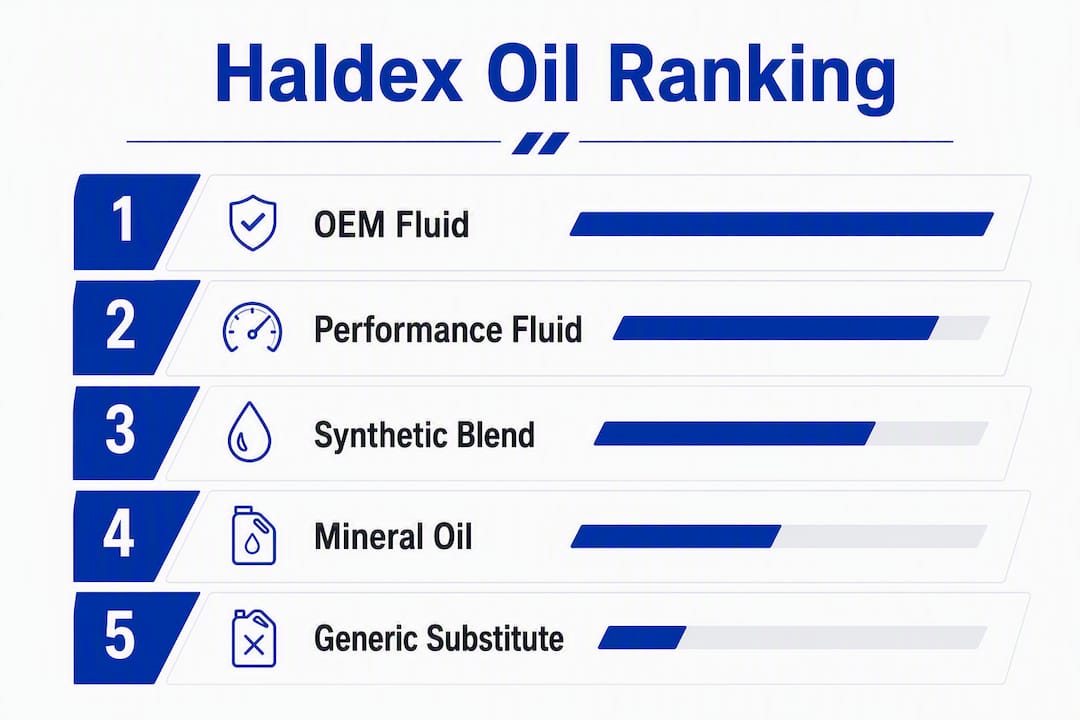
For most UK DIYers, OEM BorgWarner Haldex fluid available through Haldexparts is the single best choice. It meets factory specification, maps precisely to your generation, and arrives with the correct part number confirmed. No guesswork, no compatibility risk.
That said, two aftermarket options are worth knowing:
- Liqui Moly Multi-Disc Clutch Oil — the strongest aftermarket pick for performance use. It offers excellent shear stability and a consistent friction coefficient across operating temperatures, making it a sensible upgrade for spirited driving or track days.
- Febi Bilstein Haldex Gear Oil — the best value alternative. It matches OEM specification numbers at a noticeably lower price per litre, which suits budget-conscious owners on standard service intervals.
- Volvo AOC coupling oil — relevant if you own a Volvo-platform vehicle (XC60, V70, S60 AWD). Part numbers like 31367941 overlap with VW-group fluids in some generations, but always verify generation fitment before substituting.
Table of Contents
- Which Haldex oil should you actually buy?
- How do Haldex oils actually differ from one another?
- Which oil fits your Haldex generation?
- How to change Haldex oil yourself: a practical UK DIY guide
- How often should you change Haldex oil?
- Where to buy Haldex oils and service kits in the UK
- Key takeaways
- OEM Haldex kits and oils, ready to order from Haldexparts
- Useful sources for further reading
Which Haldex oil should you actually buy?
The table below maps each option to the situations where it genuinely earns its place.
| Oil | Haldex gen compatibility | Viscosity / thickness | Designed use | Typical price (per litre, UK) | Filter / kit available | UK availability |
|---|---|---|---|---|---|---|
| OEM BorgWarner / Haldex fluid | Gen 1–5 (gen-specific SKUs) | Varies by gen; factory spec | OEM replacement | £18–£35 | Yes — full kits with filter, O-rings, bolts | Haldexparts (OEM kits) |
| Liqui Moly Multi-Disc Clutch Oil | Gen 1–5 | Low dynamic viscosity; high shear stability | High-performance aftermarket | £15–£22 | Oil only; pair with OEM filter kit | UK automotive retailers |
| Febi Bilstein Haldex Gear Oil | Gen 1–4 (check SKU) | Matches OEM spec | OEM-equivalent, budget | £10 | Oil only; filter sold separately | UK parts suppliers |
| Volvo AOC coupling oil (31367941) | Gen 2/3 Volvo-platform | OEM Volvo spec | OEM for Volvo AWD | £18 | Volvo-specific kits | Volvo dealers, specialist suppliers |
Best overall: OEM BorgWarner fluid via Haldexparts — factory spec, generation-mapped, full kit option. Best performance aftermarket: Liqui Moly Multi-Disc Clutch Oil — for hard use, track days, or owners who want improved thermal headroom. Best value: Febi Bilstein — daily driver maintenance on a tight budget, provided you verify the part number against your generation.
Forum investigations confirm that OEM bottles for VW, Volvo and other brands frequently originate from the same supplier pool, with part numbers G055175A2 and G060175A2 appearing across Gen 2/4 and Gen 4/5 fitments respectively. Buying OEM from a UK specialist simply removes the risk of receiving the wrong formulation under a plausible-looking label.
How do Haldex oils actually differ from one another?
The Haldex unit is not a differential. Its pump fluid actuates multi-plate clutches rather than primarily lubricating gears, so the fluid’s job is fundamentally different from a standard diff oil. That distinction drives every meaningful difference between products.
Viscosity and flow
Lower dynamic viscosity means the oil circulates faster at cold temperatures, which translates to quicker clutch engagement from a standing start. RAVENOL’s AWD-H Haldex fluid explicitly notes that lower dynamic viscosity reduces cold-start wear and speeds up clutch response. Thicker fluids resist thermal breakdown under sustained load but can slow initial engagement slightly, which matters more on track than on a commute.
Friction modifiers
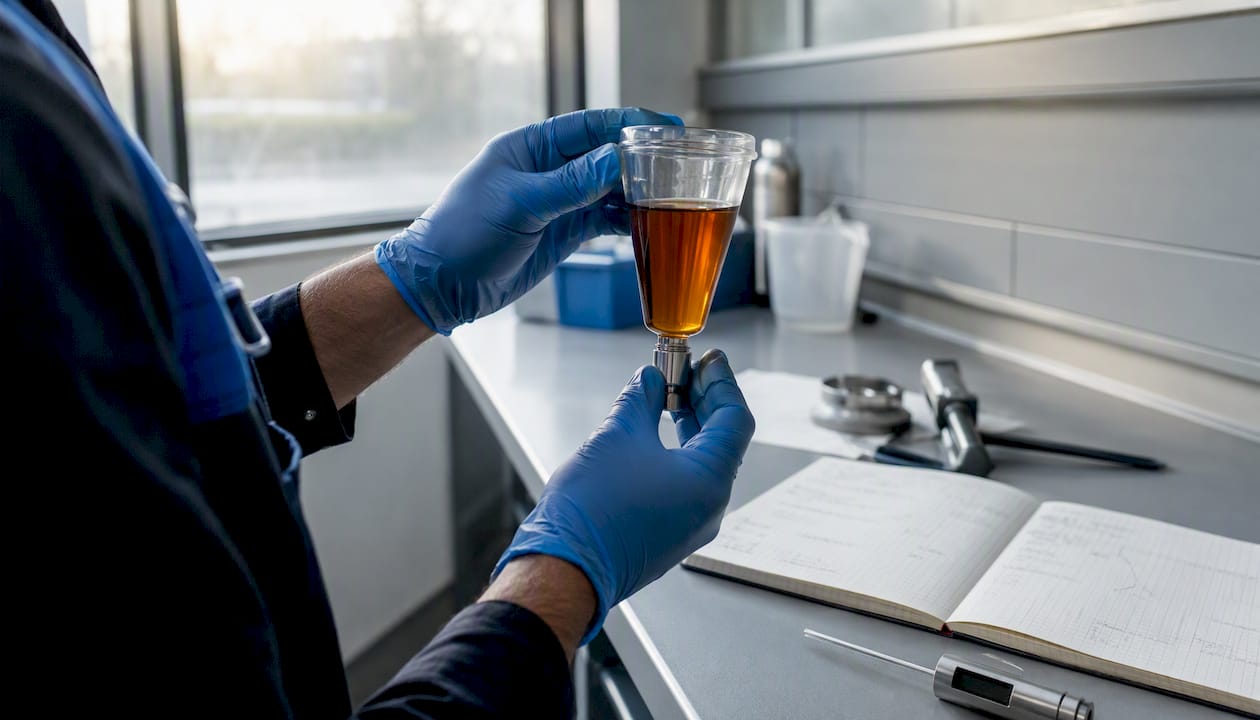
The friction modifier package controls how the multi-plate clutch slips and locks. Get this wrong and you either get a grabby, jerky engagement or a clutch that slips under load. OEM formulations are tuned to the exact clutch pack geometry of each generation. Aftermarket fluids like Liqui Moly’s Multi-Disc Clutch Oil are engineered to maintain an optimum friction coefficient across all operating conditions, with corrosion protection and anti-foam additives built in.
Shear stability and thermal performance
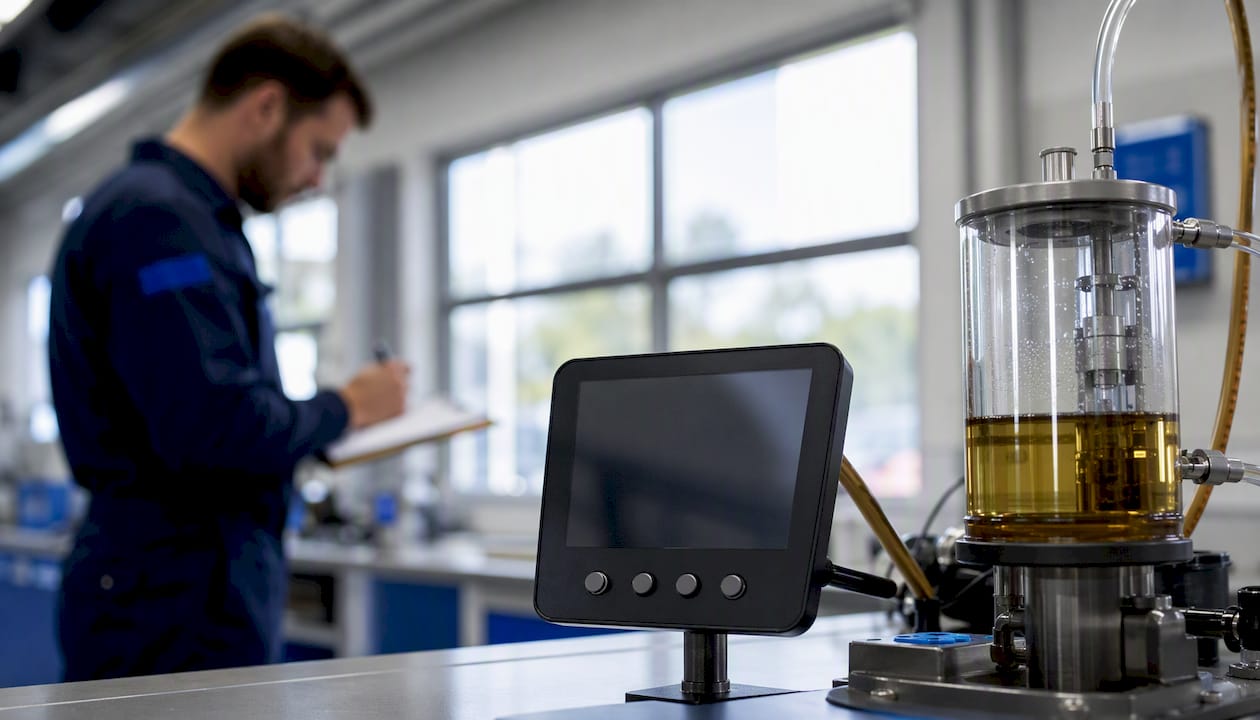
Shear stability determines how well the fluid holds its viscosity grade under mechanical stress. A fluid that shears down becomes thinner than intended, which changes pump pressure and clutch behaviour mid-drive. High-performance aftermarket fluids tend to advertise improved viscosity index (VI) and thermal stability, benefits that matter most under heavy use rather than standard commuting. Bardahl’s Haldex Fluid is one example: it lists kinematic viscosity figures and claims compatibility up to fifth-generation Haldex couplings across VAG-group vehicles.
Pro Tip: If you notice a change in AWD engagement feel after a service, the friction modifier profile of the new fluid is the most likely cause. Switching back to OEM spec usually resolves it within a few hundred miles.
Fluid formulation differences between Group II/III base stocks and fully synthetic can also alter perceived engagement feel. Some owners prefer older synthetic formulations for a slightly quicker initial bite, but generation compatibility should always take precedence over chasing a particular feel.
Which oil fits your Haldex generation?
Matching the fluid to your generation is non-negotiable. Using the wrong viscosity or friction modifier package can accelerate clutch wear or cause pump pressure faults.
| Generation | Typical vehicles | OEM part number(s) | Common aftermarket equivalent | Fill volume (approx.) | Filter present? |
|---|---|---|---|---|---|
| Gen 1 | Audi TT (8N), VW Golf IV 4Motion, Bora 4Motion | — | — | — | Yes |
| Gen 2 | Audi TT (8J), A3/S3 (8P), VW Golf V/VI 4Motion | G055175A2 | — | — | Yes |
| Gen 4 | Audi A3/S3 (8V), VW Golf VII 4Motion, Skoda Octavia vRS, Seat Leon Cupra | G060175A2 | — | — | Yes (OEM kit recommended) |
| Gen 5 | VW Golf VIII 4Motion, Audi A3 (8Y), newer Skoda/Seat | G060175A2 | Bardahl Haldex Fluid / Liqui Moly | — | Strainer only (no cartridge filter) |
| Volvo / Land Rover | XC60, V70 AWD, Discovery Sport | Volvo 31367941 | Febi (verify gen) | — | Yes (model-dependent) |
Part numbers G055175A2 and G060175A2 are frequently used interchangeably across Gen 2/4 and Gen 4/5 with caveats for generation-specific fitment. Always cross-reference against your vehicle’s VIN or the pump label before ordering.
How to identify your Haldex generation
- By vehicle and year: most VAG-group cars from 1998–2004 use Gen 1; 2004–2012 typically Gen 2; 2012–2020 Gen 4; post-2020 Gen 5. Volvo and Land Rover variants follow their own timelines.
- Visually: Gen 1 pumps are larger and bolt directly to the rear differential housing. Gen 4/5 units are more compact with a smaller pump motor.
- By part number on the pump: the pump housing usually carries a BorgWarner or Haldex casting number that maps to generation.
- Fill plug location: on most VAG units, the fill plug is on the rear of the Haldex housing, accessible from underneath with the car on ramps.
How to change Haldex oil yourself: a practical UK DIY guide
A Haldex oil change is well within reach for an experienced home mechanic. Budget around 90 minutes for your first attempt.
What you need
- Correct OEM or aftermarket Haldex fluid for your generation (see table above)
- OEM filter and seal kit (if your generation uses a cartridge filter)
- 10 mm and 8 mm sockets, T25/T30 Torx bits
- Large syringe or fluid transfer pump (at least 100 ml capacity)
- Drain tray, ramps or axle stands, torque wrench
- Brake cleaner and clean lint-free cloths
- New O-rings (supplied in OEM kit)
Step-by-step procedure
- Raise and secure the car on ramps or axle stands. Never work under a car supported only by a jack.
- Locate the Haldex unit on the rear axle. The pump motor sits on the front face of the housing.
- Disconnect the pump’s electrical connector — a single multi-pin plug on most generations.
- Remove the pump using the appropriate socket or Torx bit (typically two M6 bolts on Gen 1/2; Gen 4/5 may differ slightly). Keep the bolts — you will inspect them for corrosion.
- Drain the old fluid into your tray. Tilt the unit if needed to get a full drain.
- Remove and inspect the strainer/gauze. Clean it thoroughly with brake cleaner. On generations without a cartridge filter, this step is critical — a blocked strainer is a leading cause of pump failure.
- Replace the cartridge filter if your generation uses one. Use an OEM filter where possible; the design tolerances are tighter than unverified aftermarket alternatives.
- Replace all O-rings and seals from your kit. If pump bolts or plug threads show corrosion, swap in the replacement fasteners from the OEM kit.
- Reinstall the pump and torque bolts to specification. Community-sourced figures and VIDA workshop data are your best reference here; do not overtighten.
- Fill with new fluid using the syringe via the fill plug. Add the correct volume for your generation (see table above), then refit the fill plug.
- Reconnect the electrical connector, lower the car, and take a short drive of 5–10 minutes to circulate the fluid through the clutch pack.
- Top up if needed. Remove the fill plug again and add fluid until it just reaches the plug level. Refit and torque.
Pro Tip: For a more thorough exchange without full disassembly, perform two drain-and-refill cycles: drain cold, refill, drive 10 minutes, drain again, then refill to final volume. This significantly reduces the particulate load carried over from the old fluid.
If you find heavy metallic debris in the drained fluid or on the strainer, consider sending a sample for oil analysis before assuming a simple service will suffice. Excessive metal particles can indicate clutch pack or pump wear that a fluid change alone will not fix.
How often should you change Haldex oil?
Community practice and manufacturer guidance broadly align on roughly 20,000 miles (approximately 30,000 km) for generations with a cartridge filter — Gen 1 and Gen 2 in particular. Gen 5 units, which use a strainer rather than a cartridge, benefit from more frequent strainer cleaning, with many owners opting for 15,000-mile intervals or annually, whichever comes first.
Oxidation, clutch dust contamination and heat cycling are the three main drivers of fluid degradation. A fluid that looks dark and smells burnt has already lost much of its friction modifier effectiveness.
Warning signs that service is overdue
- Delayed rear engagement: the car feels like a front-wheel-drive vehicle under hard acceleration before the rear axle bites.
- Unusual noises from the rear: a whine or clunk under load can indicate pump wear or clutch pack distress.
- Dark, gummy fluid on drain: healthy fluid is amber and flows freely; degraded fluid is dark brown or black and may carry visible particles.
- Fault codes: P1889 (oil pump pressure performance) and related AWD codes are a direct prompt to service the unit.
- Strainer debris: metallic particles on the gauze beyond fine silt warrant investigation before simply refilling.
Between services, a quick visual check under the car for leaks around the pump housing and a short acceleration test on a dry straight will tell you a lot. Any change in AWD engagement feel is worth investigating promptly.
Where to buy Haldex oils and service kits in the UK
For OEM-grade kits with confirmed generation fitment, Haldexparts is the most direct route for UK buyers. The site maps kits to generation and vehicle model, lists OEM part numbers clearly, and stocks complete kits including filter, O-rings and bolts rather than just the fluid bottle. Free shipping applies on orders over £150.
Liqui Moly Multi-Disc Clutch Oil is widely stocked by UK automotive retailers and online parts suppliers. Febi Bilstein Haldex fluid is similarly available through parts platforms, often at a lower price per litre than OEM. If you own a Volvo-platform vehicle, Volvo dealers and Volvo-specialist suppliers stock the AOC coupling oil, though cross-referencing the part number against your generation first saves a wasted trip.
When evaluating any product page, check for:
- OEM part number listed explicitly — not just “compatible with Haldex” marketing copy.
- Kit contents clearly stated — filter, O-rings, bolts, and fluid volume should all be itemised.
- Generation compatibility confirmed — a fitment table or VIN lookup tool is a strong trust signal.
- Returns policy for incorrect parts — a reputable seller will accept returns on unopened, correctly ordered items.
Buying a complete OEM service kit from a generation-mapped supplier costs more upfront than buying fluid alone, but it eliminates the risk of missing a seal or using a filter that does not meet the pump’s tolerance. For a system where a £15 O-ring failure can lead to a £400 pump replacement, the maths are straightforward.
For performance fluids outside the OEM channel, Diamondbrite’s online shop stocks performance automotive fluids and is worth checking if you are sourcing Liqui Moly or similar products alongside other detailing or maintenance supplies.
Price ranges to expect in the UK: a litre of OEM Haldex fluid typically runs £18–£35 depending on generation and supplier. A complete OEM service kit (fluid, filter, O-rings, bolts) generally falls in the £35–£75 range. Aftermarket fluid alone from Febi or Liqui Moly sits at £10–£22 per litre.
Key takeaways
OEM BorgWarner Haldex fluid, sourced via a generation-mapped UK supplier, is the most reliable choice for most DIYers — aftermarket options like Liqui Moly are worth considering only for performance or track use.
| Point | Details |
|---|---|
| OEM fluid is the safest default | BorgWarner OEM fluid meets factory spec and eliminates compatibility risk across Gen 1–5. |
| Match oil to your generation | Part numbers G055175A2 and G060175A2 cover Gen 2/4 and Gen 4/5 respectively; always verify before ordering. |
| Service interval: around twenty thousand miles | Gen 1/2 with filters need a full kit change around 20,000 miles; Gen 5 strainer units benefit from shorter intervals. |
| Aftermarket suits hard use | Liqui Moly Multi-Disc Clutch Oil is the top aftermarket pick for track days or spirited driving. |
| Haldexparts for UK OEM kits | Haldexparts stocks generation-mapped OEM kits with filter, seals and fluid, with free shipping over £150. |
Why I’d still choose OEM for 90% of Haldex services
The performance aftermarket makes a compelling case on paper. Better VI, improved thermal stability, tighter shear resistance — all real properties, all measurable. But here is the part that tends to get glossed over: the Haldex clutch pack was calibrated with a specific friction modifier profile in mind. Swap that profile and you may get a subtly different engagement feel that is neither better nor worse objectively, just different from what the system was designed around.
For a daily driver covering mixed UK roads, that difference is largely academic. The OEM fluid will outlast most service intervals without drama, and the generation-specific part number removes the single biggest source of DIY error: ordering the wrong bottle. Where I would genuinely reach for Liqui Moly or a comparable high-performance fluid is a car that sees track days, timed events, or sustained high-load AWD use. The thermal headroom is real in those conditions. For everything else, the OEM route via a trusted UK supplier is the one I would recommend without hesitation.
OEM Haldex kits and oils, ready to order from Haldexparts
Haldexparts stocks the full range of OEM BorgWarner Haldex service kits for Gen 1 through Gen 5, covering Audi, VW, Skoda, Seat, Volvo, Land Rover, Ford, Vauxhall, Saab, and Opel. Each kit is mapped to generation and vehicle model, so you are not left cross-referencing part numbers across three browser tabs.
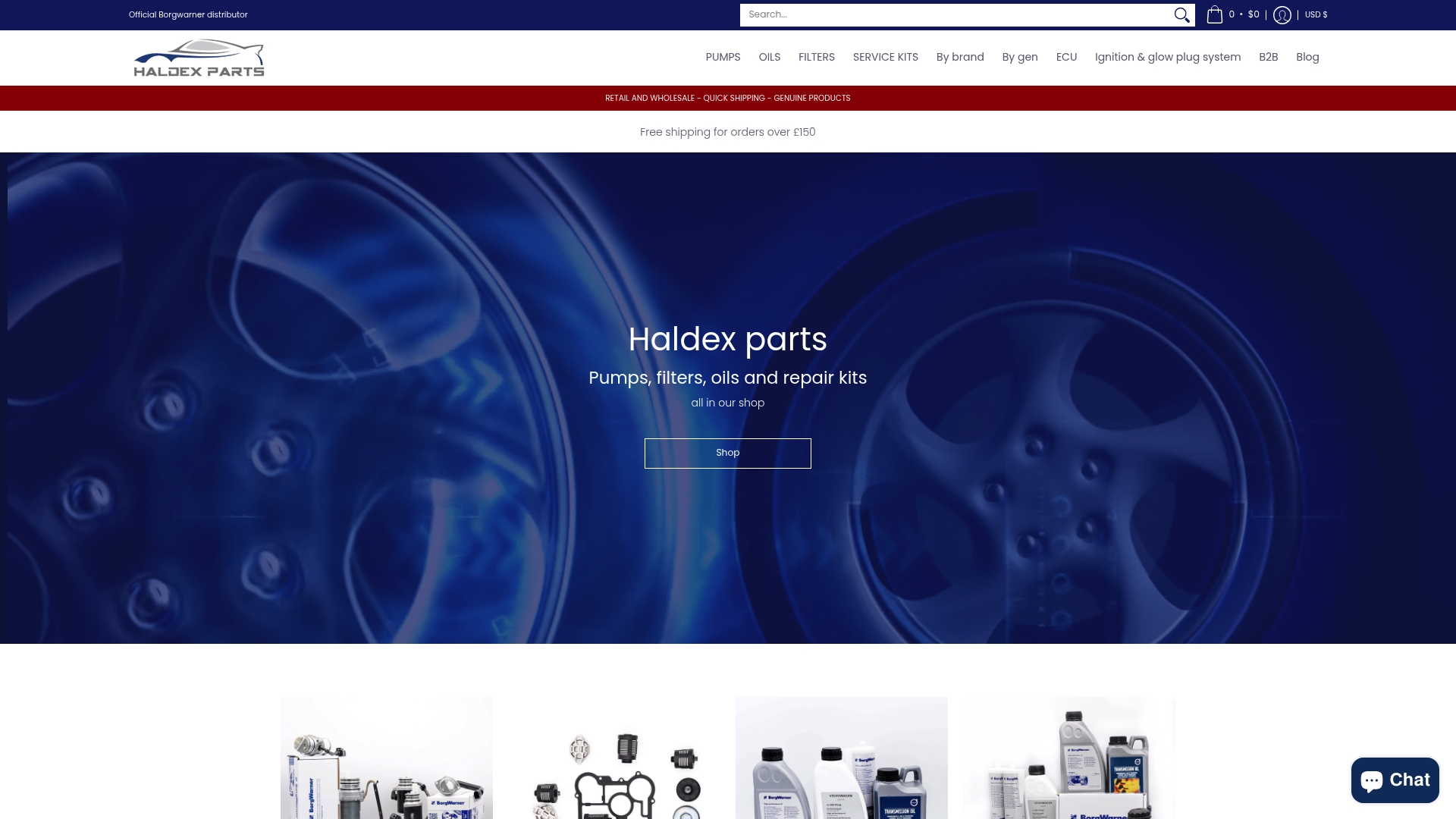
The Gen 4 OEM oil and filter kit is one of the most popular items, and the full service kit collection covers everything from fluid-only orders to complete kits with pump seals, O-rings and bolts. If you need Haldex oils or replacement filters separately, those are listed individually too. Orders over £150 qualify for free UK shipping. Not sure which kit fits your car? The fitment tables on each product page and the generation selector make it straightforward — or contact the team directly with your VIN for confirmation before you order.
Useful sources for further reading
- TTForum: Which Haldex oil for Gen 4? — community thread with hands-on part number comparisons and OEM sourcing discussion for Gen 4 owners.
- TTForum: Cost-effective Haldex oil options — practical price comparisons between OEM and aftermarket fluids for Gen 1 and Gen 2/4, including filter sourcing.
- SwedeSpeed: AOC fluid alternative for Gen 2/3 Haldex — Volvo-platform owners discussing cross-compatibility between Volvo AOC and VW-group part numbers.
- SwedeSpeed: DIY Haldex oil change — detailed step-by-step with tool recommendations, torque notes and post-service checks.
- RAVENOL AWD-H Haldex Fluid (UK) — UK product page with viscosity guidance and vehicle compatibility list.
- Haldexparts: Why Haldex oil degrades — explains oxidation, clutch dust and heat cycling as degradation drivers; useful for setting service intervals.
- Haldexparts: Why choose an OEM Haldex filter — detailed case for OEM filter selection and its effect on pump longevity.
- Discovery Sport Forum: which oil for Haldex clutch? — Land Rover-specific discussion comparing Febi Bilstein and BorgWarner OEM options with real-world pricing context.