

The Haldex accumulator is defined as a hydraulic energy buffer that stores pressurised fluid and releases it instantly to engage the all-wheel-drive clutch pack. Without it, the electric pump must spin up from rest before any clutch actuation can occur, creating a measurable lag in torque transfer. The role of Haldex accumulator technology is exclusive to Generation 4 systems, found on VAG platforms including Audi, VW, Skoda, and Seat vehicles from approximately 2007 to 2012. Understanding how it works, what it protects, and how to maintain it separates a competent Haldex service from a guesswork repair.
How does the Haldex accumulator work in Generation 4 systems?
Generation 4 Haldex systems use an electric high-pressure pump and a hydraulic accumulator that maintains around 30 bar (approximately 435 psi) at all times. The Haldex Control Module (J492) governs the entire system via an electromagnetic valve, the N373. That constant pressure reservoir is the accumulator’s defining feature.
Here is how the system operates in sequence:
- The electric pump charges the accumulator to the target pressure during normal driving.
- The J492 module monitors pressure and commands the pump to top up as needed.
- When AWD engagement is required, the N373 valve opens and stored pressure flows directly to the clutch pack.
- The clutch engages within milliseconds because the fluid is already at operating pressure.
- The pump then recharges the accumulator for the next demand cycle.
The critical point is that clutch actuation happens before the pump needs to react. This is the fundamental engineering advantage of the accumulator design. Earlier Haldex generations relied on pump speed to generate pressure reactively, meaning wheel slip had to occur before the system responded. The accumulator removes that dependency entirely.
Pro Tip: When diagnosing a slow AWD response on a Gen 4 system, check accumulator pressure retention before replacing the pump. A pump that cycles too frequently is often compensating for an accumulator that cannot hold pressure, not a pump that is failing outright.
What benefits does the Haldex accumulator provide?
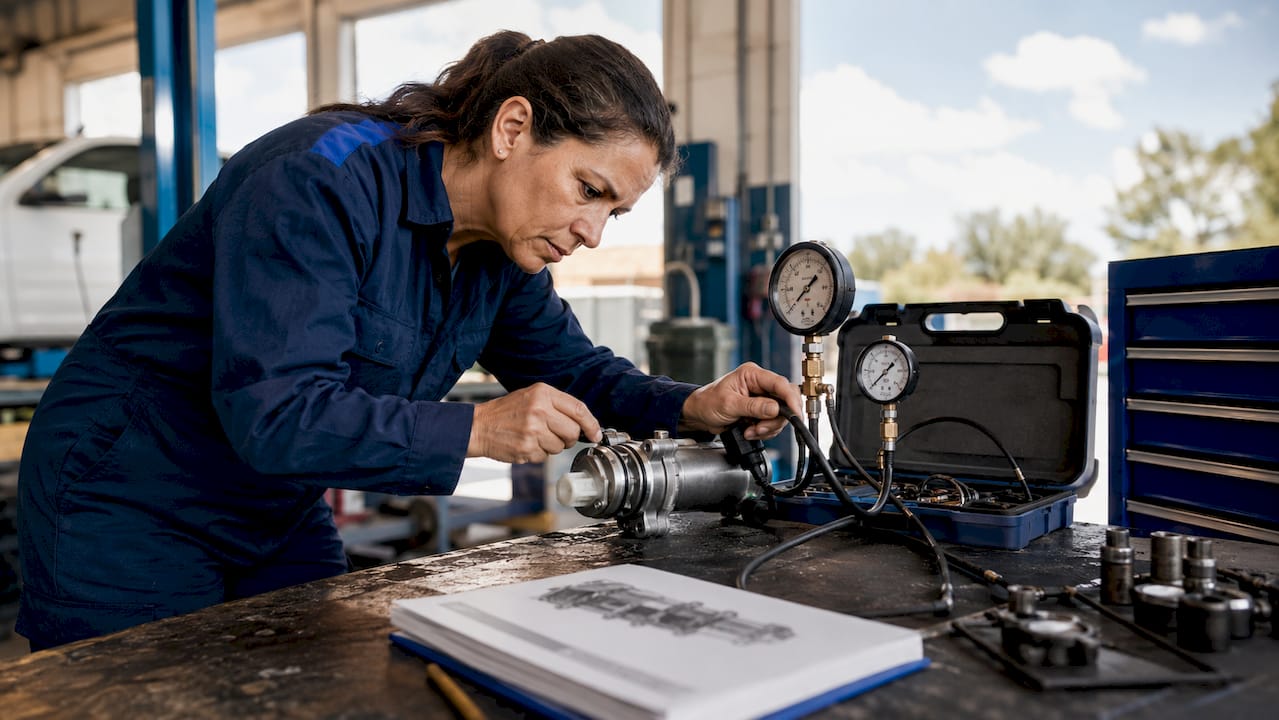
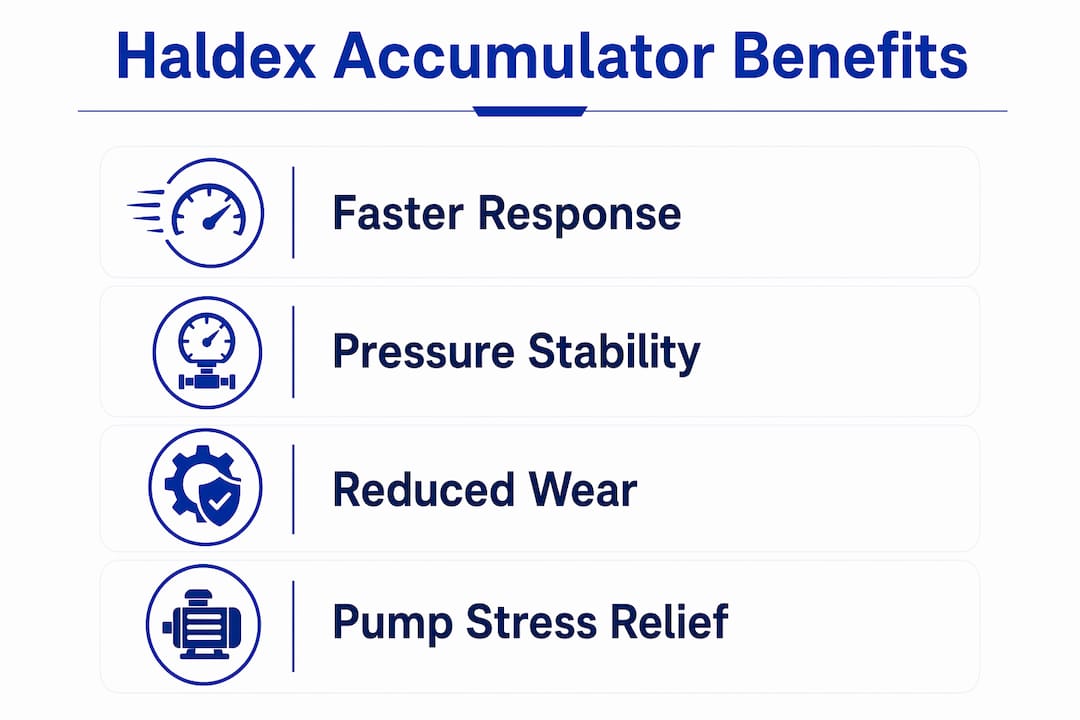
The accumulator delivers three distinct advantages: faster response, pressure stability, and reduced mechanical wear on the pump motor.
Faster AWD engagement under dynamic conditions
Hydraulic accumulators improve response time by storing and instantly releasing pressurised fluid, removing the delay caused by pump startup. In a Haldex context, this means the rear axle receives torque before traction loss becomes noticeable to the driver. The system shifts from reactive to predictive engagement, which is a meaningful difference on wet roads or during hard cornering.
Pressure stability and clutch protection
Pressure fluctuations cause clutch slip. The accumulator acts as a buffer, absorbing demand spikes and preventing the pressure drops that would otherwise allow the clutch pack to slip under load. Stored pressure enables predictive torque engagement, meaning the clutch receives consistent clamping force rather than variable pressure from a pump chasing demand.
The accumulator represents a genuine engineering advance over earlier reactive AWD designs. It shifts the system’s logic from “respond to slip” to “prevent slip,” which is a fundamentally different and more effective approach to all-wheel-drive control.
Reduced pump motor stress
Without an accumulator, the pump would need to run continuously or accelerate rapidly every time AWD is demanded. The accumulator absorbs peak demand, so the pump operates in shorter, controlled charge cycles. This reduces heat build-up, motor wear, and the risk of premature pump failure. A well-maintained accumulator directly extends the service life of the pump unit.
Common issues and Haldex accumulator maintenance
Accumulator problems almost always trace back to oil contamination. Oil contamination circulates wear particles that clog the filter, reduce flow, and cause pressure drops. Once pressure drops below the required 30 bar, the clutch slips and the system logs fault codes.
| Symptom | Likely cause | Recommended action |
|---|---|---|
| ABS or ESP fault codes | Pressure drop from blocked filter | Replace filter and oil; check accumulator retention |
| N373 valve fault code | Insufficient pressure to valve | Inspect accumulator and pump output |
| Rear axle slip under load | Clutch not clamping fully | Check pressure, filter, and accumulator integrity |
| Pump cycling excessively | Accumulator not holding pressure | Test accumulator; replace if pressure bleeds off rapidly |
The service procedure for the accumulator requires careful preparation. Accumulator pressure must be released before any disassembly, because stored pressure can cause serious injury if the system is opened under load. Diagnostic tools that estimate pressure in Gen 5 systems do not apply here. Gen 4 requires physical depressurisation.
Follow this sequence for safe servicing:
- Switch off the ignition and disconnect the pump electrical connector.
- Actuate the N373 valve manually or via diagnostic software to bleed stored pressure.
- Confirm pressure has dropped to zero before loosening any hydraulic fittings.
- Drain and replace the Haldex oil and filter before reassembly.
- Reconnect the pump and run the adaptation procedure using a compatible diagnostic tool.
Failing to run the pump adaptation after replacement causes inadequate clamping force even with new components installed. This is one of the most common post-service complaints and it is entirely avoidable. A good vehicle maintenance checklist always includes adaptation steps after hydraulic component replacement.
Pro Tip: Always replace the Haldex oil and filter at the same time as any accumulator or pump work. Reusing contaminated oil in a freshly serviced system defeats the purpose of the repair and accelerates wear on new components.
How to identify Generation 4 Haldex units with accumulators
Generation 4 is the only Haldex generation with a physical accumulator. Gen 5 replaced it with a centrifugal pump governor system, removing the accumulator entirely. Ordering parts for the wrong generation is a common and costly mistake.
| Feature | Generation 4 | Generation 5 |
|---|---|---|
| Accumulator present | Yes | No |
| Pressure control method | Hydraulic accumulator + N373 valve | Centrifugal pump governor |
| Approximate model years | 2007–2012 | 2012 onwards |
| Typical platforms | VAG MQB predecessors, Audi TT Mk2, Golf Mk6 | Golf Mk7, Audi Q3 (post-2012) |
| Diagnostic pressure reading | Physical measurement required | Estimated by control module |
Visual identification is straightforward once you know what to look for. The Gen 4 unit has a visible accumulator canister mounted to the pump assembly. Gen 5 units have a cleaner, more compact profile without the canister. If you are working on a VAG all-wheel-drive vehicle built between 2007 and 2012, assume Gen 4 until confirmed otherwise.
Correct generation identification also changes your diagnostic approach. Gen 4 accumulator pressure must be physically verified and safely released before service. Gen 5 diagnostics rely on module-estimated values. Mixing up these procedures risks both incorrect diagnosis and physical injury during disassembly. For a full breakdown of fault identification by generation, the Haldex fault diagnosis guide covers the process in detail.
Key takeaways
The Haldex accumulator is the single component that separates reactive AWD engagement from predictive torque transfer, and its condition directly determines system reliability.
| Point | Details |
|---|---|
| Accumulator function | Stores hydraulic pressure at 30 bar for instant clutch actuation without pump lag. |
| Gen 4 exclusivity | Only Generation 4 Haldex systems use an accumulator; Gen 5 uses a governor instead. |
| Contamination risk | Blocked filters from dirty oil cause pressure drops, clutch slip, and ABS or ESP fault codes. |
| Safe servicing | Always depressurise the accumulator before opening any hydraulic fitting on a Gen 4 unit. |
| Adaptation after repair | Run the pump adaptation procedure after any replacement to restore correct clamping force. |
Why the accumulator is the component technicians underestimate most
I have seen more misdiagnosed Gen 4 Haldex faults trace back to the accumulator than to any other single component. The pump gets replaced, the oil gets changed, and the fault returns within weeks. The accumulator was never tested properly. It is not glamorous and it does not fail dramatically, but a unit that cannot hold pressure quietly undermines everything else in the system.
The thing that surprises most technicians is how quickly contamination degrades accumulator performance. You do not need catastrophic filter blockage. A partially restricted filter is enough to prevent the accumulator from reaching full charge pressure, and the system will limp along producing intermittent faults that are genuinely difficult to pin down without proper pressure testing.
My advice is straightforward. Treat the accumulator as a primary service item, not an afterthought. Check pressure retention during every Haldex service on a Gen 4 unit. If the accumulator bleeds down faster than expected between pump cycles, replace it before the customer reports a problem. That proactive approach saves time, saves money, and protects the pump from the extra stress of compensating for a failing accumulator. Understanding how Haldex responds under hard acceleration makes it clear just how much the accumulator contributes to real-world AWD performance.
— Mindaugas
Genuine Gen 4 accumulator parts from Haldexparts
Haldexparts stocks the components Gen 4 systems actually need, including the pre-charge pump assembly that feeds and maintains the accumulator. The BorgWarner pre-charge pump (part number 0AY598549A) is a genuine-grade unit built for Audi, VW, Skoda, and Seat applications. Every part is selected for compatibility with the hydraulic demands of Gen 4 systems.
Haldexparts also supplies Gen 5 oil pumps and early-generation pump tips for technicians working across multiple platforms. Free shipping applies to orders over £150, and product listings include generation-specific fitment information so you order the right part the first time.
FAQ
What is the role of the Haldex accumulator?
The Haldex accumulator stores hydraulic pressure at approximately 30 bar and releases it instantly to engage the AWD clutch pack, eliminating the lag that would occur if the pump had to build pressure from rest.
Which Haldex generation uses an accumulator?
Generation 4 is the only Haldex generation with a physical accumulator. Generation 5 replaced it with a centrifugal pump governor system that estimates pressure electronically.
What symptoms indicate a failing Haldex accumulator?
Common symptoms include ABS or ESP fault codes, excessive pump cycling, rear axle slip under load, and an N373 valve fault code. All of these point to the system failing to maintain the required 30 bar operating pressure.
Do I need to depressurise the system before servicing the accumulator?
Yes. The Gen 4 accumulator holds live hydraulic pressure and must be fully depressurised before any fittings are loosened. Failure to do so risks serious injury and component damage.
Why does AWD performance stay poor after replacing the Haldex pump?
Skipping the pump adaptation procedure after replacement causes incorrect clutch pressure application. Always run the adaptation using a compatible diagnostic tool to restore correct clamping force and torque transfer.