

No. A Haldex coupling cannot be run as permanent rear-wheel drive for normal road use because the hardware and control logic are built to keep front drive engaged by default. You can push a Haldex-equipped car towards a rear-biased feel through controller tuning, steel friction plates, or a control-unit swap, but genuine rear-only drive needs a mechanical conversion, not a software trick.
TL;DR:
- Haldex cannot be set to a true rear-wheel drive mode without a mechanical conversion, as its design depends on variable engagement controlled electronically.
- Increasing rear bias through tuning or hardware upgrades can push the system toward a more rear-driven feel but risks stressing drivetrain components if overdone.
- Proper maintenance, including oil and filter changes every 20,000 to 40,000 miles, is essential to preserve Haldex responsiveness and avoid feeling like the rear axle is dead.
- Controller recalibration or installing OEM-grade friction plates and control units can enhance rear torque delivery but cannot achieve full rear drive.
- Mechanical upgrades, such as limited-slip differentials or rebuilt axles, are necessary for permanent rear bias but involve higher costs, complexity, and potential legality issues.
Table of Contents
- Rear wheel drive only Haldex: how the coupling actually works
- Tuning and parts that shift the balance rearward
- Keeping Haldex responsive: service and maintenance basics
- Mechanical alternatives if you want permanent rear bias
- Before you touch anything: a quick pre-tune checklist
- Realistic expectations for enthusiasts chasing rear-drive feel
- Parts worth having if you’re modifying a Haldex car
- Sources
- FAQ
Rear wheel drive only Haldex: how the coupling actually works
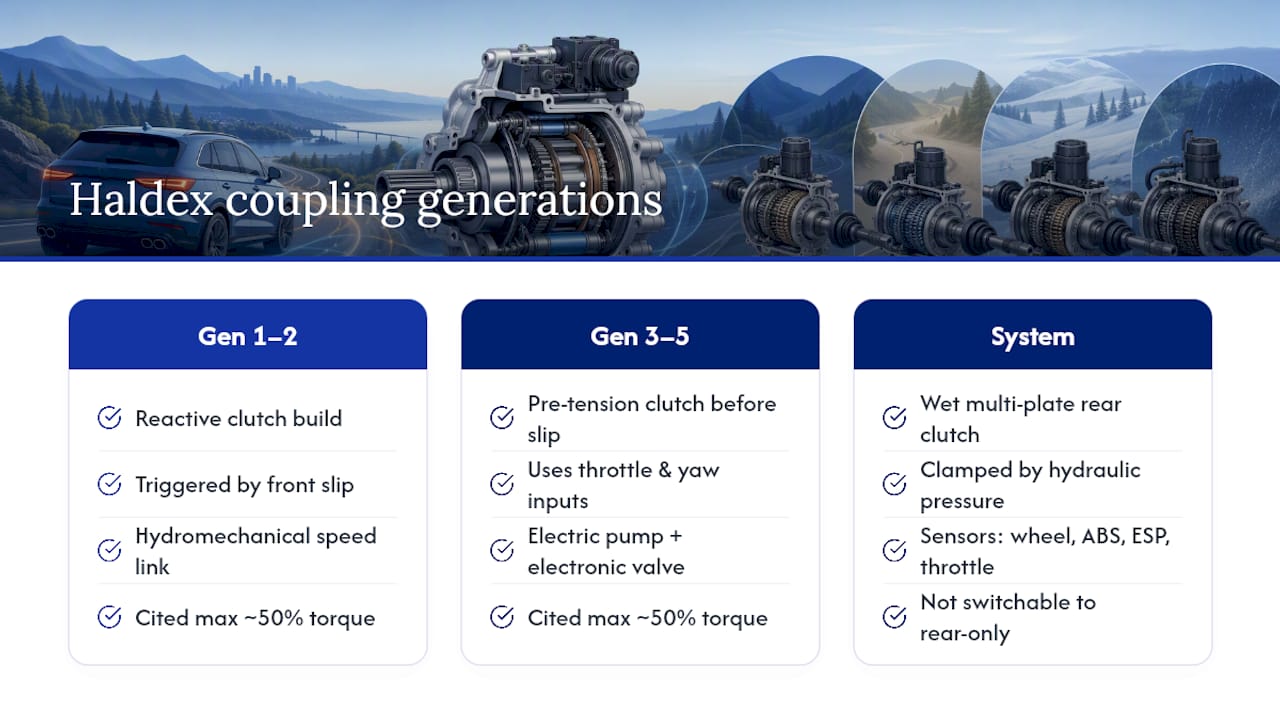
Haldex is fundamentally a wet multi-plate clutch pack sitting on the rear axle, squeezed together by hydraulic pressure from an electric pump and a control valve. The control module decides how hard to clamp that clutch, using wheel-speed sensors, throttle position, and data shared from the ABS and ESP systems. There is no way to switch the front axle off and leave the rear running alone, because the whole system is designed around variable engagement, not a binary front/rear split.
The behaviour has changed a lot across generations. Generation 1 and 2 couplings were reactive: they waited for the front wheels to slip before building clamping pressure, using a hydromechanical arrangement driven by the speed difference between axles, a clever way to give transverse-engine Audi and VW models AWD without a longitudinal centre differential. Generation 3 through 5 flipped that logic. These couplings pre-tension the clutch before slip even happens, reading throttle input and yaw data to pre-empt wheel spin rather than react to it.
Some tuning discussions cite maximum figures around 50%, but manufacturers are consistent that the real-world number depends heavily on the vehicle and how the controller is mapped.
Disconnecting the front axle to force rear-only behaviour is not something the system supports, and doing it on the road removes a stability layer the ESP and ABS systems rely on. Haldex was engineered as an on-demand coupling precisely so manufacturers could fit AWD into transverse platforms without the packaging cost of a proper transfer case, and that design goal is baked into every generation since the first one appeared.
Tuning and parts that shift the balance rearward
You cannot make a Haldex car rear-wheel drive only, but you can noticeably shift how it feels under load. Two routes get used in practice: recalibrating the controller, or physically upgrading the hardware that decides how hard the rear clutch grips.
Controller recalibration changes the thresholds at which the pump builds pressure, effectively telling the system to send torque rearward sooner and more aggressively. Done through a controller tuning guides, this is the cheapest way to get a more rear-biased feel, but it interacts directly with ESP and traction control, which are still watching wheel speed and deciding whether to intervene. Push the map too far and you get a car that feels lively at low speed and unpredictable near the limit, particularly in the wet.
Hardware changes go further:
- Steel friction plate sets, upgraded steel friction plate sets for 4th and 5th Generation Haldex, replace worn or softer factory friction material with plates that hold clamping force more consistently under repeated hard use.
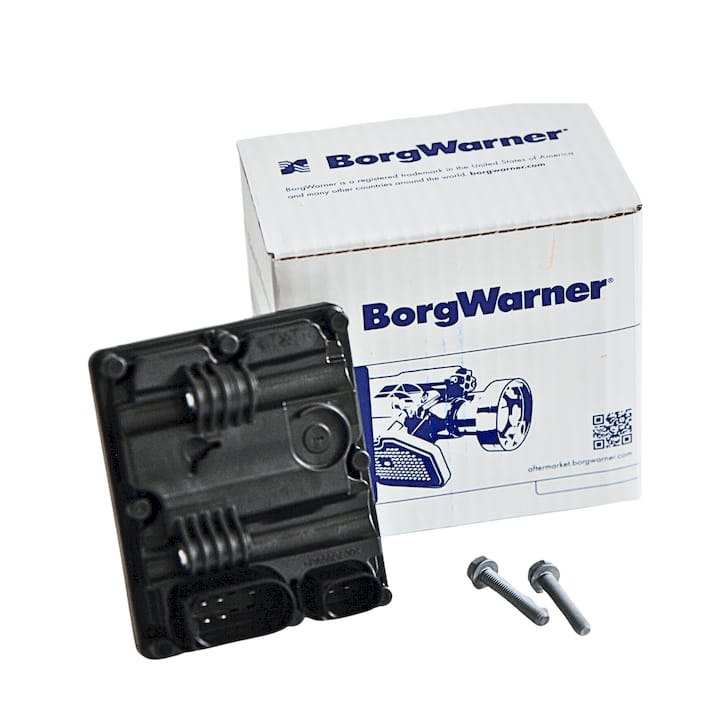
- OEM control-unit replacement, using compatible Generation 5 control units, resets the electronic side when a faulty or mismatched module is limiting how much torque the system will ever send rearward.
- Pump and oil upgrades restore the hydraulic pressure the whole system depends on, which matters more than people expect. A tired pump caps how aggressively any controller map can behave, no matter how good the tune is.
Pro Tip: Match the friction plate set and control unit to the exact Haldex generation fitted to your car before ordering. Fitting Generation 4 parts to a Generation 5 coupling, or vice versa, is one of the most common and expensive mistakes DIY tuners make.
Push any of these too hard and you are loading the driveshafts, CV joints, and rear differential mounts with forces they were not specced for. Warranty cover on the coupling itself typically ends the moment you fit a non-OEM controller map, so treat aggressive tuning as a modification, not a free upgrade.
Keeping Haldex responsive: service and maintenance basics
A neglected Haldex system will feel like it has no rear drive at all, even with a perfect tune sitting on the controller. Most “dead rear axle” complaints trace back to maintenance, not design limits.
- Change the Haldex oil and filter on schedule, typically every 20,000 to 40,000 miles depending on the model. Degraded oil loses viscosity and starves the clutch pack of consistent pressure.
- Watch for pump wear symptoms, including a whining noise from the rear differential housing, delayed engagement when pulling away, and fault codes logged against oil pressure or pump current draw.
- Check the basics before assuming a bigger fault: oil condition and level, any visible leaks around the pump housing, and that electrical connectors to the pump and control unit are properly seated. Loose or corroded connectors are a common, cheap-to-fix cause of intermittent AWD faults, and correct connector seating and torque are exactly the kind of detail workshop procedures for rear drive units insist on getting right.
- Test wheel-speed sensor health, since the control module leans heavily on that data to decide clamping force, and a failing sensor can make the system behave as if it has given up on the rear axle entirely.
- Replace rather than rebuild when the pump is worn out, the control unit shows persistent internal faults, or the clutch pack has glazed friction plates. A full breakdown of Haldex generations and service steps is worth reading before deciding which route makes sense for your car.
Mechanical alternatives if you want permanent rear bias
If a genuinely rear-biased driveline matters more than staying within Haldex’s design envelope, mechanical conversion is the honest answer, not deeper tuning. A limited-slip differential upgrade or a rebuilt rear-axle unit, such as the Wavetrac-style options built for Generation 4 platforms, gives a more permanent and mechanically enforced rear bias than any controller map can replicate.
These conversions are more effective than tuning at delivering a consistent rear feel, but they are also more involved to fit, and many are sold explicitly as motorsport parts. That labelling matters: such conversions may not be road-legal in every jurisdiction and typically void any remaining Haldex warranty, so treat them as a trade-off between performance and compliance, not a straightforward upgrade. Fitting one also changes load paths through the driveshafts and rear subframe mounts, so a full alignment check and inspection of driveline components afterwards is not optional.
Before you touch anything: a quick pre-tune checklist
- Confirm your Haldex generation and note the OEM part numbers already fitted, since parts and controller maps are generation-specific.
- Check compatibility of any friction plate set or control unit against that generation before ordering, using resources like a Haldex-compatible vehicle guide.
- Scan for fault codes, inspect oil condition and pump health, and confirm wheel-speed sensors and ABS/ESP interaction are clean before layering a tune on top of an existing fault.
- Decide your goal: a temporary rear-biased feel through tuning, or a permanent mechanical change. That decision drives your budget and whether a specialist installer is worth the cost.
Realistic expectations for enthusiasts chasing rear-drive feel
Haldex tuning has a ceiling, and it is lower than most forum threads suggest. Controller recalibration and a good friction plate set will genuinely sharpen the rear feel, but once you are asking for sustained rear-only behaviour, you have left tuning territory and entered mechanical conversion territory. Push a stock driveline past what it was engineered for and you are trading reliability for a feeling, often without gaining much real lap time.
Take the conservative route first: sort maintenance, confirm your generation, then tune in small steps. Anything touching the control unit or ECU maps deserves a specialist who has done it before, not a first attempt on a daily driver. Guides on how traction control interacts with Haldex are worth reading before you start.
— Mindaugas
Parts worth having if you’re modifying a Haldex car
If you have decided tuning or a hardware refresh is the right move, fit parts that match your generation exactly rather than guessing. For ECU-level changes on Generation 5 VAG vehicles, the OEM Genuine 0CQ907554J control unit and its alternate part number equivalent, the OEM Genuine 0AY907554J control unit, are the direct OEM-grade replacements to reach for.
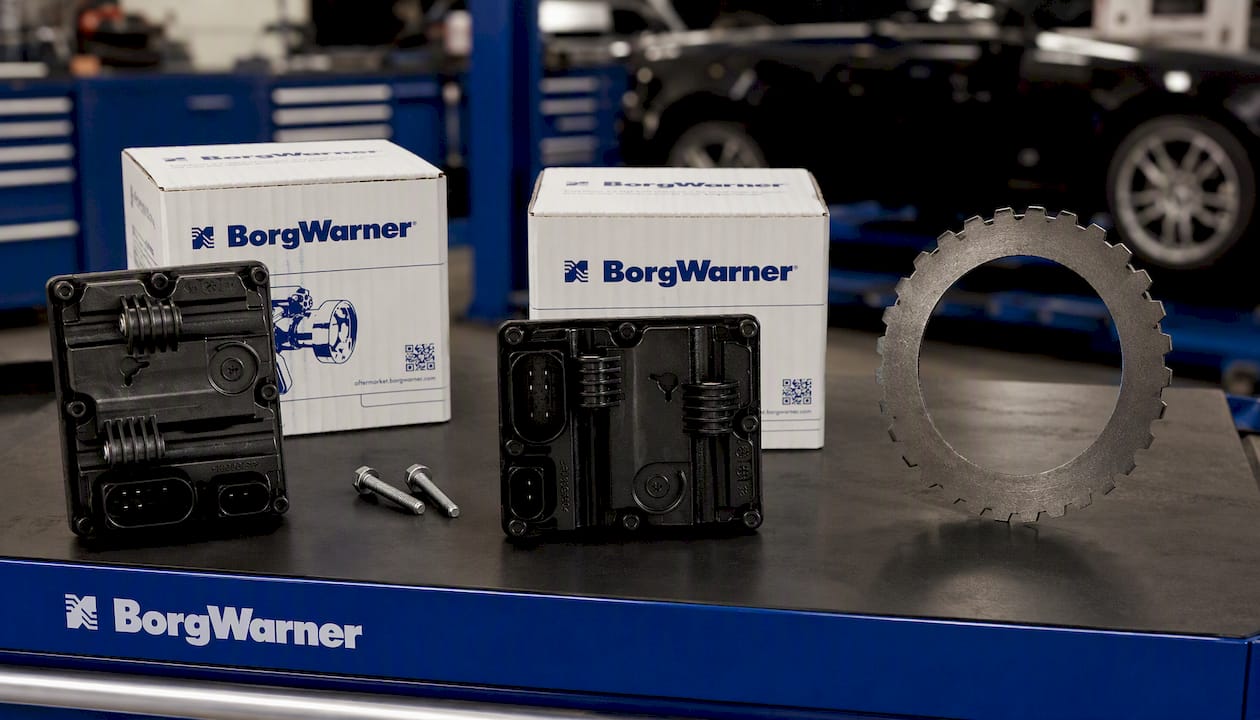
If clamping force under hard driving is the priority, the BorgWarner 107883 steel friction plate set covers both 4th and 5th Generation couplings with 15 discs of upgraded friction material. Haldexparts stocks these as OEM-grade parts with exact part-number matching, rather than generic aftermarket substitutes, which matters when a mismatched component can quietly cap how well any tune performs. Beyond the headline upgrades, the full range of pumps, oils and filters covers the routine service work that keeps any tuning investment working as intended. Start by identifying your Haldex generation and vehicle model, then select the matching parts from the product pages.
Sources
- Haldex - the truth! - PistonHeads UK
- Haldex - How it works
- Springfieldvw
- Rear axle units with integrated Wavetrac limited slip differential 6 Generation 4 - Haldex-LSD
FAQ
Can a Haldex system be switched to permanent rear-wheel drive?
No, not through software or normal parts changes. The coupling’s design and control logic depend on variable engagement between axles, so a permanent rear-only mode would need a mechanical conversion such as a rebuilt rear-axle unit, not a tune.
How much torque does Haldex normally send to the rear axle?
Generation 5 Haldex couplings typically send around 10 to 15% of drive torque rearward during normal driving, rising under acceleration or wheel slip.
What is the fastest way to get a more rear-biased feel?
Controller recalibration is the quickest change, followed by fitting a hardware upgrade like the BorgWarner 107883 friction plate set. Both work within the existing coupling and avoid the cost and complexity of a full mechanical conversion.
Is a rear-biased Haldex tune bad for the drivetrain?
Pushing rear engagement harder increases stress on driveshafts, CV joints, and differential mounts, so aggressive tuning without matching hardware upgrades raises the risk of premature wear. Sticking to conservative controller changes and OEM-grade parts, matched to your exact Haldex generation, keeps that risk manageable.
Does Haldexparts sell the control units needed for tuning changes?
Yes. Haldexparts stocks OEM Genuine Generation 5 control units, including part 0CQ907554J and part 0AY907554J, alongside friction plates, pumps, oils, and filters for VAG-platform vehicles.