
Haldex refill capacity refers to the specific volume of fluid needed to replenish the Haldex all-wheel-drive coupling after a service drain, typically 0.7–0.75 litres for most models. The total system capacity sits at approximately 0.85 litres, but residual fluid remains in the pump and internal passages after draining. That difference is not a rounding error. Underfilling by even a small margin starves the pump and accelerates wear. Getting the volume right is the single most important step in any Haldex system refill, and this guide gives you the exact figures and procedure to do it correctly.
What is Haldex refill capacity and how does it differ from total system volume?
The standard Haldex fluid capacity is 0.85 litres total, but the refill amount during a service is approximately 0.7–0.75 litres. The gap exists because residual oil clings to internal components, the pump body, and the filter housing even after a full drain. Pouring in 0.85 litres would overfill the system and create pressure problems.
The Volkswagen Transporter T5 is the most notable exception. Its Haldex unit holds approximately 1.135 litres in total, with a service refill of around 0.95 litres. That higher figure reflects the larger coupling used in a heavier commercial platform. Owners of the T5 who follow standard car figures will consistently underfill their system.
The table below shows the key capacity differences across common applications.
| Model / Generation | Total oil capacity | Service refill volume |
|---|---|---|
| Standard Haldex (Gen 4 & 5) | 0.85 litres | 0.70–0.75 litres |
| VW Transporter T5 | 1.135 litres | 0.95 litres |
Always confirm the figure for your specific vehicle before starting. Haldex fluid capacity specifications vary by generation and platform, and the wrong number causes real damage.
How to refill the Haldex system correctly
A correct Haldex system refill is a multi-stage process, not a single pour. Rushing any stage introduces air into the system, which prevents the pump from building pressure and engaging the rear axle properly.
Pro Tip: Loosen the filler plug before you touch the drain plug. If the filler plug is seized and you have already drained the oil, the AWD system is disabled until you resolve it.
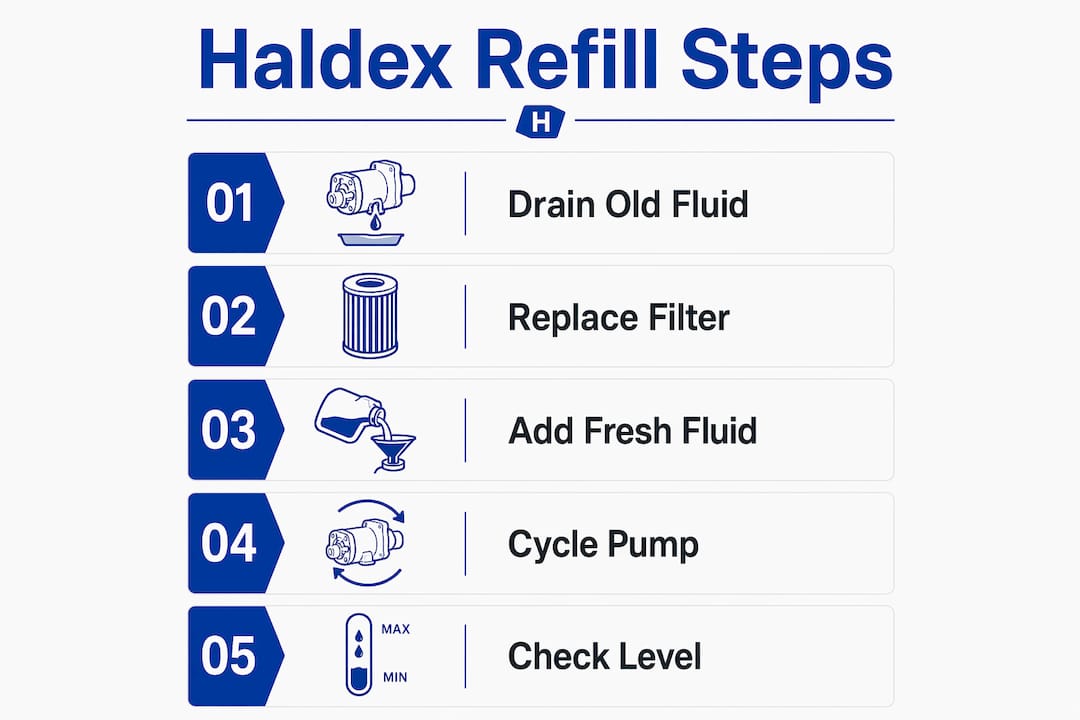
Follow these steps in order for a reliable result.
-
Position the vehicle on a level surface. Any slope skews the fluid level reading and causes inaccurate fill volumes. Use a flat ramp or four axle stands at equal height.
-
Loosen the filler plug first. Confirm it moves freely before draining. This is the step most DIY owners skip, and it is the one that causes the most grief.
-
Drain the old fluid completely. Remove the drain plug and allow the system to empty fully. Inspect the drained fluid for metallic particles, which signal internal wear beyond a simple fluid change.
-
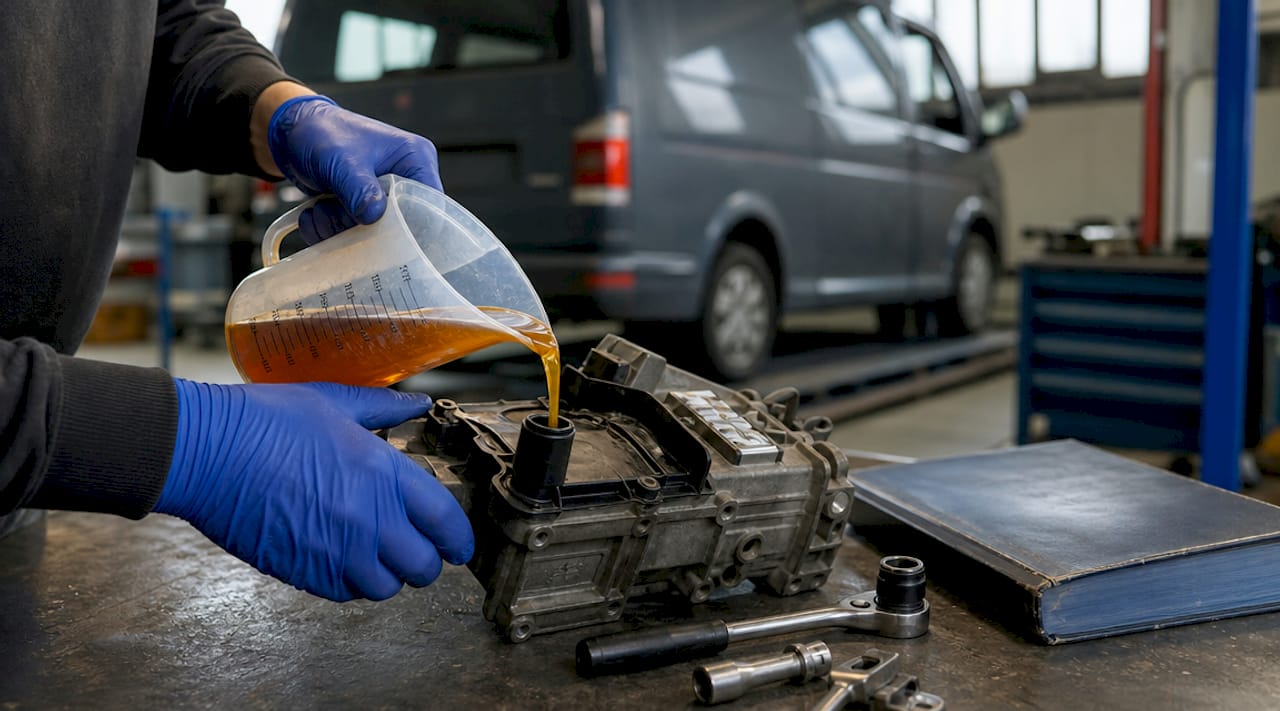
Refit the drain plug and add fresh fluid via syringe. Use a large syringe or hand pump through the service port. Add fluid slowly until it begins to weep from the fill hole. That overflow is your confirmation the cavity is full.
-
Refit the filler plug and connect diagnostic software. Use VCDS or an equivalent tool to cycle the Haldex pump and solenoid valves. This primes the system and pushes fluid into passages that gravity cannot reach.
-
Check fluid temperature before the final top-up. Oil temperature between 20–40°C is the correct range for an accurate final level measurement. Cold fluid reads lower than it actually is once at operating temperature.
-
Perform a final top-up. After cycling, the level will drop slightly as fluid fills the pump and valve body. Top up again until overflow confirms the system is correctly primed and full.
Skipping the diagnostic cycling step is the most common mistake in DIY Haldex maintenance. The pump will not self-prime through driving alone, and the system will underperform until it is cycled properly.
How often should you change Haldex fluid?
Haldex servicing intervals are every 3 years or every 20,000–40,000 miles, whichever comes first. That range accounts for the wide variation in how different owners use their vehicles. A car used gently on motorways sits at the longer end. A car used for towing, track days, or frequent stop-start urban driving needs attention at the shorter end.
Delayed servicing does not just mean dirty fluid. Contaminated oil carries metallic debris from normal wear directly into the pump pickup screen. Once that screen blocks, the pump starves, pressure drops, and the rear axle disengages under load. Pump replacement costs significantly more than a fluid change.
Key signs that your Haldex fluid is overdue for a change:
- Dark, metallic fluid on drain. Fresh Haldex oil is light amber. Black or grey fluid with visible particles means contamination has already begun.
- Rear axle hesitation on hard acceleration. The coupling takes longer to engage when fluid is degraded or the pump is partially starved.
- Fault codes stored in the Haldex control module. Codes related to pump pressure or solenoid function often appear before the driver notices any handling change.
- Mileage or age exceeding the service interval. Do not wait for symptoms. Preventive changes are always cheaper than reactive repairs.
- Recent towing or track use. High thermal load degrades fluid faster than normal driving. Shorten the interval accordingly.
Checking the filter and pickup screen during every service is not optional. Generation 4 and 5 units use a replaceable filter element. Cleaning or replacing it at each fluid change keeps the pump supplied with clean oil and extends system life considerably.
What are the most common DIY Haldex refill mistakes?
DIY Haldex maintenance fails most often not because of mechanical difficulty, but because of skipped steps and incorrect assumptions. The procedure looks simple on paper. The details are where it goes wrong.
Pro Tip: Check for stored fault codes before you drain the oil. A fluid change will not fix a failed pump, a worn clutch pack, or a faulty pressure sensor. Knowing what faults exist before you start saves you from blaming the new fluid for a pre-existing problem.
The most frequent errors are:
- Using the wrong fluid specification. Haldex systems require a specific low-viscosity coupling fluid. Standard gear oil or differential fluid will damage the clutch pack and pump seals. Always match the fluid to your generation and vehicle manufacturer specification.
- Underfilling the system. Pouring in a fixed volume without the overflow check leaves the system short. The only reliable confirmation of correct fill is fluid weeping from the filler hole on a level surface.
- Skipping diagnostic priming. Fluid replacement alone is insufficient for long-term reliability. Without cycling the pump and valves via VCDS or equivalent software, air remains trapped in the system and the pump cannot build correct pressure.
- Ignoring the pump pickup screen. A blocked screen starves the pump even when fluid level is correct. Inspect and clean or replace the screen at every service.
- Assuming a fluid change resolves mechanical faults. Fresh oil in a worn pump or a damaged solenoid will not restore correct function. Diagnose existing faults before and after any service.
- Working at incorrect fluid temperature. Checking the final level with cold fluid gives a false low reading. The 20–40°C window is the standard for accurate measurement.
The risks of incorrect fluid extend beyond immediate underperformance. Wrong specification fluid degrades seals over months, and the damage is not always visible until the pump fails entirely.
Key takeaways
Haldex refill capacity is 0.7–0.75 litres for most models, not the full 0.85-litre system volume, and correct priming with diagnostic tools is as critical as the fluid volume itself.
| Point | Details |
|---|---|
| Refill volume differs from total capacity | Most models take 0.7–0.75 litres on refill; the T5 takes 0.95 litres. |
| Overflow check confirms correct fill | Add fluid until it weeps from the filler hole on a level surface. |
| Diagnostic priming is mandatory | Cycle the pump and valves with VCDS after filling to remove air from the system. |
| Service every 3 years or 20,000–40,000 miles | Shorten the interval for towing, track use, or stop-start driving. |
| Wrong fluid causes lasting damage | Always match fluid specification to your Haldex generation and vehicle platform. |
Why I think most DIY Haldex services fall short
After years of working with Haldex systems across Audi, VW, and Land Rover platforms, the pattern I see most often is this: the owner changes the fluid, drives away satisfied, and then wonders six months later why the rear axle still hesitates on wet roundabouts. The fluid was fine. The priming was not done.
The diagnostic cycling step is where most DIY services fail. VCDS is not expensive, and many independent garages will run the output test for a small fee if you do not own the tool. Skipping it because it feels like an optional extra is the single biggest mistake I see. The pump cannot self-prime through normal driving in any reasonable timeframe.
My other strong advice is to treat the pickup screen as a consumable, not a one-time inspection. On Generation 4 and 5 units, that screen is the pump’s only protection against metallic debris. A clean screen at every service costs almost nothing. A replacement pump costs considerably more.
For sourcing parts, I always recommend using OEM-specification components. The fluid specification tolerance in Haldex systems is tight, and off-specification fluid causes seal degradation that shows up slowly and expensively. Haldexparts stocks the correct oils, filters, and service kits for the most common platforms, which removes the guesswork from specification matching.
If you are unsure whether your system has pre-existing faults, get a diagnostic scan before you start. A Haldex fault diagnosis before a service tells you whether a fluid change is all you need or whether there is a deeper problem that fresh oil will not fix.
— Mindaugas
Haldexparts service kits for a complete, correct refill
Knowing the right refill volume is only half the job. Having the correct fluid, filter, and seals for your specific generation and vehicle platform is the other half.
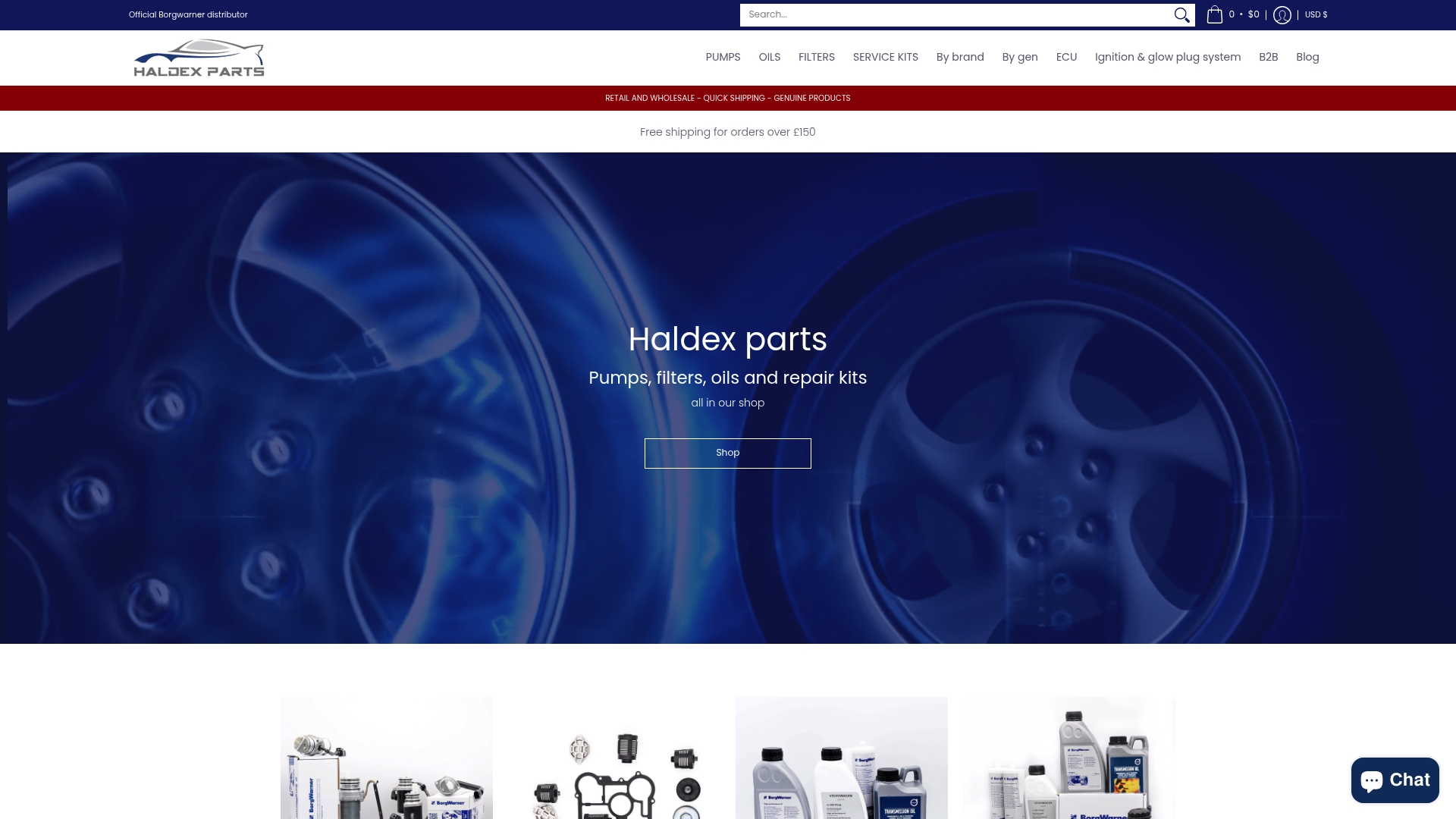
Haldexparts stocks complete Haldex service kits that include the correct OEM-specification oil, filter, and essential seals in a single order. Kits are available for Audi, VW, Ford, Land Rover, and Volvo platforms, matched to the correct Haldex generation. Orders over £150 include free UK delivery. If you need only the fluid, the full range of Haldex-specification oils is listed separately by generation and vehicle. Every product includes full specification data so you can confirm compatibility before ordering.
FAQ
What is the standard Haldex refill capacity?
The standard Haldex refill capacity is 0.7–0.75 litres for most Generation 4 and 5 units. The total system volume is 0.85 litres, but residual fluid in the pump and passages means the refill amount is always lower.
How much fluid does a VW Transporter T5 Haldex take?
The Transporter T5 Haldex unit has a total capacity of approximately 1.135 litres and requires around 0.95 litres on a service refill. This is significantly higher than the standard car figure and must not be confused with it.
Do I need diagnostic software to refill Haldex fluid?
Yes. After filling to the overflow point, you must cycle the pump and solenoid valves using VCDS or equivalent diagnostic software. Without this step, air remains trapped in the system and the pump cannot build correct pressure.
How often should Haldex fluid be changed?
Haldex fluid should be changed every 3 years or every 20,000–40,000 miles. Vehicles used for towing, track driving, or frequent stop-start urban use should be serviced at the shorter end of that range.
Can I use any oil in a Haldex system?
No. Haldex systems require a specific low-viscosity coupling fluid matched to the generation and vehicle manufacturer specification. Standard gear oil or differential fluid will damage the clutch pack and pump seals over time.