

An OEM Haldex filter is the only filter type manufactured to the exact hydraulic and material specifications required by the Haldex all-wheel-drive coupling system. Fitted to vehicles including the Volkswagen Golf R, Audi TT Quattro, Skoda Yeti, Ford Kuga, and Volvo XC60, the Haldex unit controls rear axle engagement through a precisely managed oil circuit. Choosing a genuine filter is not a preference. It is a technical requirement. This article explains why, with specific reference to system compatibility, filtration standards, and the real costs of getting it wrong.
Why choose an OEM Haldex filter over aftermarket options
The Haldex system is controlled by sophisticated software requiring precise hydraulic conditions that only OEM filters and oils reliably deliver. The electronic control module reads oil pressure and temperature data in real time, and the filter sits directly in that data loop. A filter that restricts flow even slightly will skew sensor readings and trigger fault codes that do not reflect any actual mechanical failure.
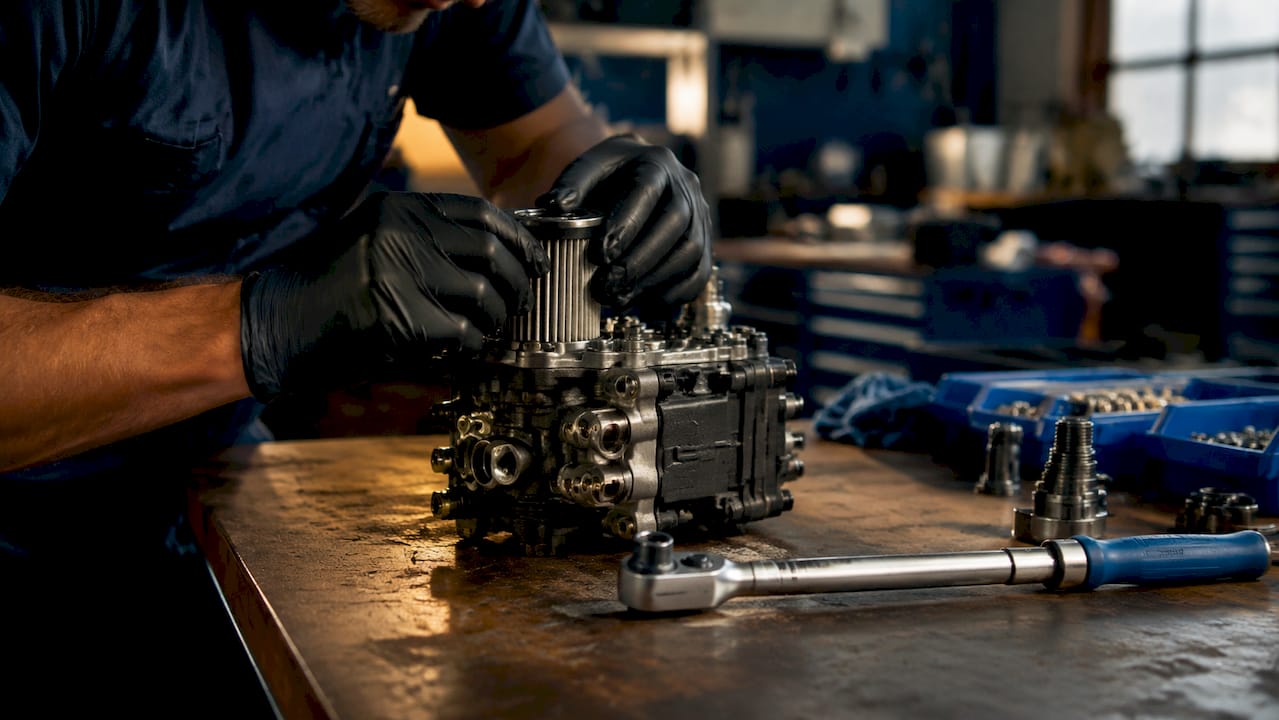
OEM filters for Haldex systems are formulated to Volkswagen specifications G060175A2 or G055175A2, ensuring the correct clutch friction characteristics and fluid dynamics across all operating temperatures. That specification is not printed on most aftermarket packaging. When you fit a filter that does not meet those tolerances, you are not saving money. You are introducing an unknown variable into a system that has no tolerance for unknowns.
The practical consequences of using a substandard filter include:
- Sensor misreadings that generate false fault codes, wasting diagnostic time
- Reduced clutch pack engagement, causing inconsistent AWD behaviour under load
- Accelerated pump wear from contaminated or restricted oil flow
- Voided manufacturer warranty on the Haldex unit itself
Pro Tip: When servicing a Haldex unit, always cross-reference the filter part number against the vehicle’s generation. A Gen 4 filter such as part 2003085 is not interchangeable with a Gen 5 internal strainer assembly, and fitting the wrong unit causes immediate flow restriction.
OEM vs aftermarket Haldex filters: a direct comparison
The table below captures the core differences that matter to technicians and informed DIY owners.
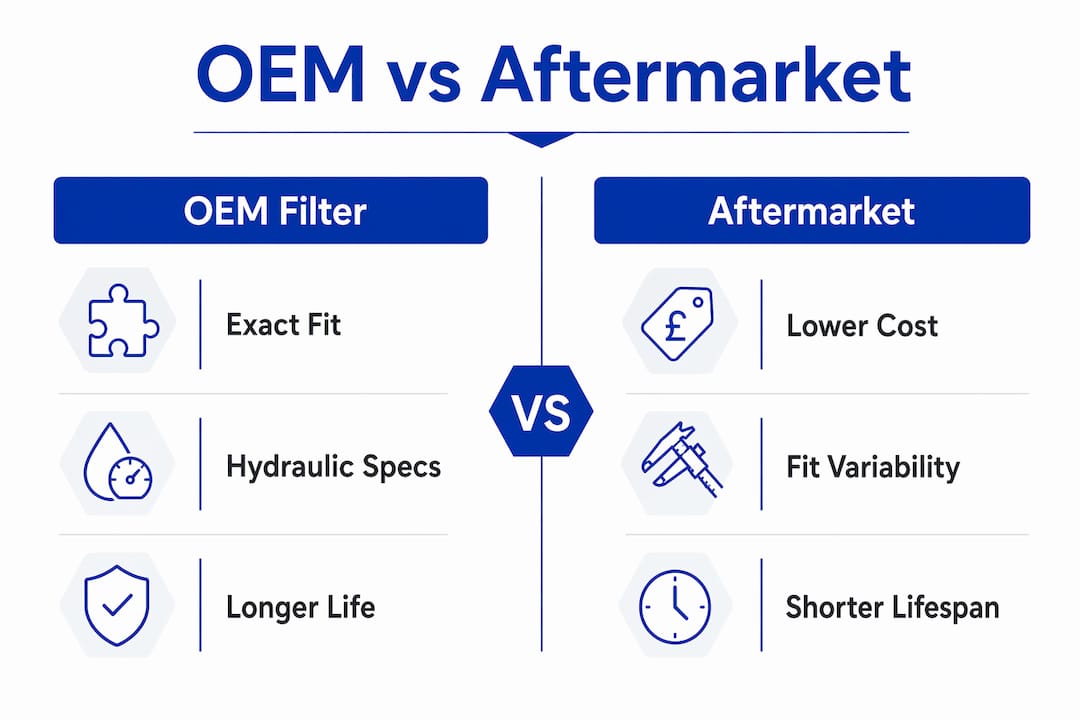
| Factor | OEM Haldex filter | Aftermarket filter |
|---|---|---|
| Fitment precision | Manufactured to exact housing tolerances | Variable; may require force-fitting or leave gaps |
| Filtration rating | Meets VW G055175A2 / G060175A2 specification | Rarely stated; often unknown micron rating |
| Electronic compatibility | Validated against Haldex ECU pressure thresholds | Not validated; risk of false fault codes |
| Warranty coverage | Backed by manufacturer warranty | Typically no warranty or limited 90-day cover |
| Long-term cost | Higher upfront, lower total repair cost | Lower upfront, higher risk of pump replacement |
Aftermarket parts suit only low-complexity consumables; for electronic and high-precision drivetrain components like the Haldex filter, OEM provides the durability and warranty confidence that aftermarket simply cannot match. This is not a blanket dismissal of the aftermarket sector. A replacement wiper blade or cabin air filter carries minimal risk if the specification is slightly off. A Haldex filter operating inside a pressurised, electronically monitored oil circuit is an entirely different matter.
Cost is the most common argument for choosing aftermarket. A genuine OEM filter typically costs more than a budget alternative. However, a Haldex pump replacement on a Volkswagen Golf R or Audi S3 can run to several hundred pounds in parts alone, before labour. One failed service using a non-compliant filter can eliminate years of savings. The oem vs aftermarket awd parts comparison consistently shows that for drivetrain components, OEM wins on total cost of ownership.
Common maintenance pitfalls and how OEM filters prevent them
The most damaging misconception in Haldex maintenance is that the unit is fit and forget. Many owners and even some independent workshops treat the Haldex as a sealed unit requiring no attention until a warning light appears. By that point, the pump is often already damaged.
Here is the correct service approach, in order:
- Identify your Haldex generation. Gen 4 units (found in many Audi, VW, Seat, and Skoda models from 2008 onwards) use a removable cartridge filter. Gen 5 units use an internal mesh strainer instead of a conventional cartridge. Cleaning this strainer during fluid service is critical and is frequently omitted, leading to restricted flow and premature pump wear.
- Drain the old oil completely. Partial drains leave degraded fluid that contaminates fresh oil within a short service cycle.
- Inspect and replace or clean the filter. For Gen 4, fit a new OEM cartridge filter. For Gen 5, clean the mesh strainer thoroughly and inspect for damage before refitting.
- Refill with the correct OEM-specification oil. Frequent replacement of Haldex oil and filters preserves system pressure and clutch engagement effectiveness. Using the wrong viscosity oil alongside a correct filter still compromises performance.
- Clear any stored fault codes and perform a short road test to confirm AWD engagement under load.
Pro Tip: On Gen 5 Haldex units, the pump strainer is accessed from beneath the vehicle after draining the oil. Use a soft brush and clean solvent to remove debris from the mesh. Never use compressed air directly on the strainer, as this can force debris deeper into the pump housing.
Non-OEM fluids and filters accelerate clutch pack wear and reduce rear axle engagement quality. Technicians who see repeat Haldex failures on the same vehicle almost always find a history of non-OEM servicing in the records. The pattern is consistent enough to treat as a diagnostic indicator in its own right.
Diagnostic confusion is the other major pitfall. Substandard parts cause fault codes that do not indicate true mechanical failure, leading workshops to replace sensors or control units unnecessarily. Fitting OEM filters from the outset removes this variable entirely and makes the diagnostic process far more reliable. You can read more about the failure modes this creates in the Haldex failure guide published by Haldexparts.
How to source and order genuine OEM Haldex filters online
Choosing reputable online suppliers is the single most important step in avoiding counterfeit or substandard filters. The online market for Haldex parts includes a significant volume of low-quality alternatives presented with OEM-style packaging and part numbers. Here is how to verify what you are buying:
- Check the part number against the vehicle’s generation. Genuine OEM filters carry traceable part numbers such as 2003085 for Gen 4 VW/Audi/Seat/Skoda applications, or 9V4N-4A319-AA for the Ford Kuga Gen 4 AOC unit. If a listing does not state the part number clearly, do not order it.
- Buy from suppliers who specify OEM or BorgWarner origin. BorgWarner manufactures the Haldex coupling system and produces the reference-standard filters. A supplier listing “BorgWarner” or “OEM” with a traceable part number is a reliable indicator of authenticity.
- Avoid listings with no technical specification. Price alone is not a guide. A filter listed at a fraction of the OEM price with no part number, no micron rating, and no vehicle fitment data is almost certainly not meeting the required specification.
- Look for wholesale and trade pricing on volume orders. Workshops sourcing OEM Haldex parts wholesale should look for suppliers offering trade accounts or volume discounts without compromising on part authenticity. Ordering OEM Haldex parts online from a specialist supplier also provides access to full service kit bundles, which simplify stock management.
- Confirm warranty and returns policy. Genuine OEM parts carry manufacturer backing and strict quality control, reducing the risk of premature failure and enabling clear warranty pathways if issues arise. A supplier unwilling to state their returns policy on OEM parts is a warning sign.
For multi-vehicle workshops, the multi-vehicle Haldex service guide from Haldexparts provides a practical framework for scheduling services across different Haldex generations and vehicle brands, which reduces the risk of ordering the wrong filter for a specific job.
Key takeaways
OEM Haldex filters are the only filters validated to meet the hydraulic, electronic, and material specifications that the Haldex coupling system requires for reliable AWD performance.
| Point | Details |
|---|---|
| OEM specification matters | Filters must meet VW G055175A2 or G060175A2 standards to maintain correct clutch friction and fluid dynamics. |
| Aftermarket risk is real | Non-OEM filters can generate false fault codes, accelerate pump wear, and void the Haldex unit warranty. |
| Generation awareness is critical | Gen 4 uses a cartridge filter; Gen 5 uses an internal mesh strainer. Fitting the wrong type causes immediate damage. |
| Total cost favours OEM | A pump replacement costs far more than the price difference between OEM and budget aftermarket filters. |
| Source from verified suppliers | Only buy from suppliers who state the BorgWarner or OEM part number and offer a clear warranty policy. |
The uncomfortable truth about “good enough” filters
I have seen the same failure pattern more times than I care to count. A vehicle comes in with intermittent AWD faults, the owner insists it was serviced recently, and when you pull the service history you find a filter that cost a third of the OEM price from an unspecified online seller. The fault codes point in three different directions. You spend an hour ruling out the pressure sensor, the control unit, and the wiring loom before you realise the filter is simply not holding the correct pressure differential.
The argument I hear most often is that the Haldex filter is just a filter. It is not. It is a precision hydraulic component operating inside an electronically governed system. The tolerance between a filter that works and one that causes a cascade of false diagnostics is smaller than most people expect.
What I tell customers and junior technicians alike is this: the Haldex unit is one of the most underserviced components on modern AWD vehicles, and the filter is the cheapest part of the service. Spending the extra few pounds on a genuine BorgWarner or OEM-specification filter is not a luxury. It is the minimum standard for a service you can stand behind. The vehicles I see come back with repeat Haldex issues almost always have a pattern of non-OEM servicing. The ones that do not cause problems are the ones where someone used the right parts every time.
— Mindaugas
Get genuine OEM Haldex filters from Haldexparts
Haldexparts stocks a full range of genuine OEM and BorgWarner Haldex filters for Audi, VW, Seat, Skoda, Ford, Volvo, Land Rover, and more, with clear part numbers and generation compatibility listed for every product. Every filter is supplied with manufacturer backing and full traceability, so you know exactly what you are fitting. For workshops and DIY owners who want to service the complete system in one order, the Haldex service kits bundle the correct filter, OEM-specification oil, and ancillary components for each Haldex generation. Orders over £150 qualify for free shipping, making it straightforward to stock up for multiple vehicles without inflating your parts budget.
FAQ
What is an OEM Haldex filter?
An OEM Haldex filter is a genuine, manufacturer-specification filter designed to meet the exact hydraulic and material standards of the Haldex AWD coupling system. It is produced to VW specifications such as G055175A2 or G060175A2 and is the only filter type validated for use with the Haldex electronic control module.
How often should a Haldex filter be replaced?
The Haldex filter should be replaced at every oil service interval, which most manufacturers recommend at approximately every 30,000 to 40,000 miles or every two to three years. Consistent servicing with OEM filters prevents pump burnout and maintains clutch engagement quality.
Can a non-OEM filter damage the Haldex unit?
Yes. Inferior aftermarket filters can cause sensor misreadings, false fault codes, and accelerated clutch pack wear, all of which can lead to premature pump failure and costly repairs.
Does the Gen 5 Haldex have a replaceable filter?
Gen 5 Haldex units do not use a conventional cartridge filter. They use an internal mesh strainer that must be cleaned, not replaced, during each oil service. Omitting this step is one of the most common causes of restricted flow and early pump failure on Gen 5 systems.
Where can I order genuine OEM Haldex filters online?
Haldexparts supplies genuine OEM and BorgWarner filters for all major Haldex generations, with full part number listings and vehicle compatibility data available on their website at haldexparts.co.uk.