

Haldex engagement is defined as the hydraulic transfer of torque from the front axle to the rear axle, triggered by the electronic control module detecting specific traction and dynamic conditions. The system does not operate as a permanent four-wheel-drive unit. Instead, it monitors wheel speed, throttle position, steering angle, and stability data continuously, then applies clutch pressure only when conditions demand it. Understanding what triggers Haldex engagement matters enormously for accurate diagnosis, tuning decisions, and preventive maintenance across Audi, VW, Volvo, and Land Rover platforms.
What triggers Haldex engagement in practice?
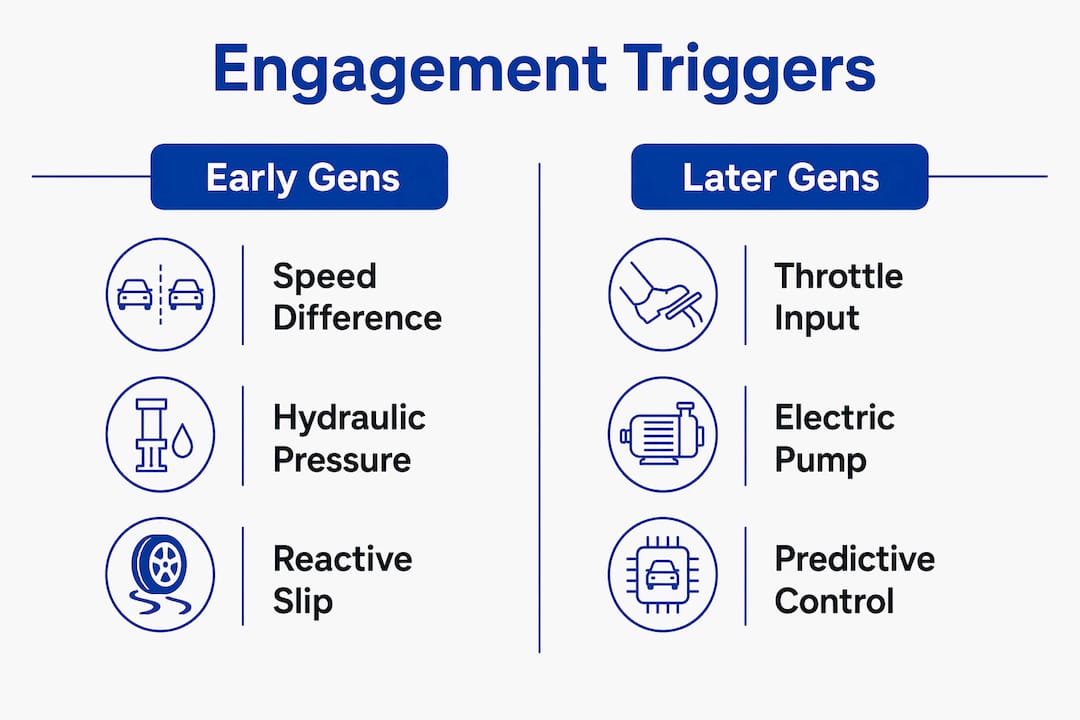
The Haldex AWD system engages when its control module detects a difference in rotational speed between the front and rear axles. That speed differential is the primary mechanical signal, but it is far from the only one. Sensor inputs including wheel speed, throttle, and steering angle feed the ECU simultaneously, creating a combined picture of traction demand rather than a single binary trigger.
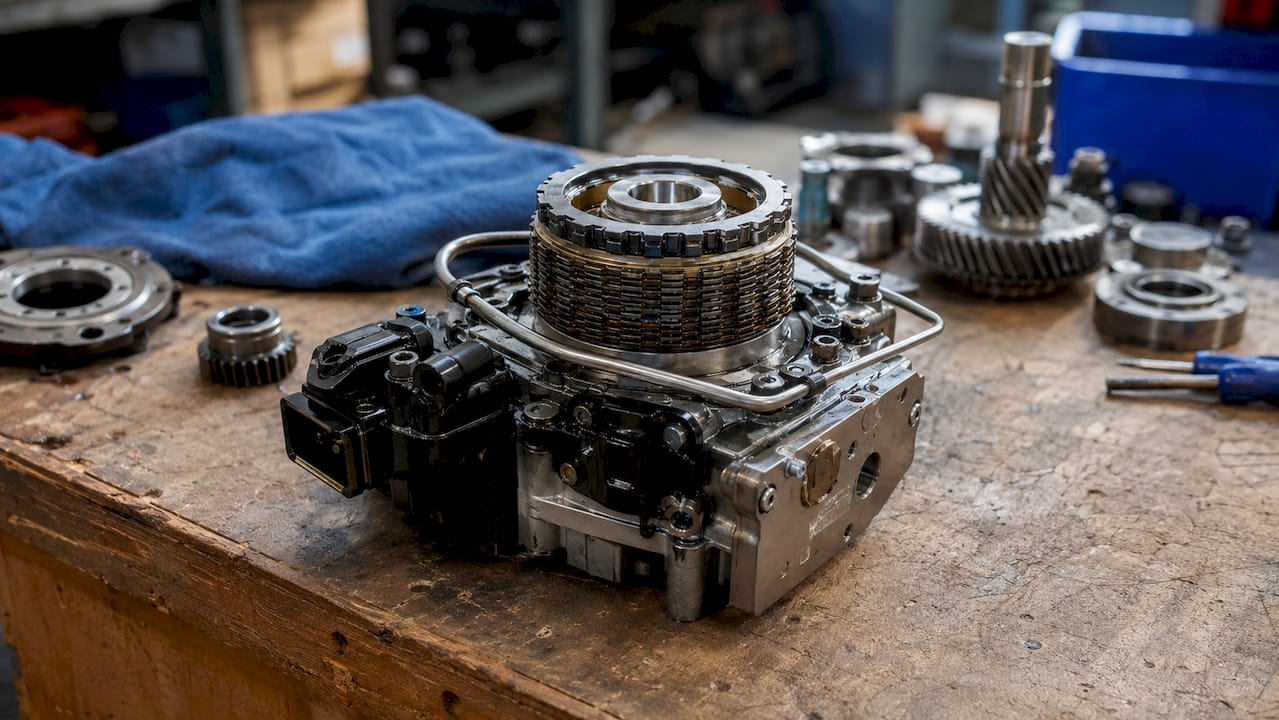
When the front wheels begin to slip, hydraulic pressure builds inside the Haldex unit and compresses a multi-plate clutch pack. This forces torque rearward. Depending on conditions and generation, the system can send more than 50% of available power to the rear axle. That figure is significant because it means Haldex is not merely a traction aid. Under the right conditions, it genuinely alters the vehicle’s handling balance.
Later generations moved beyond purely reactive slip detection. From Generation 4 onwards, the ECM broadcasts throttle and torque demand to the Haldex module, which can pre-engage the clutch before any slip occurs. This predictive approach is the defining shift in how modern Haldex systems behave on the road.
How do sensor inputs influence Haldex engagement?
The Haldex control module reads a continuous stream of CAN bus data to decide when and how firmly to engage the clutch pack. No single sensor commands engagement alone. The system weighs multiple inputs together, which is why Haldex activation can feel subtle or variable in different driving situations.
The key sensor inputs are:
- Wheel speed sensors. These detect rotational speed at each corner. A front-to-rear speed difference is the foundational engagement trigger, particularly in older generations.
- Throttle position sensor. High throttle demand signals the driver is requesting torque, prompting the module to pre-load the clutch in predictive systems.
- Steering angle sensor. Cornering inputs modify torque distribution to prevent understeer and support dynamic handling balance.
- Yaw and lateral acceleration sensors. These feed stability control integration, allowing the Haldex module to adjust clutch pressure during oversteer or understeer events.
- ABS and ESP modules. These communicate over the CAN bus and can override or modulate clutch pressure in real time during braking or stability interventions.
The interaction between throttle position and wheel speed is particularly telling. A sharp throttle input on a dry road may produce no measurable slip, yet a predictive system will still partially engage the clutch in anticipation. This is why technicians diagnosing engagement complaints must look at the full sensor picture, not just wheel speed delta.
Pro Tip: When using VCDS or similar diagnostic software, log throttle position, wheel speed at all four corners, and Haldex clutch duty cycle simultaneously. A mismatch between high throttle demand and zero clutch engagement almost always points to a hydraulic fault rather than a sensor or software issue.
What are the differences in engagement triggers across Haldex generations?
The evolution from Generation 1 to Generation 5 represents a fundamental change in how the system decides to engage. Early units are reactive. Later units are predictive. The practical difference in traction response is substantial.
| Generation | Engagement trigger | Control method | Key characteristic |
|---|---|---|---|
| Gen 1 | Front-to-rear speed difference only | Mechanical hydraulic pressure | Reactive; engagement delay under slip |
| Gen 2/3 | Speed difference plus basic ECU input | Electro-hydraulic with solenoid valve | Faster response; limited predictive ability |
| Gen 4 | Throttle demand plus speed sensors | Electric pump with accumulator | Pre-slip engagement; instant rear lockup |
| Gen 5 | Full CAN bus integration | PWM-controlled pump motor via J492 module | No accumulator; pressure varies by pump speed |
Gen 1 Haldex relies entirely on the front wheels rotating faster than the rear to generate hydraulic pressure. There is no electronic prediction. The clutch only compresses once slip has already begun, which introduces a measurable engagement delay. For road driving this is largely acceptable, but on loose or icy surfaces the lag is noticeable.
Generation 4 changed the architecture fundamentally. An electric pump and accumulator maintain pre-charged hydraulic pressure at all times. When the ECM signals torque demand, the Haldex module opens the clutch valve immediately, drawing on stored pressure for near-instant rear engagement. The pump activates every 20 seconds to maintain accumulator charge, which is why pump health is so critical in Gen 4 units.
Generation 5 removed the accumulator entirely. Clutch pressure varies by electric pump motor speed, regulated via pulse-width modulation through the J492 control module. This gives finer pressure control but means the pump must respond quickly and accurately. Any degradation in pump performance directly reduces engagement speed and torque transfer capacity.
Pro Tip: Gen 5 systems estimate pressure values rather than measuring them directly. If you are diagnosing a Gen 5 unit, cross-check pump adaptation and fault codes alongside any live data readings. Estimated pressure values can appear normal even when the pump is underperforming.
How do stability and braking systems affect Haldex engagement?
The Haldex unit does not operate in isolation. ABS, ESP, and EDL modules all communicate with the Haldex control module over the CAN bus, and each can modify clutch behaviour in real time. Understanding this interplay is critical for accurate fault diagnosis.
-
ABS intervention. During emergency braking, clutch pressure is released to allow the ABS system to modulate individual wheel braking without interference from the rear torque coupling. This is intentional and correct behaviour, not a fault.
-
ESP yaw correction. The yaw rate sensor detects understeer or oversteer. The ESP module signals the Haldex controller to increase or decrease clutch engagement accordingly, tightening the torque split to help rotate the vehicle back onto the intended line.
-
EDL (Electronic Differential Lock). EDL applies braking force to a spinning wheel on the driven axle, effectively redirecting torque to the wheel with grip. This works alongside the Haldex front-to-rear split rather than replacing it, giving the system a two-axis traction management capability.
-
Cornering torque management. Steering angle data modifies the clutch engagement map during cornering. The system reduces rear torque delivery in tight, low-speed turns to prevent binding and tyre scrub, then increases it as the steering straightens and speed builds.
-
CAN bus communication speed. All of this coordination happens in milliseconds. The CAN bus carries continuous data between the ABS control unit, the ESP module, the engine ECU, and the Haldex J492 module. Any CAN bus fault or communication dropout can cause erratic or absent Haldex engagement even when the hydraulic system is perfectly healthy.
The practical implication for technicians is that an engagement complaint may originate in the stability control system rather than the Haldex unit itself. Always check for ABS and ESP fault codes before condemning the Haldex pump or clutch pack.
What practical factors can prevent or delay Haldex engagement?
Mechanical and hydraulic condition directly determines whether the system can act on the engagement commands it receives. Good sensor data and correct software commands produce nothing if the hydraulic circuit cannot deliver adequate clutch pressure.
The most common causes of engagement failure or delay are:
- Clogged filter cartridge. A blocked Haldex oil filter restricts oil flow to the pump and clutch circuit, reducing available pressure. This is the single most frequent cause of gradual engagement degradation and is entirely preventable with scheduled servicing.
- Pump wear or failure. The electric pump is the pressure source for Gen 4 and Gen 5 systems. A pump with resistance outside the 5 to 8 ohm range signals potential failure. Worn pumps produce insufficient pressure even when commanded correctly.
- Oil condition. Degraded Haldex fluid loses its viscosity and lubrication properties. Contaminated oil accelerates wear on the pump and clutch pack, shortening service life and reducing hydraulic efficiency.
- Accumulator pressure loss (Gen 4). Pre-pressure accumulation in Gen 4 is what enables instant engagement. Any hydraulic pressure drop in the accumulator circuit increases engagement delay and system hesitation, which drivers often describe as a momentary loss of traction on acceleration.
- Connector and wiring faults. Corroded or damaged pump connectors interrupt the electrical signal to the pump motor. This produces engagement failure codes without any mechanical fault in the clutch pack itself.
Diagnostic testing should always include an actuator test with the ignition on and engine off. Pump current draw and PWM signals indicate actual pump performance and clutch engagement state, separating a command signal fault from a hydraulic delivery fault. Common error codes associated with engagement problems include C1113 on VW 4Motion platforms, which points directly to pump circuit faults.
You can read more about the full range of hydraulic and electrical issues in this Haldex failure guide from Haldexparts.
Key takeaways
Haldex engagement is governed by a combination of wheel speed differential, throttle demand, and stability sensor inputs, with hydraulic system health determining whether those commands translate into actual torque transfer.
| Point | Details |
|---|---|
| Primary engagement trigger | Front-to-rear wheel speed difference initiates clutch pressure in all generations. |
| Predictive control from Gen 4 | Electric pump and accumulator allow pre-slip engagement based on throttle demand signals. |
| Stability system integration | ABS and ESP actively modify clutch pressure in real time via CAN bus communication. |
| Hydraulic health is critical | Clogged filters and worn pumps prevent engagement regardless of correct sensor and software commands. |
| Gen 5 diagnostics require care | Pressure values are estimated, not measured; always cross-check pump adaptation data and fault codes. |
Why most Haldex misdiagnoses come down to one overlooked distinction
After working through hundreds of Haldex faults across Audi, VW, and Volvo platforms, the single most common diagnostic error I see is treating a command signal as proof of engagement. A technician reads live data, sees the Haldex module issuing a clutch engagement command, and concludes the system is working. It is not. Good sensor data with poor hydraulic pressure results in engagement loss just as surely as a failed sensor.
The shift to predictive control in Gen 4 and Gen 5 systems is genuinely impressive engineering, but it creates a diagnostic trap. Because the system no longer waits for slip to occur, you cannot reproduce an engagement event simply by spinning the front wheels on a ramp. You need to simulate the full input picture: throttle demand, steering angle, and wheel speed together.
My advice is to treat every Haldex engagement complaint as two separate investigations. First, verify the software and sensor chain is issuing the correct commands. Second, verify the hydraulic circuit can actually deliver the pressure those commands require. The pump connector condition and oil cleanliness are where most real-world failures hide, not in the control module. Proactive servicing of the pump, filter, and fluid on a fixed interval is not optional maintenance. It is the difference between a system that engages when you need it and one that hesitates at exactly the wrong moment.
— Mindaugas
Keep your Haldex engaging when it matters most
Reliable Haldex AWD function depends on the hydraulic system being in the same condition as the software that commands it. A correctly calibrated control module paired with a worn pump or blocked filter will still leave you without rear torque transfer.
Haldexparts stocks OEM-grade Haldex service kits covering pumps, oils, and filters for Audi, VW, Volvo, Ford, and Land Rover applications. Whether you are restoring engagement response on a Gen 4 unit or maintaining a Gen 5 system, the right parts are available with free shipping on orders over £150. Browse the full range of Haldex AWD pumps and service components at Haldexparts to keep your system responding exactly as the engineers intended.
FAQ
What is the primary trigger for Haldex engagement?
The primary trigger is a rotational speed difference between the front and rear axles. In Generation 4 and 5 systems, throttle demand signals can also pre-engage the clutch before any slip occurs.
How does Haldex engage differently in Gen 1 versus Gen 4?
Gen 1 relies entirely on mechanical front-to-rear speed difference to build hydraulic pressure, making it reactive. Gen 4 uses an electric pump and accumulator to maintain pre-charged pressure, enabling engagement before slip develops.
Can ABS or ESP prevent Haldex from engaging?
Yes. During ABS braking events, the Haldex clutch pressure is intentionally released to allow independent wheel braking. ESP can also modulate clutch engagement to correct understeer or oversteer in real time.
What maintenance prevents Haldex engagement failure?
Regular replacement of the filter cartridge, pump inspection, and fluid changes are the three most effective preventive measures. A clogged filter or worn pump reduces hydraulic pressure and directly delays or prevents clutch engagement.
How do you diagnose a Haldex engagement fault accurately?
Run an actuator test with the ignition on and engine off to measure pump current draw and PWM output. This separates a software command fault from a hydraulic delivery fault and identifies whether the pump itself is the source of the problem.