

The Haldex coupling is defined as an electronically controlled hydraulic clutch that transfers torque from the front axle to the rear axle on demand. Under hard acceleration, the system can send up to 50% of engine torque to the rear wheels within milliseconds, based on throttle position and wheel speed data. This near-instant response is what separates a Haldex-equipped car from a simple front-wheel-drive platform. For drivers researching how Haldex responds under hard acceleration, the key fact is this: the system does not wait for slip to occur. Later generations act before the front wheels lose grip, making the difference between a composed launch and a scramble for traction.
How does Haldex engage mechanically and electronically under hard acceleration?
The Haldex system uses an electric pump to build hydraulic pressure, which then clamps a multi-plate clutch pack connecting the front and rear axles. When you press hard on the throttle, the Haldex Control Module reads signals from the throttle position sensor, individual wheel speed sensors, and the CAN bus network shared with the ABS and ESP modules. This networked control system processes all those inputs simultaneously and calculates how much clutch clamping force the rear axle needs.
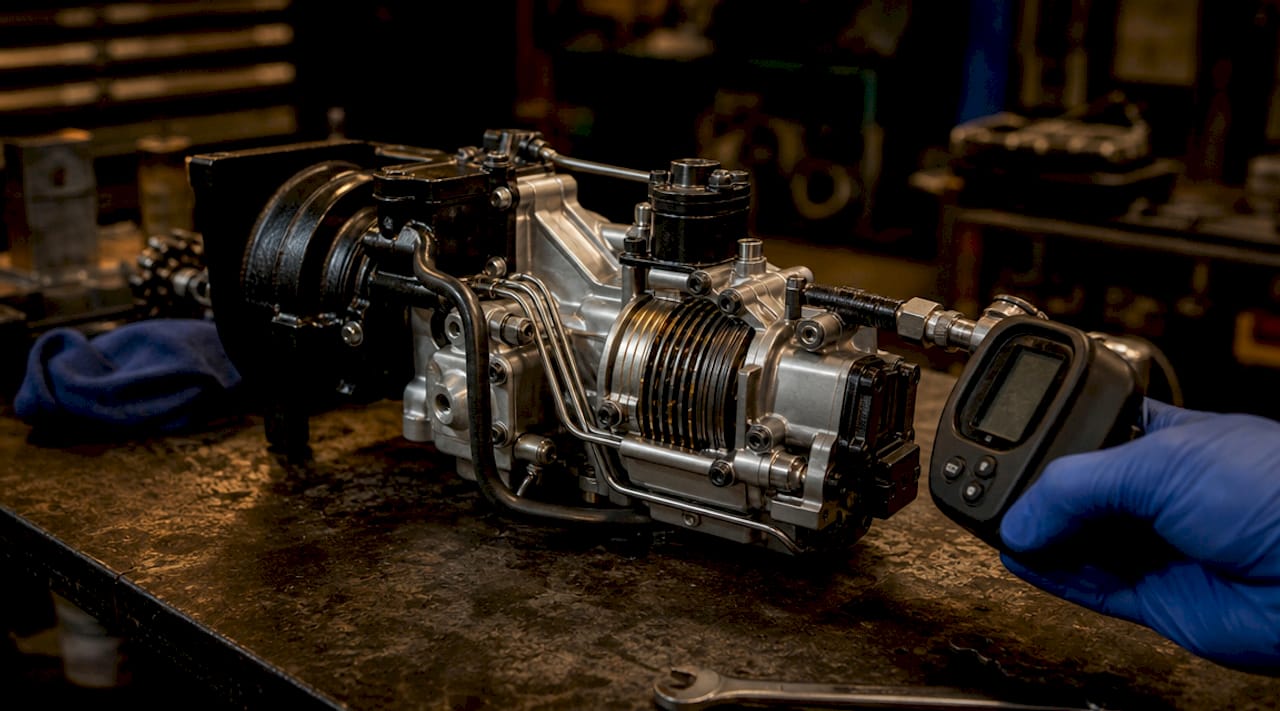
The speed of this process is what makes modern Haldex systems genuinely effective on a fast road or track exit. Older reactive systems waited for the front wheels to spin before engaging the rear. Newer generations, particularly Gen 4 and Gen 5, act on predicted demand rather than confirmed slip.
Here is how the engagement sequence works in practice:
- Throttle input detected. The control module reads a large throttle opening and cross-references it with vehicle speed and steering angle.
- Pump builds pressure. The electric pump pressurises the hydraulic circuit, preparing the clutch pack for engagement.
- Clutch pack clamps. Hydraulic pressure forces the friction plates together, mechanically linking the rear driveshaft.
- Torque flows rearward. The rear axle receives torque proportional to the clutch clamping force, up to the 50% maximum.
- Continuous modulation. The module adjusts pressure in real time as wheel speeds and throttle input change throughout the acceleration phase.
Pro Tip: If your car hesitates before rear-wheel drive engagement on a fast exit, the issue is often a worn pump or degraded fluid reducing hydraulic pressure. A refreshed Haldex pump restores the pressure response that makes proactive engagement possible.
What impact does Haldex have on handling and cornering under hard acceleration?
Haldex torque distribution directly changes how a car behaves when you accelerate hard mid-corner or on a straight. The most immediate effect is a reduction in front-wheel slip, which on a front-biased platform would otherwise manifest as axle tramp and wheel spin. By sharing the load with the rear axle, the front tyres retain more lateral grip, which keeps the car pointed where you want it.
The understeer question is more nuanced. Haldex platforms are fundamentally front-wheel-drive cars with an on-demand rear axle. The front axle still carries the majority of drive under light throttle. This front-drive bias means understeer can persist in tight, slow corners where the system does not fully engage. Hard acceleration, however, is exactly where Haldex earns its keep. The rear torque load shifts weight rearward and reduces the scrubbing effect on the front tyres.
Key handling effects you will notice under hard acceleration:
- Reduced push at corner exit. Rear torque loading balances the car and reduces the tendency to run wide.
- Improved straight-line traction. Both axles share the drive load, so neither set of tyres reaches its grip limit as quickly.
- Interaction with ESP and ABS. The EDL brake intervention system can apply individual brakes to simulate torque vectoring, sharpening turn-in alongside the Haldex torque split.
- The ‘Haldex kick’. Some drivers feel a sudden surge of rear drive engagement. This is typically software behaviour in older reactive maps, not a mechanical fault.
- Cornering stability under power. On faster, sweeping corners, the rear torque contribution keeps the car neutral and planted rather than washing wide.
The interaction between Haldex and the stability control system is particularly important on wet roads. ESP can reduce engine torque while Haldex simultaneously increases rear drive, producing a more balanced response than either system could achieve alone.
How do different Haldex generations respond to hard acceleration?
The generational evolution of Haldex is a story of moving from reactive to predictive control. Early systems waited for slip. Later systems act before slip begins.
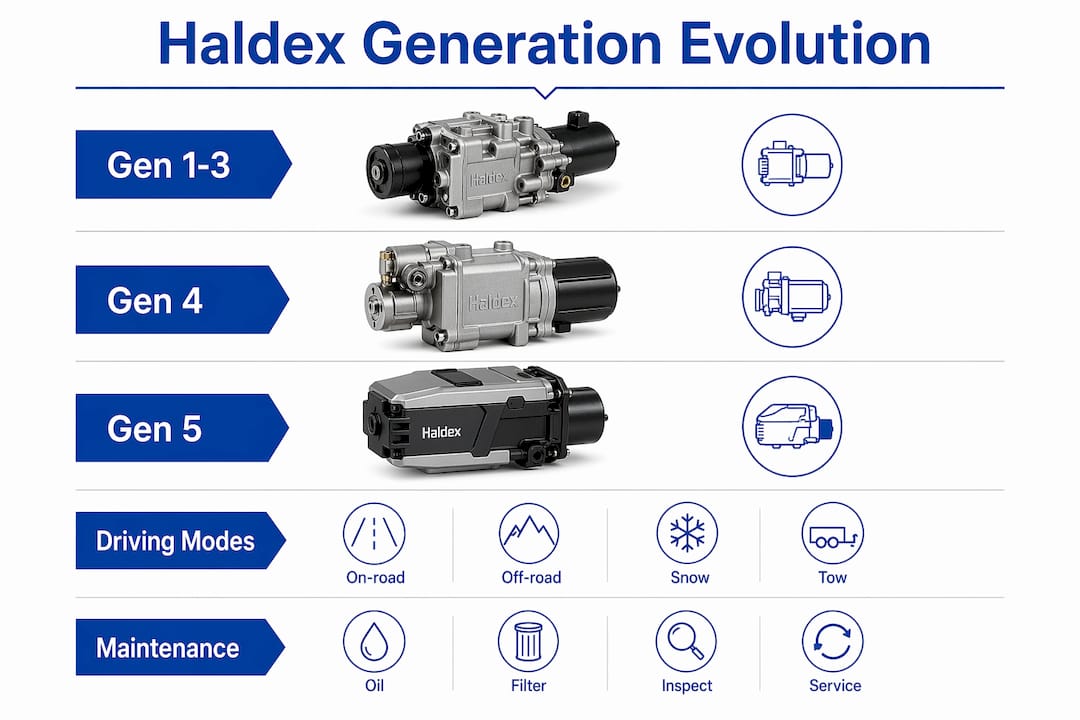
| Generation | Engagement strategy | Key hardware | Acceleration response |
|---|---|---|---|
| Gen 1–3 | Reactive, slip-triggered | Mechanical pump, basic ECU | Noticeable delay before rear drive engages |
| Gen 4 | Proactive, demand-based | Electric pump, hydraulic accumulator | Pre-emptive clutch engagement before slip occurs |
| Gen 5 | Predictive, software-driven | Electric pump, no accumulator | Pump speed controls clutch pressure dynamically |
Gen 4 was the first generation to use an electric high-pressure pump paired with an accumulator. The accumulator stores pressurised fluid so the clutch can engage the instant the control module calls for it, with no build-up delay. This eliminated the hesitation that drivers of Gen 1–3 cars often described as a lurch or kick.
Gen 5 removed the accumulator entirely and instead controls clutch pressure by varying the electric pump motor speed in real time. This approach gives the software finer control over torque distribution. The trade-off is that the system relies heavily on software maps and sensor accuracy. A faulty pressure sensor or degraded fluid can cause the pump to misjudge the required clamping force, leading to inconsistent rear drive engagement under hard acceleration.
Driving modes also play a role. Sport or Dynamic modes on vehicles like the Volkswagen Golf R and Audi S3 adjust the Haldex software map to send more torque rearward earlier in the throttle travel. This makes the car feel more rear-biased and responsive on a fast road, without any hardware change.
What maintenance keeps Haldex performing under hard acceleration?
A Haldex system that is not maintained will not respond correctly under hard acceleration. The hydraulic fluid degrades with heat and use, reducing its ability to transmit pressure cleanly through the clutch pack. The filter collects metallic particles shed by the friction plates. When the filter blocks or the fluid breaks down, clutch engagement becomes sluggish or inconsistent.
Symptoms that indicate the system needs attention:
- Excessive front wheel spin on launch. The rear axle is not receiving torque quickly enough, pointing to low hydraulic pressure.
- Clunking or grinding from the rear. Worn friction plates or contaminated fluid cause mechanical noise under load.
- Inconsistent AWD engagement. The car feels like a front-wheel-drive car most of the time, even under hard throttle.
- Warning lights. The AWD or traction control warning lamp can indicate a pump fault, sensor failure, or fluid pressure issue.
- Vibration under acceleration. Worn steel lamella discs inside the clutch pack can cause shudder when the clutch engages.
Regular fluid and filter changes are the single most effective maintenance step. Track days and spirited driving accelerate fluid degradation significantly, so drivers who use their cars hard should service the Haldex unit more frequently than the standard interval. Checking the Haldex fault codes with a compatible diagnostic tool after any demanding drive session is good practice. It catches pump wear or sensor drift before it becomes a failure.
Pro Tip: After a track day or a long motorway run in Sport mode, change the Haldex fluid before the next hard session. Heat cycles degrade the oil faster than mileage alone, and why Haldex needs flushing explains exactly what happens to the fluid chemistry under sustained heat.
Using OEM-grade parts matters here. Aftermarket fluids with incorrect viscosity can cause the clutch pack to slip under high clamping loads, which is precisely the condition you need it to hold during a hard launch. Keeping air filter intervals current also supports engine output consistency, which in turn gives the Haldex control module cleaner throttle data to work with.
Key takeaways
The Haldex system delivers its best performance under hard acceleration when the hydraulic circuit is clean, the pump is healthy, and the software map matches the driving style.
| Point | Details |
|---|---|
| Torque transfer is near-instant | Gen 4 and Gen 5 systems engage the rear axle before front-wheel slip occurs, not after. |
| Understeer is reduced, not eliminated | Hard acceleration shifts load rearward and reduces front tyre scrub, but slow-corner understeer can persist. |
| Generation matters for response | Gen 1–3 systems react to slip; Gen 4 and Gen 5 predict demand and engage proactively. |
| Fluid condition drives performance | Degraded fluid reduces hydraulic pressure and slows clutch engagement under hard throttle. |
| Software maps shape the feel | Sport and Dynamic modes alter torque distribution curves, changing how the car responds on a fast road. |
What I have learned about Haldex under hard acceleration
The thing most enthusiasts miss is that the ‘Haldex kick’ they complain about is almost never a hardware problem. It is a software map issue. Older reactive maps wait too long before sending torque rearward, and when they do engage, the step-change feels abrupt. A controller tuning guide can address this directly, and the difference on a fast B-road is immediately noticeable.
What I find genuinely underappreciated is the interaction between Haldex and the brake-based torque vectoring that ESP provides. Most drivers think of these as separate systems. They are not. On a well-maintained car with fresh fluid, the two systems work together to produce cornering behaviour that a simple open-differential AWD system cannot match. The Haldex splits torque front to rear, and the ESP brakes individual wheels to sharpen direction. The result is a car that feels more neutral than its front-biased architecture suggests.
My caution for enthusiasts is this: do not expect software tuning alone to fix a handling balance problem. Mechanical grip improvements, specifically tyres and suspension geometry, do more for understeer than any Haldex map change. The causes of Haldex failure are almost always maintenance-related, not design flaws. A clean, well-serviced system running a good software map is genuinely capable. A neglected one with degraded fluid will disappoint regardless of what map you load.
— Mindaugas
Keeping your Haldex system ready for hard use
A Haldex system that responds correctly under hard acceleration starts with the right parts in the right condition. Haldexparts stocks OEM-grade service kits covering pumps, oils, and filters for Audi, VW, Ford, Land Rover, and more. Every kit is matched to the specific generation and vehicle model, so you are not guessing at compatibility.
Orders over £150 qualify for free shipping, and the product pages include generation-specific fitment information to make selection straightforward. Whether you are servicing after a track day or doing a scheduled fluid change, Haldexparts has the components to keep your AWD system engaging exactly when you need it. Browse the full range at Haldexparts and find the right kit for your car.
FAQ
How quickly does Haldex engage under hard acceleration?
Gen 4 and Gen 5 Haldex systems engage within milliseconds of a hard throttle input, using proactive hydraulic pressure to clamp the rear clutch pack before front-wheel slip occurs.
Does Haldex fix understeer completely?
Haldex reduces understeer under hard acceleration by loading the rear axle and freeing up front tyre grip, but the front-drive bias of the platform means understeer can persist in slow, tight corners.
What causes the ‘Haldex kick’ feeling under acceleration?
The ‘Haldex kick’ is typically caused by reactive software maps in older Gen 1–3 systems, not mechanical failure. Software tuning or upgrading to a later-generation controller resolves it.
How often should I service the Haldex system if I drive hard?
Track sessions and spirited driving accelerate fluid and filter wear significantly. Service the fluid and filter after every track day or at least annually if you drive hard on the road.
Does Sport mode change how Haldex responds under acceleration?
Sport and Dynamic driving modes alter the Haldex software map to send torque rearward earlier in the throttle travel, making the car feel more balanced and responsive under hard acceleration without any hardware change.