
Judder or shudder at low speed, weak or delayed rear-axle engagement, an AWD or ABS warning light, and oil that looks dark, gritty or smells burnt: those four signs together are the strongest indicator of Haldex oil contamination. None of them alone is conclusive, but any two appearing at once should move contamination to the top of your suspect list.
Before you go near the pump, run three quick checks: scan for stored AWD or Haldex fault codes, pull a small oil sample to check colour and smell, and drive the car to try to reproduce the judder. That sequence takes fifteen minutes and tells you whether you are dealing with a simple service or something more serious.
- Scan for AWD/Haldex-related DTCs before touching anything mechanical
- Check oil colour, clarity and smell against a known-good sample
- Road-test on a tight, low-speed turn to try to reproduce judder
Key Takeaways
Contaminated Haldex oil most reliably shows up as judder or shudder, weak rear-axle engagement, AWD-related fault codes and visibly degraded fluid, and confirming it takes a scan, an oil sample and a road test rather than guesswork.
| Point | Details |
|---|---|
| Watch for the symptom cluster | Judder, delayed rear engagement, AWD warning lights and dark or gritty oil together strongly suggest contamination. |
| Scan before you drain anything | Stored AWD, Haldex or ABS-related codes narrow the diagnosis before you touch the oil. |
| Black sludge isn’t always urgent | OEM guidance treats solidified additive sludge as benign unless metal particles or fault codes accompany it. |
| Clean the strainer, not just the oil | A drain-and-refill without a pump screen clean can leave the real restriction in place. |
| Match parts to generation | Haldexparts supplies OEM-grade oil, filter and pump kits selected by vehicle and Haldex generation to avoid spec mismatches. |
Table of Contents
- What are the driving and dashboard symptoms of Haldex oil contamination?
- How does contaminated oil actually cause Haldex failure?
- What should you look for when inspecting the oil and pump?
- How do you diagnose Haldex oil contamination step by step?
- What are the repair options, and what do they typically cost?
- How do you prevent Haldex oil contamination?
- Frequently asked questions
- Sources
What are the driving and dashboard symptoms of Haldex oil contamination?
Judder is the symptom most owners notice first. It typically shows up as a shudder through the drivetrain during low-speed manoeuvring, particularly on full lock in a car park or when pulling away from a junction. That is the coupling struggling to lock the rear axle smoothly, and contaminated oil is one of the most common reasons it cannot.
Front-biased handling under acceleration is the other classic sign. If the car feels like it is losing traction at the rear wheels when you would expect all four to be working, especially pulling away on a wet or loose surface, the coupling may not be engaging fully. Common symptoms include poor grip from a standstill and inconsistent engagement, and both are frequently traced back to degraded fluid restricting hydraulic pressure rather than a worn coupling itself.
Warning lights rarely say “Haldex” outright. Instead, you will usually see an AWD malfunction light, a general drivetrain warning, or occasionally an ABS light, since wheel-speed data feeds into how the system decides when to engage. Stored codes worth flagging during a scan include anything referencing coupling pressure, pump performance, or communication faults between the AWD control module and the ABS module.
Some symptoms are subtler and easy to write off as “just how the car feels.” Delayed rear engagement on takeoff, AWD that seems to cut in and out intermittently rather than staying consistent, or a faint whine or binding noise under load can all point to contamination long before judder becomes obvious. These early signs deserve just as much attention as the loud ones, because they’re the stage where a simple service still fixes the problem.
Pro Tip: Judder and inconsistent engagement are easiest to reproduce on a cold start, on a wet or loose surface, with steady, gentle acceleration through a tight turn. Flooring the throttle on dry tarmac often masks the exact symptom you’re trying to catch.
How does contaminated oil actually cause Haldex failure?
Haldex fluid does two jobs: it lubricates moving parts and it builds the hydraulic pressure that clamps the clutch pack. When either job fails, the whole system underperforms even though nothing has physically broken yet.
Additive breakdown and viscosity loss happen gradually with heat cycling and age, and they change how quickly the oil can build pressure when the pump calls for it. Water ingress, whether from a failed seal or a poorly reseated fuel tank venting cap, thins the oil further and accelerates internal corrosion. Metal particles from wear inside the pump or clutch pack act as an abrasive, compounding the damage every time the system cycles.
The failure chain generally runs like this:
- Contaminated or degraded oil restricts flow through the pump pickup
- Restriction reduces the pump’s ability to build hydraulic pressure
- Low pressure means the clutch pack cannot fully clamp
- The result is delayed, weak, or inconsistent rear-axle engagement
Dirty oil that clogs the pump screen reduces the system’s ability to build pressure, and that single restriction point explains most of the judder and inconsistent traction owners report.
What should you look for when inspecting the oil and pump?
Colour and smell tell you most of what you need to know before a single tool comes out. Healthy Haldex oil is a clean, translucent amber. Contamination shows up as darkened or nearly black fluid, a thin watery consistency, visible metallic flakes, or a milky emulsion if water has got in. A sharp, burnt smell usually means the oil has been run too hot for too long.
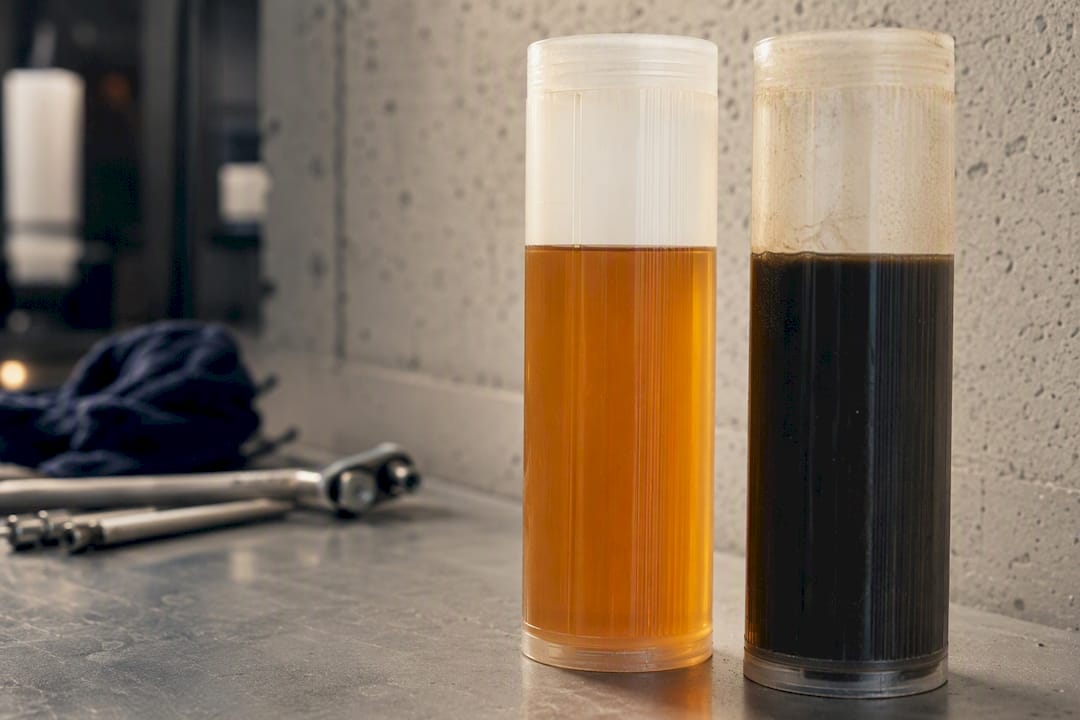
Black sludge deserves a specific mention because it alarms a lot of owners unnecessarily. OEM guidance describes a black deposit caused by additives solidifying in cold oil, and that sludge often dissolves once the oil warms up. It is not automatically a reason to replace components. Treat it as a warning sign only when it’s accompanied by metal particles, persistent fault codes, or poor pressure readings.
The pump pickup screen is the next place to check. A screen packed with fine debris or metallic sediment indicates the contamination has been circulating for a while, which changes the service plan from a simple drain to a full pump strainer clean.
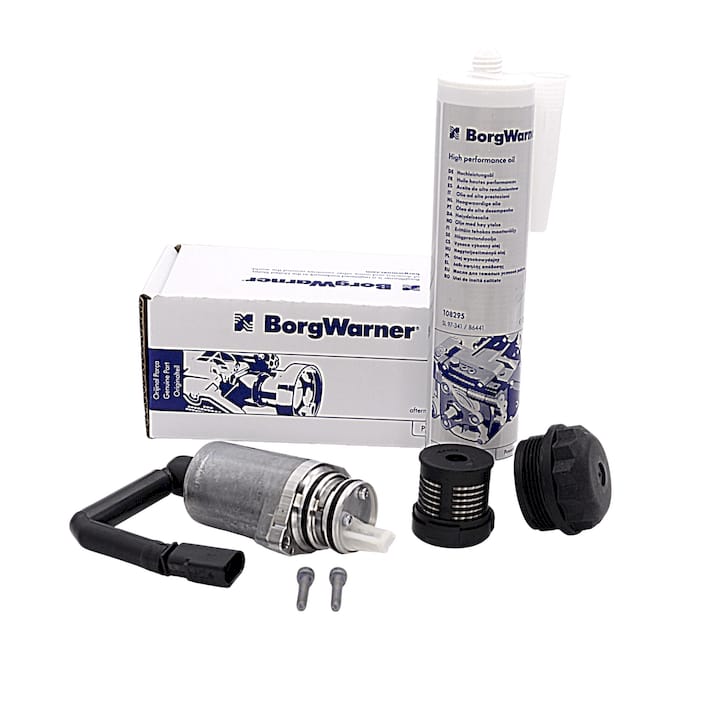
Pro Tip: Drain a small sample into a clean, clear container and photograph it against white paper in daylight. Comparing that photo to a known-good sample makes colour and clarity differences far easier to judge than eyeballing it on the dipstick.
How do you diagnose Haldex oil contamination step by step?
Start by confirming the vehicle’s Haldex generation and correct oil specification, since fill procedures and intervals vary between generations and getting this wrong invalidates every check that follows. Pull whatever service history exists; a car that has never had a Haldex service is a strong candidate for contamination regardless of mileage.
Move to the scan tool next. Look for AWD, Haldex, or drivetrain-related codes, and where the tool allows it, record live data such as pump duty cycle and commanded pressure. A road test that reproduces the symptom while capturing live data is often more diagnostic than a visual check alone, so don’t skip straight to the oil pan.
Work through the checks in this order:
- Road-test to reproduce judder or delayed engagement under realistic conditions
- Drain a small sample and assess colour, clarity, and smell
- Check for metallic particles using a magnet or fine mesh
- Inspect the pump pickup screen for debris or sludge buildup
- Cross-reference findings against stored fault codes and live data
If the sample looks clean, the screen is clear, and no fault codes point to pressure or communication faults, contamination is unlikely and you should look elsewhere in the drivetrain. If the oil is degraded but the screen is only lightly soiled, a drain-and-refill with a strainer clean is usually sufficient. If the screen is heavily blocked or metal is present, plan for pump removal and a closer inspection of the clutch pack. Practical guides for pump testing walk through the exact live-data parameters worth recording during this stage.
Pro Tip: Wear gloves and work in a ventilated area when handling samples. Breathing oil vapours can cause headaches, nausea and irritation even from small quantities, so don’t sample straight over your face in a confined bay.
What are the repair options, and what do they typically cost?
Fixes escalate roughly in this order, and it’s worth working through them in sequence rather than jumping straight to the most expensive option.
- Drain-and-refill with strainer clean: the cheapest and most common fix; typically 1 to 2 hours of labour when the pump is accessible
- Pump removal, strainer clean and seal replacement: a step up in labour, usually 2 to 4 hours depending on vehicle access
- Pump rebuild or replacement: needed when internal wear or persistent low pressure remains after cleaning; parts and labour both increase
- Clutch pack or friction plate service, or full coupling replacement: the most expensive route, reserved for cases where metal contamination has damaged the friction surfaces
Costs vary significantly by vehicle, region, and whether parts are OEM or aftermarket, so treat any figure as a ballpark rather than a quote. A straightforward service is almost always the more cost-effective first move; jumping to a full coupling replacement before confirming the oil and screen condition risks paying for a repair the car didn’t need.
How do you prevent Haldex oil contamination?
Interval matters more than most owners assume. For 5th generation Haldex systems, guidance points to a change roughly every 30,000 km, with the pump removed to clean the strainer at the same time, since some generations don’t have a separate serviceable filter. Using the correct OEM or BorgWarner-specified oil matters because the additive package is tuned to the system’s operating temperature and pressure range, not interchangeable with generic gear oil.
A short checklist worth keeping in the service file:
- Record the oil change date, mileage, and generation-specific spec used
- Check filler and drain seals for weeping at every service
- Avoid long runs of very short trips that never let the system reach operating temperature
- Ask your workshop whether the strainer was cleaned, not just whether the oil was changed
What other faults get mistaken for Haldex oil contamination?
Not every judder or traction complaint is oil-related. Worn or mismatched tyres, faulty wheel-speed sensors, differential wear, and engine misfires that upset torque delivery can all produce similar symptoms.
Quick differentiators help narrow it down fast. Mismatched tyre pressures or tread depth show up immediately on a tyre check. ABS or wheel-speed sensor faults throw their own distinct codes, separate from AWD-specific ones. Differential wear tends to produce a consistent whine under load rather than an intermittent judder, and engine misfires usually come with their own stored codes unrelated to the drivetrain module. If the scan tool shows AWD or Haldex-specific codes alongside degraded oil, contamination is the more likely culprit; if the codes point elsewhere, keep looking before you touch the coupling.
A mechanic’s brief note from the bay
In the bay, the first three checks are always the scan tool, an oil sample, and a look at the pump screen; service history and the correct oil spec usually settle whether it’s a service or a repair.
Where to source the right Haldex oil, filters and pump parts
Once you’ve confirmed contamination, the fix only works if the parts going back in match the vehicle and generation exactly. Haldexparts stocks OEM-grade filter and oil kits, pump seal kits, and friction plate sets built to BorgWarner and OEM specification, so you’re not guessing whether a generic gear oil will hold up under Haldex operating pressures.
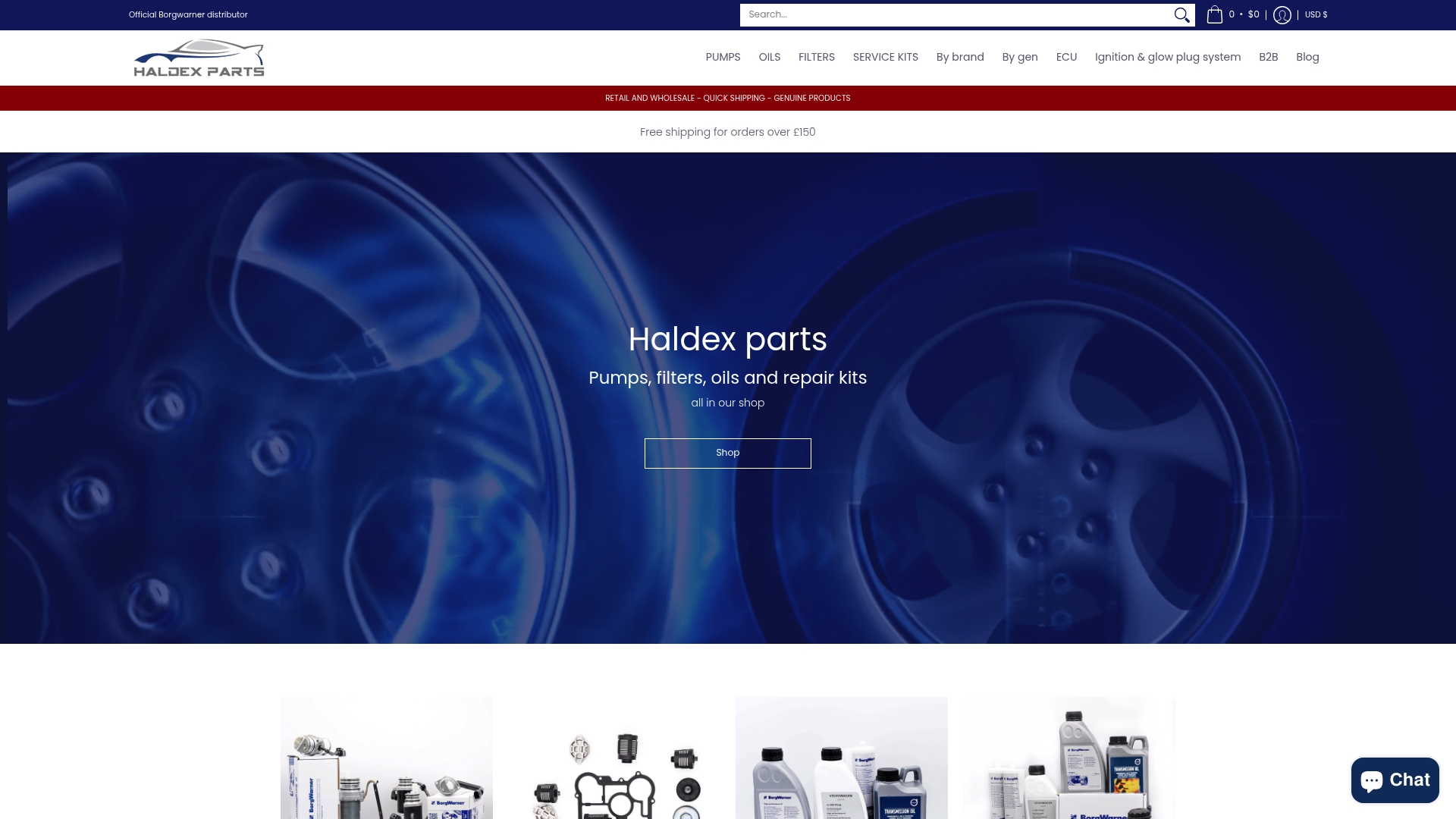
For VAG-platform vehicles needing a full service, the 2nd generation pump, filter and oil kit covers Audi, VW, Škoda and SEAT applications in one order, while Volvo owners can go straight to the AOC filter assembly for S60, S80, V60, V70, XC70, XC60 and XC90 models. SAAB and Opel owners will find a matching genuine OEM coupling oil and filter kit, and Ford Kuga owners needing pump seal work can check the Gen 4 AWD pump oil seal kit. If the pump screen inspection reveals wear beyond a simple clean, the full range of service kits covers every generation, and technical details on each listing help you confirm fitment before you buy. Not sure which generation your car uses? Check the vehicle-specific kit pages, and get in touch if you need help matching a part number.
Frequently asked questions
What are the first signs of Haldex oil contamination? Judder or shudder at low speed, delayed rear-axle engagement, and an AWD or drivetrain warning light are usually the earliest noticeable signs, often before the oil itself looks obviously dirty.
Can I check for contamination without a scan tool? You can assess oil colour, smell and clarity without one, but a scan tool is the fastest way to rule out or confirm AWD-specific fault codes, and it’s worth borrowing or booking one session at a workshop before deciding on a repair.
Is black sludge in Haldex oil always a problem? Not necessarily. Some OEM guidance describes black sludge caused by additives solidifying in cold oil, which can dissolve when warm. It becomes a genuine concern only alongside metal particles, persistent fault codes, or poor pressure readings.
How often should Haldex oil be changed to avoid contamination? Intervals vary by generation, but guidance for 5th generation systems points to roughly every 30,000 km, with the pump strainer cleaned at the same time since some generations lack a separate filter.
Does contaminated oil always mean the pump needs replacing? No. Many cases resolve with a drain-and-refill and a strainer clean. Pump replacement usually only becomes necessary when metal contamination or persistent low pressure remains after a proper service.
Sources
These sources back the diagnostic guidance above and are worth reading in full for deeper technical detail.
- Haldex Service Signs Explained - Mechalex
- 5th Generation Haldex - Oil Change. When should the oil in the Haldex system be changed? - Haldex Service
- Haldex Coupling - Black substance/sludge observed in oil and pump housing - TOPIx / OEM bulletin
- Fuel oil poisoning: MedlinePlus Medical Encyclopedia