
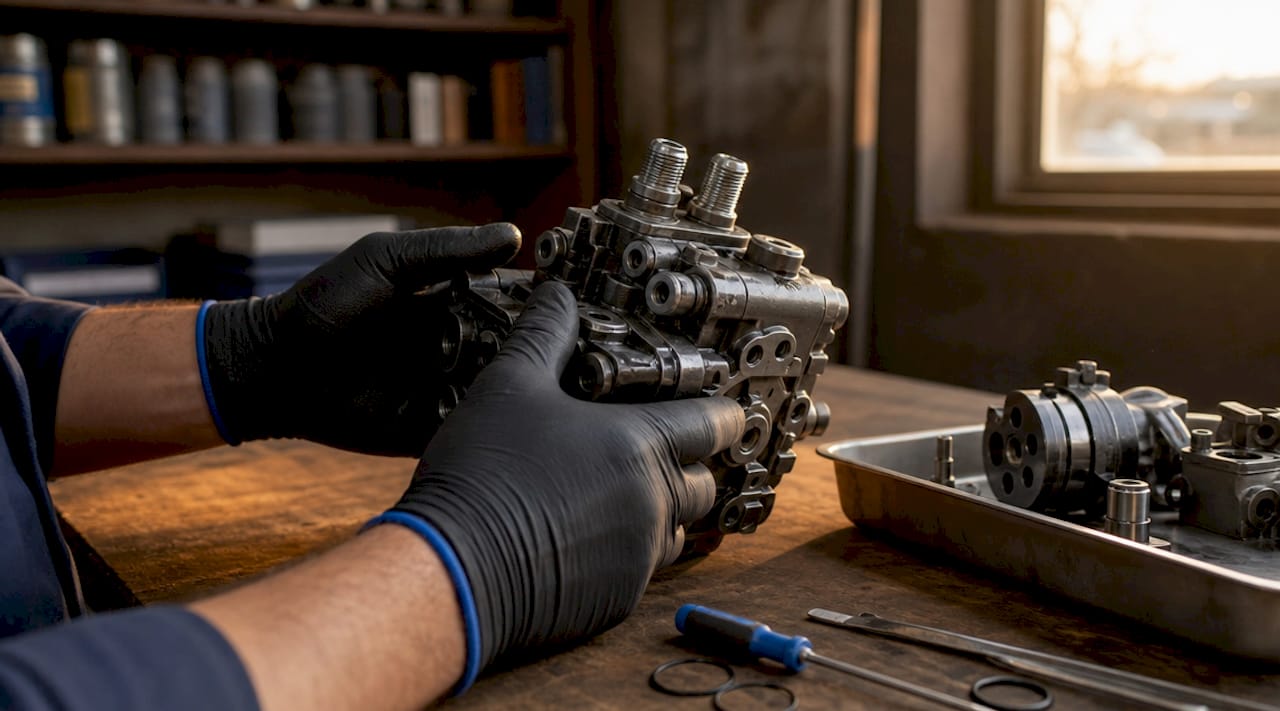
Haldex hydraulic pressure range is defined not by a fixed numeric threshold but by real-time modulation of the electric pump motor’s speed and voltage to regulate clutch engagement force. This dynamic approach replaces the static accumulator-based pressure storage used in earlier Haldex generations. Understanding how pressure is controlled across different Haldex generations is the foundation of accurate diagnosis and effective maintenance for Audi, VW, Skoda, Seat, Ford, and Land Rover all-wheel-drive systems. Whether you are a workshop technician or a DIY owner, knowing what the hydraulic pressure specifications actually mean in practice will save you from costly misdiagnosis.
What is the Haldex hydraulic pressure range across generations?
The answer depends entirely on which generation of Haldex you are working with, and the differences are significant enough to change your entire diagnostic approach.
Earlier Haldex generations generate pressure reactively from wheel slip via mechanical reciprocating piston pumps driven by differential wheel speed. Generation 1 and Generation 2 units have no electric pump and no pre-charged accumulator. Pressure only builds when the front and rear axles rotate at different speeds, which means AWD engagement is inherently delayed. This reactive behaviour is the defining limitation of early Haldex hydraulic system specs.
Generation 4 changed the architecture entirely. The system uses a dedicated electric pre-charge pump to fill an accumulator to approximately 30 bar (435 psi), and a proportional solenoid valve (the N373 valve) then meters that stored pressure to the multi-plate clutch on demand. This pre-charged design allows immediate clutch engagement without waiting for wheel slip to occur. Practitioners recognise that this proactive pressure control via electric pumps radically improved clutch responsiveness and enabled predictive AWD engagement strategies.
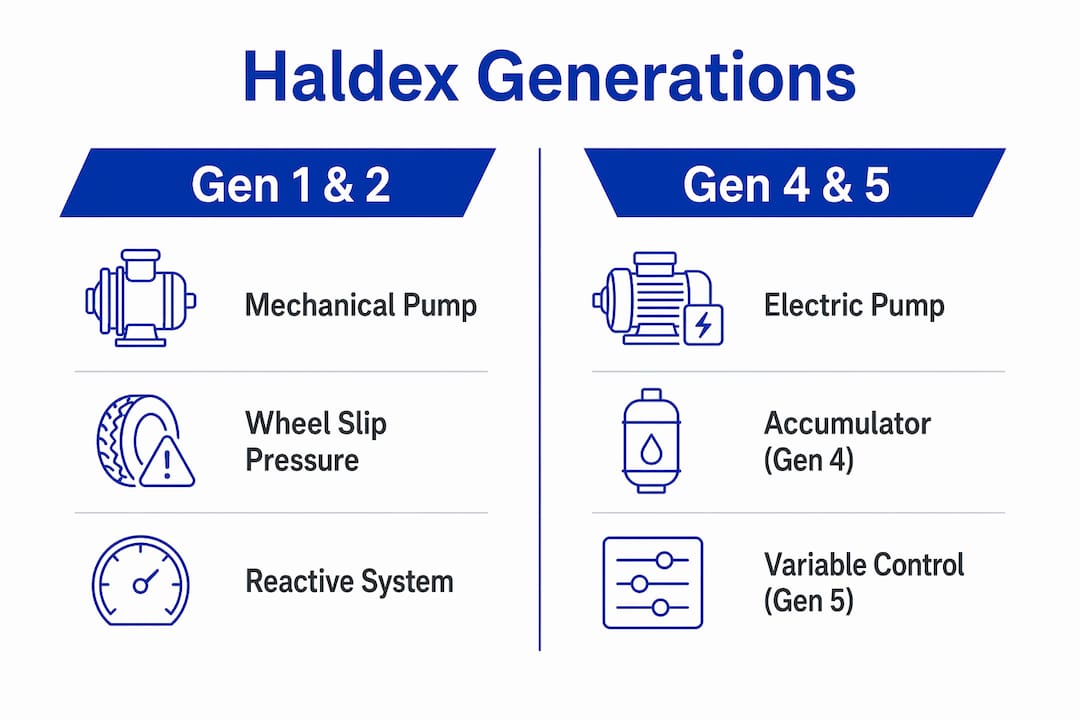
Generation 5 removes the accumulator and the proportional valve altogether. Clutch pressure is regulated by modulating the pump motor’s voltage and speed directly, with no physical pressure sensor in the circuit. There is no fixed Haldex system pressure limit to quote for Gen 5 because pressure is a continuous variable determined by the controller’s real-time demand. This is the most important distinction for anyone researching Haldex pressure adjustment guidelines.
Generation comparison: pressure control methods
| Generation | Pressure source | Target pressure | Control method |
|---|---|---|---|
| Gen 1 and 2 | Mechanical piston pump (wheel slip driven) | No fixed value | Reactive only |
| Gen 4 | Electric pre-charge pump and accumulator | ~30 bar (435 psi) | N373 proportional valve |
| Gen 5 | Electric pump (direct drive) | Variable, no sensor | Pump speed and voltage modulation |
What are the typical hydraulic pressure specifications for Haldex?
For Gen 4, the hydraulic pressure specification is well defined. The pre-charge pump fills the accumulator to 30 bar, which converts to approximately 435 psi using the standard conversion of 1 bar equalling 14.5 psi. That figure is meaningful because it tells you the minimum accumulator charge needed before the N373 valve can deliver adequate clutch clamping force. Below that threshold, clutch slip occurs even if the valve itself is functioning correctly.
For Gen 5, no equivalent absolute pressure figure exists in the technical literature. The diagnostic software in tools such as VCDS or OBD Eleven reports an estimated clutch pressure based on pump current draw and motor RPM, not a physical sensor reading. This estimated value is a calculated output from the controller’s self-calibration routine, not a measurement. Treating it as a measured pressure figure is one of the most common errors in Gen 5 diagnosis.
Typical operational behaviour across driving conditions breaks down as follows:
- At rest or light cruising: The pump runs at low speed or intermittently; clutch pressure is minimal and the rear axle receives little or no torque.
- During moderate acceleration or cornering: The controller increases pump speed to raise clutch pressure and transfer torque rearward.
- Under heavy slip or performance demand: Pump speed reaches maximum, delivering peak clutch clamping force for full AWD engagement.
- During a fault condition: Pump output drops or becomes erratic, and the controller logs adaptation faults rather than a pressure fault code, because there is no pressure sensor to trigger one.
Understanding this behaviour is the practical meaning of Haldex hydraulic system specs for Gen 5 owners and technicians.
How to measure hydraulic pressure in a Haldex system
Direct pressure measurement is straightforward in Gen 4 but not possible in Gen 5 without hardware modification. In Gen 4, a pressure gauge can be connected to the accumulator test port to verify the 30 bar charge. If the accumulator fails to hold pressure or the pump cannot reach 30 bar, you have a confirmed hydraulic fault rather than a valve or clutch fault.
In Gen 5, the approach to measuring or inferring hydraulic pressure shifts entirely to electrical and software diagnostics:
- Pump current draw: Measure the pump motor’s current consumption with a clamp meter during a commanded activation. A healthy Gen 5 pump draws current within the manufacturer’s specified range; a worn or restricted pump draws abnormally high current to compensate for reduced flow.
- Adaptation values in diagnostic software: The Gen 5 controller self-calibrates by monitoring pump current draw to reach target clutch pressure thresholds. Persistent low adaptation values indicate pump wear or a hydraulic circuit restriction that a software reset cannot resolve.
- Winding resistance check: Measure the pump motor’s winding resistance with a multimeter. Values outside specification indicate internal motor degradation affecting pressure delivery capability.
- Fault code context: Fault codes related to clutch slip or AWD disengagement in Gen 5 are indirect indicators of pressure failure, not direct pressure fault codes.
Pro Tip: When a Gen 5 Haldex logs clutch slip faults alongside low adaptation values, always check pump current draw before ordering a replacement clutch pack. The clutch is rarely the root cause when hydraulic delivery is compromised.
A critical diagnostic pitfall exists in Gen 4. Pump failure can mimic N373 valve faults because the valve cannot maintain clutch pressure without adequate pump supply. Technicians who replace the N373 valve without first verifying accumulator charge and pump output will find the fault returns within weeks. Always confirm pump health before condemning the valve.
Common issues that affect Haldex pressure regulation and how to maintain it
Oil contamination is the single most destructive factor for Haldex hydraulic pressure stability. Debris buildup restricts flow and disrupts pressure regulation, leading to erratic AWD engagement and accelerated pump wear. Maintaining clean oil is the paramount factor for preserving consistent hydraulic pressure performance across all Haldex generations.
The oil filter screen is the first component to suffer when service intervals are missed. A clogged filter reduces flow to the pump, which in Gen 5 forces the motor to work harder to maintain clutch pressure. The controller compensates by increasing current demand, which accelerates brush and commutator wear. The result is a pump that fails prematurely, not because of a mechanical defect but because of a maintenance failure.
Key maintenance practices to protect hydraulic pressure performance:
- Service interval: Change the Haldex oil and filter every 30,000 to 40,000 miles or every two years, whichever comes first. Vehicles used in demanding conditions (towing, track use, frequent off-road driving) should be serviced more frequently.
- Oil specification: Use only the oil grade specified for your Haldex generation. Gen 4 and Gen 5 units require different viscosity grades; using the wrong oil affects pump efficiency and clutch engagement characteristics.
- Filter replacement: Always replace the oil filter at every service. Reusing a filter defeats the purpose of an oil change.
- Pump inspection: On high-mileage Gen 5 units, inspect the pump’s brush condition during a major service. Brush degradation is the leading cause of reduced pressure delivery in Gen 5 systems.
Pro Tip: If you are buying a used Audi Quattro, VW 4Motion, or Land Rover Freelander 2 with unknown service history, treat the Haldex oil and filter as an immediate replacement item. The cost of a service kit is a fraction of a pump or clutch pack replacement.
Typical symptoms of hydraulic pressure issues include clutch slipping, erratic AWD engagement, and related ABS or traction control fault codes. These symptoms appear because the system detects disproportionate front-to-rear wheel speed differences under conditions where the clutch should be engaged. When you see these codes alongside a service history gap, oil contamination and pump wear are the first areas to investigate, not the clutch pack or the control unit.
Key takeaways
Haldex hydraulic pressure is not a fixed specification but a dynamically controlled variable, and the correct diagnostic approach depends entirely on which generation of the system you are working with.
| Point | Details |
|---|---|
| Gen 4 pressure target | Accumulator charges to approximately 30 bar (435 psi); verify this before diagnosing valve or clutch faults. |
| Gen 5 has no pressure sensor | Pressure is estimated from pump current and RPM; low adaptation values indicate pump or circuit restriction. |
| Pump health drives pressure | In both Gen 4 and Gen 5, pump wear or clogged filters are the root cause of most pressure-related faults. |
| Oil cleanliness is critical | Contaminated oil restricts flow, disrupts pressure regulation, and accelerates pump failure across all generations. |
| Generation determines diagnosis | Using Gen 4 diagnostic logic on a Gen 5 unit leads to misdiagnosis; confirm the generation before interpreting fault codes. |
Why generation matters more than any pressure number
After working through hundreds of Haldex diagnostics, the pattern I see most often is technicians anchoring on a pressure figure that does not apply to the unit in front of them. Someone reads “30 bar” in a forum post, assumes it applies to their Gen 5 Golf R, and then spends an hour looking for a pressure test port that does not exist.
The more useful mental model is this: in Gen 4, pressure is a stored quantity you can measure and verify. In Gen 5, pressure is a behaviour you infer from electrical data. These are fundamentally different diagnostic tasks, and conflating them wastes time and money.
What I have found genuinely useful in the field is combining adaptation value analysis with a direct current draw measurement on the pump. If adaptation values are low and current draw is high, the pump is working harder than it should to deliver the same clutch force. That combination tells you the hydraulic circuit has a restriction, usually a clogged filter or worn pump internals, before any mechanical fault code appears. Catching it at that stage means a service kit fixes the problem. Ignoring it means a pump replacement.
The other thing worth stating plainly: the most common cause of Haldex failure is not a component defect. It is deferred maintenance. Clean oil and a fresh filter at the correct interval will keep hydraulic pressure stable for the life of the vehicle in most cases. The engineering in these systems is sound. The failure mode is almost always neglect.
— Mindaugas
Get the right parts for your Haldex service
Maintaining correct hydraulic pressure in your Haldex system starts with using the right components at every service interval.
Haldexparts stocks complete Haldex service kits covering Gen 4 and Gen 5 units across Audi, VW, Skoda, Seat, Ford, and Land Rover applications. Each kit contains OEM-grade oil, filter, and seals matched to your specific generation and vehicle model. If your diagnosis points to pump wear, the Haldex pump range includes direct-fit replacements for Gen 5 units including the 0CQ598549A for VW Crafter II applications. Free shipping applies on orders over £150, and the product listings include generation-specific fitment data so you order the correct part the first time.
FAQ
What is the hydraulic pressure in a Gen 4 Haldex system?
Gen 4 Haldex maintains approximately 30 bar (435 psi) in the accumulator, supplied by an electric pre-charge pump and regulated by the N373 proportional valve for clutch engagement.
Does Gen 5 Haldex have a fixed pressure range?
No. Gen 5 Haldex has no pressure sensors or accumulator; clutch pressure is controlled by varying pump motor speed and voltage, so no fixed pressure range exists.
How do you diagnose hydraulic pressure problems in a Gen 5 Haldex?
Use diagnostic software to check adaptation values and measure pump current draw with a clamp meter. Persistent low adaptation values combined with high current draw indicate pump wear or a hydraulic circuit restriction.
Can a clogged filter cause Haldex pressure faults?
Yes. A blocked filter restricts oil flow to the pump, forcing it to draw higher current to compensate. This accelerates pump wear and causes erratic clutch pressure, leading to AWD engagement faults.
Why does replacing the N373 valve not always fix Gen 4 pressure faults?
Because pump failure mimics valve faults in Gen 4. If the pump cannot supply adequate flow to the accumulator, the valve has no pressure to regulate, and the fault returns regardless of valve condition.