

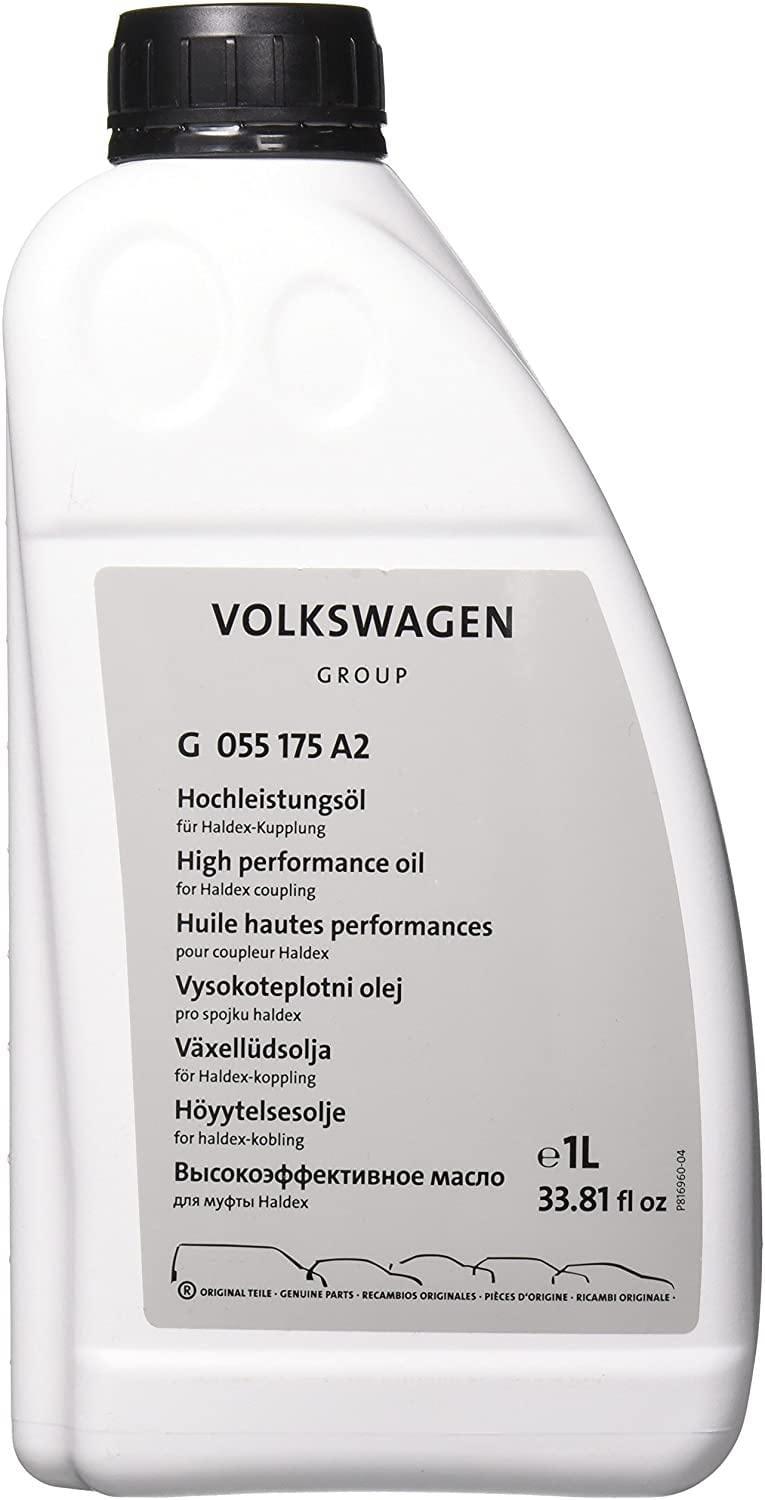
Yes, service it, and don’t trust the “lifetime fluid” line in the owner’s handbook. Change the Haldex fluid and filter every 20,000 to 40,000 miles or every 2 to 3 years, whichever comes first, using OEM fluid G 060 175 A2 / G055175A2. Skip it and you’re gambling with a system that can’t warn you until it fails.
- Glazed clutch plates from cooked, degraded fluid
- A clogged pump screen that starves the coupling of pressure
- A repair bill several times larger than a routine service
Specialists tracking failed units consistently point to the same root cause: neglected fluid changes turn a £150 job into a four-figure one.
Key Takeaways
Servicing the Haldex coupling every 20,000 to 40,000 miles with OEM fluid and the correct filter or strainer prevents the clutch glazing and pump failures that lead to expensive repairs.
| Point | Details |
|---|---|
| Stick to the real interval | Service every 20,000 to 40,000 miles or every 2 to 3 years, regardless of “lifetime” fluid claims. |
| Confirm generation first | Check your VIN before ordering parts; Gen 4 and Gen 5 use different filters and pump procedures. |
| Never substitute fluid | Use OEM P/N G 060 175 A2 or G055175A2 only; aftermarket “compatible” oils risk AWD lockup. |
| Don’t skip the filter step | A fluid-only service without cleaning the filter or strainer basket is an incomplete job. |
| Buy matched OEM parts | Haldexparts lists pumps, seal kits, and G055175A2 coupling oil sorted by generation for accurate fitment. |
Table of Contents
- What does the Audi Haldex system actually do?
- Which Audi and VW models use Haldex, and how do you check your generation?
- How often should you service the Haldex, and what does it cost?
- How do you service a Haldex system step by step?
- What faults show up when Haldex service gets skipped?
- Should you do this yourself or book a specialist?
- Where do the correct OEM Haldex parts come from?
- What actually matters most in Haldex maintenance?
- Buying the right Haldex parts for this job
- Sources
What does the Audi Haldex system actually do?
The Haldex coupling sits at the rear axle and sends drive to the back wheels when the front ones start to slip. Inside it, a multi-plate wet clutch pack squeezes together under hydraulic pressure from a small electric pre-charge pump, transferring torque progressively rather than with a hard mechanical lock.
That clutch pack lives in friction-modified oil, and the chemistry isn’t optional. The fluid has to maintain consistent friction coefficients under heat and pressure cycling, or engagement becomes unpredictable.
- Contaminated fluid breaks down the friction modifiers, causing the plates to slip and glaze
- A blocked pump screen restricts oil flow, starving the clutch pack of pressure
- Either fault shows up as delayed or inconsistent AWD engagement, often before any warning light appears
This is why a straightforward fluid top-up on a Haldex unit is a different job to draining a differential. Get the fluid or the filter wrong and you haven’t serviced the system. You’ve disguised a fault that will resurface within a few thousand miles.
Which Audi and VW models use Haldex, and how do you check your generation?
If you drive a Quattro model without a mechanical centre differential, chances are it’s Haldex. That covers the Audi A3, S3, TT, TT RS, Q3, and most Golf-platform Quattro variants, alongside the VW Golf R, Tiguan, and several Škoda and Seat AWD siblings built on the same MQB architecture.
Generation matters more than model name here. Roughly speaking, Generation 4 units appear on cars built up to around 2015, while Generation 5 arrived alongside the facelifted Haldex controller used across most current MQB-based AWD models. The two look similar bolted to the rear subframe, but they take different filters, different pump service procedures, and in some cases different fluid quantities.
- Gen 4: accessible cartridge filter, generally simpler DIY filter swap
- Gen 5: strainer basket built into the pump housing rather than a separate cartridge
- Confirming generation by eye alone is unreliable on facelifted models
The only dependable way to know which parts to order is a VIN-based compatibility check, because ordering a Gen 4 filter for a Gen 5 pump wastes both your money and your afternoon.
How often should you service the Haldex, and what does it cost?
Audi’s official position calls the Haldex fluid a lifetime fill. Independent specialists disagree, and the consensus among technicians who actually see failed units is a 20,000 to 40,000 mile interval, or every 2 to 3 years, whichever arrives first, aligned with the fluid and filter recommendations from AmpAuto’s Gen 4/5 service guide.
Doing it yourself, parts alone run to roughly the cost of the OEM fluid and filter kit, typically under a moderate hundred pounds depending on generation. An independent workshop typically charges more for labour on top of parts, and a dealer service sits higher still, largely for diagnostic-tool time during the pump relearn.
Move the service forward rather than waiting for the interval if any of these apply:
- You tow regularly or drive on unsealed roads
- You bought the car used with no Haldex service history
- The dashboard has shown an AWD or ABS warning, even briefly
A Quattro-specific maintenance schedule is worth checking against your logbook before you commit to a date.
How do you service a Haldex system step by step?
Before touching a spanner, confirm your generation using your VIN, and if you have access to a diagnostic tool, check the Haldex oil temperature reading first. Servicing a hot unit skews your drain volume and refill accuracy, a step JCR Leeds flags as essential on Gen 5 units.
Parts and quantities you’ll need:
- OEM coupling oil, P/N G 060 175 A2 or G055175A2, approximately 700 to 800 ml
- Filter kit matched to your generation, such as the 2003085 kit for Gen 4 units
- New crush washers for the drain and fill plugs
- A torque wrench set to manufacturer spec for both plugs
Service sequence:
- Crack the fill plug first, before you touch the drain plug, so you’re not stuck with a sealed system and no way to refill it
- Drain the old fluid into a suitable container
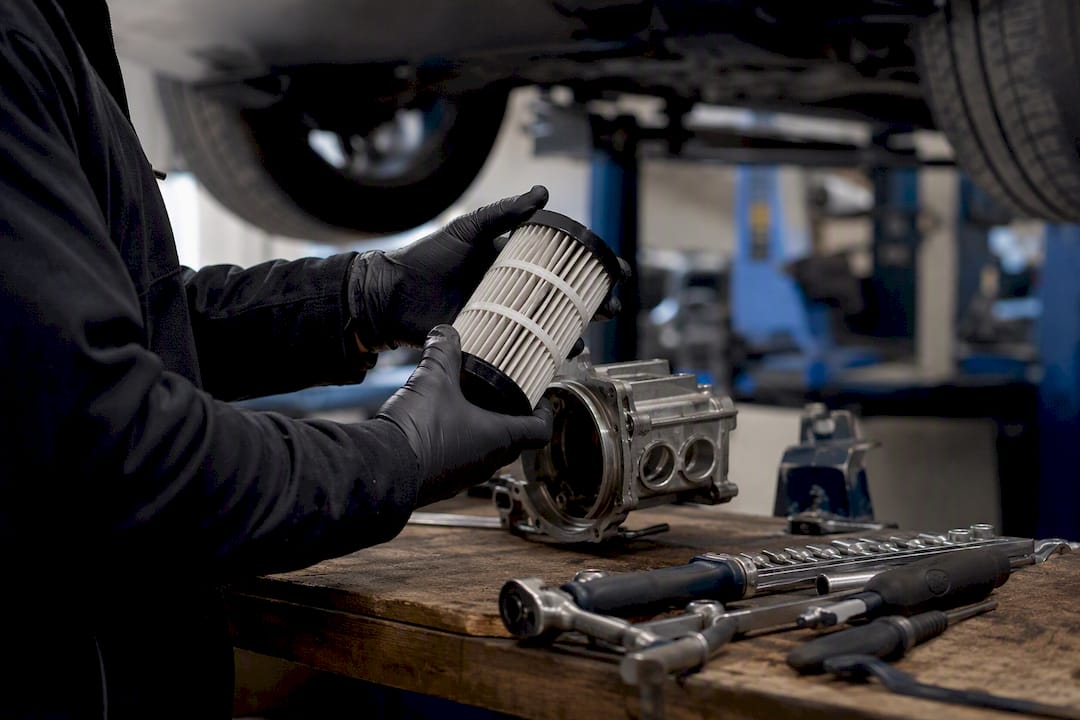
- On Gen 4, remove and replace the cartridge filter; on Gen 5, remove the pump to access and clean the strainer basket
- If you’ve disturbed the pump housing, replace the seals rather than reusing them
- Refill slowly through the fill hole until fluid overflows, which is how you confirm correct level rather than guessing a volume
- Torque both plugs to the figures set out in ECS Tuning’s service walkthrough
- If the pump was removed, run a pump relearn using VCDS, ODIS, or OBDeleven
- Scan for stored codes, clear them, and take the car for a test drive
- Recheck both plugs for leaks once the system has cycled
Pro Tip: Log the date, mileage, and exact part numbers used after every service. It costs two minutes and saves an argument with a buyer or a technician who needs to know what’s already been fitted.
Dispose of the old fluid through a licensed waste oil facility, not down a drain.
What faults show up when Haldex service gets skipped?
A handful of diagnostic codes turn up repeatedly on neglected units: pump pressure faults, CAN communication errors between the Haldex controller and the ABS module, and clutch engagement timing faults, as explained in how to diagnose transmission issues in your fleet. None of these are subtle once they start.
Watch for:
- A noticeable delay before AWD engages under acceleration
- AWD or ABS warning lights, even ones that clear themselves
- Judder or binding when turning at low speed on high-grip surfaces
After any service, don’t just close the bonnet and drive off. Scan and clear stored codes, confirm engagement under load, check both plugs for weeping fluid, and listen for pump whine that wasn’t there before. Specialist technicians treat a clean post-service scan as the real proof of a job done properly, not just a full fluid reservoir.
Should you do this yourself or book a specialist?
Draining and refilling fluid, and swapping a Gen 4 cartridge filter, sit well within reach of anyone comfortable doing an oil change. Pump removal is a different tier of job, particularly on Gen 5 units, because it usually demands a relearn procedure that needs VCDS, ODIS, or OBDeleven, something most home garages don’t have sat on a shelf.
Wrong fluid is the most common self-inflicted fault. Non-OEM “Haldex compatible” oils lack the correct friction modifiers, and the risk isn’t cosmetic. It’s intermittent AWD lockup and drivetrain or ABS faults that can take a specialist hour to trace back to a fluid swap done months earlier.
If you’re booking a workshop instead, ask three questions before handing over the keys: do they use the correct OEM P/N, can they perform a pump relearn if needed, and will they put the work in writing with a warranty attached?
Where do the correct OEM Haldex parts come from?
Haldexparts stocks OEM-grade fluid, filters, and pumps matched to the exact procedure above, sorted by brand and generation so there’s no guesswork on part numbers.
- The G055175A2 coupling oil matches the fluid spec discussed throughout this guide
- The 5th generation Haldex oil pump covers pump replacement on affected R8 and shared-platform applications
- A seal repair kit for Gen 5 pumps supports the seal replacement step if you’ve removed the pump housing
Every listing states generation, fitment, and part number so you’re not left cross-referencing three different forum threads before you order.
What actually matters most in Haldex maintenance?
The industry has spent years arguing over whether Haldex fluid is genuinely “lifetime,” and that argument is largely a distraction. The real failure point isn’t the interval debate, it’s the number of owners who change the fluid but skip the filter or strainer, then wonder why engagement is still sluggish a few months later. A fluid-only service on a system with a clogged screen is cosmetic maintenance dressed up as a real one.
The second thing conventional advice underplays is fluid chemistry. Plenty of forum posts treat “any 75W-90 gear oil” as an acceptable substitute, and that’s precisely the kind of shortcut that causes intermittent AWD lockup months later, once the friction modifiers have degraded under heat cycling. There’s no cheap substitute here that doesn’t eventually cost more than the OEM fluid did.
If you take one thing from this guide, prioritise correct parts over cost-cutting. Confirm your generation, buy the exact OEM P/N, and do the filter or strainer alongside the fluid every single time. The procedure itself isn’t difficult. Sourcing the wrong part is what turns a Saturday morning job into a comeback repair.
— Mindaugas
Buying the right Haldex parts for this job
Sourcing parts for this service shouldn’t mean guessing between three listings that all claim to fit “most Audi/VW models.” Haldexparts sorts everything by brand and generation, so the part you add to your basket is the one your VIN actually calls for.
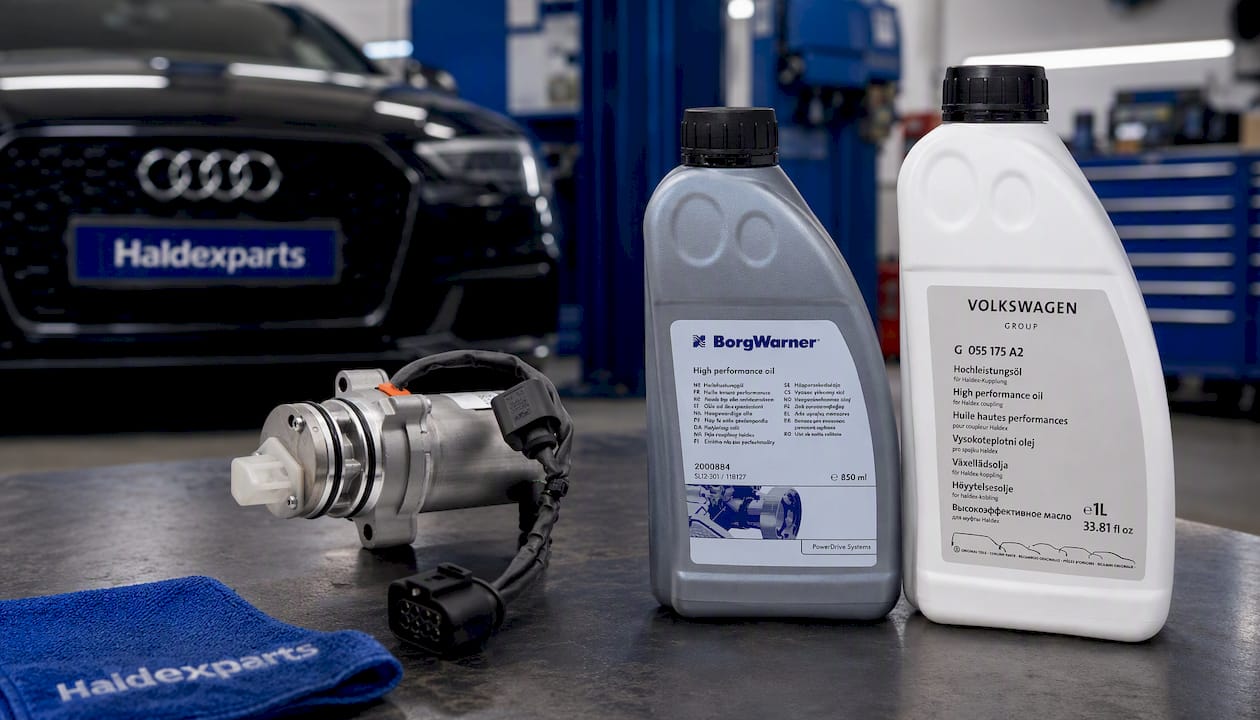
For a Gen 5 pump replacement, the Haldex Oil Pump 5th Generation 0D4906271A for Audi R8 is listed on its own, or as a combined BorgWarner pump and oil package if you’d rather order both in one go rather than tracking down oil separately afterwards. If you only need the fluid for a standard service, the Genuine G055175A2 coupling oil is the exact OEM specification referenced throughout this guide, not a “compatible” substitute.
Before you order anything, check your VIN and confirm your generation. Getting that right the first time means the parts arrive correct, fit first time, and the job gets done in one sitting rather than two.
Sources
- How to Change Audi Haldex Fluid 2026: Gen 4/5 Service Guide | AmpAuto
- How to Service Haldex Generation 5 Full Guide | JCR Leeds
- Haldex oil change service guide | Mechalex
- How To Identify and Service Your VW or Audi Haldex AWD System | ECS Tuning