

An underfilled Haldex coupling usually shows up as an all-wheel-drive car that drives like a front-wheel-drive one: front wheels spin on wet or loose surfaces, the rear axle joins in late or not at all, and you may hear a whine or feel a shudder from the rear on tight, low-speed turns. The dash often stays quiet. That is why the fluid level, the fluid type and the filter or strainer need to be right the first time, and why we sell Haldex service kits by brand and by generation, so the oil, filter and pump parts you order match the unit under the car.
TL;DR
- Underfill starves the pump and clutch pack of oil. Expect delayed or missing rear-wheel drive, front-wheel spin, and rear whine, hum or shudder, often with no warning light.
- Noise when turning at low speed (crunching, crackling, snatching while parking) points to worn or contaminated fluid and a blocked filter as often as to low level. Check level and condition together.
- Noise straight after a service points to the fill: wrong level, trapped air, the wrong oil, or the wrong plug opened. Re-check before blaming parts.
- Confirm with fault codes and live pump data. Fluid and filter or strainer come first, the pump or clutch pack only if fresh fluid does not restore normal engagement.
- Use the oil and quantity specified for your vehicle and generation, and finish the job with the pump setting routine where your model needs one.
Table of Contents
- What a Haldex unit does, and what underfill means
- The symptoms of an underfilled Haldex
- Haldex noise when turning
- Haldex noise after a service
- How to check level and condition properly
- Confirming the cause with codes and live data
- When fluid is not enough
- How often to change the fluid
- Getting the right parts
- Perspective
- FAQ
- Sources
What a Haldex unit does, and what underfill means
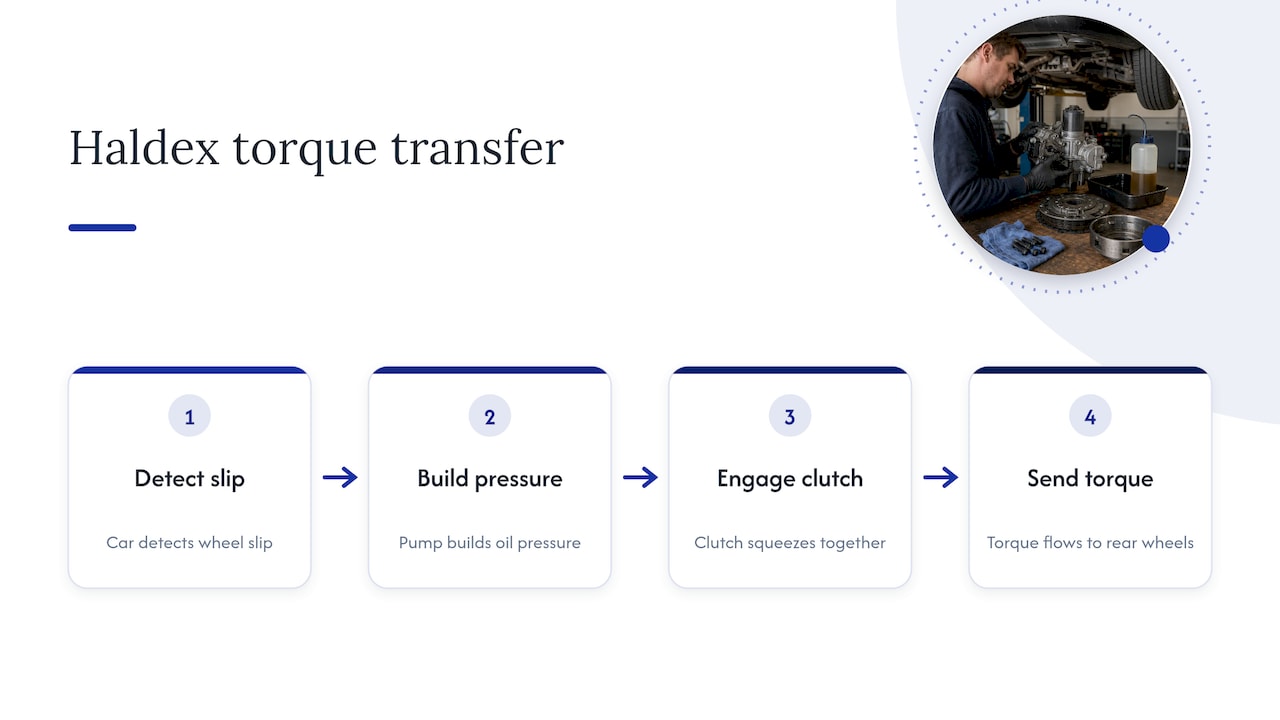
A Haldex coupling sits at the rear differential of transverse-engine all-wheel-drive cars (Audi quattro, VW 4Motion, Volvo, Ford, Land Rover and others). It is a wet multi-plate clutch pack with an electric pump and a control unit. When the car detects wheel slip, the pump builds oil pressure, the clutch squeezes together and torque flows to the rear wheels. At steady cruising it releases and the car is mostly front-wheel drive. Haldex has been through five generations, and Audi of America’s training material notes that the oil deteriorates from shear forces and high temperature, which changes the friction levels in the clutch.
That small volume of oil does two jobs: it is the hydraulic medium and the lubricant. Underfill means there is less oil than the unit is designed to run with. The pump can draw air, pressure builds slowly or not at all, and the plates run with less lubrication. Our service-mistakes guide makes the point that guessing the level instead of filling to the level plug starves the unit when you go under and builds pressure when you go over, and either error accelerates clutch and pump wear.
The symptoms of an underfilled Haldex
None of these is unique to low oil, but together they form the usual picture.
Delayed or missing rear-wheel drive
The commonest sign is a car that feels like it has lost its edge. Pulling away on gravel, wet paint lines or snow, the front wheels spin for longer before the rear axle helps. In a low-grip engagement test, gentle wheel spin should bring in drive within a second or two, as our guide explains. If it takes noticeably longer, or never arrives, the pump is not building pressure fast enough.
Do not provoke wheelspin deliberately on a public road to test it. Use a quiet, safe, low-grip surface and keep it gentle.
Rear shudder, binding or snatching
With too little oil, the clutch pack can grab and release unevenly. You feel it as a shudder or binding from the rear when parking or turning at full lock, which can be mistaken for a tyre or differential problem.
Whine, hum or buzz from the rear
A pump that runs without enough oil, or without drawing it cleanly through a blocked strainer, tends to whine or buzz. On Gen 5 MQB-based Audis, one diagnostic write-up links a failing pump or clogged suction strainer to buzzing or whining from the rear axle with loss of AWD traction.
Warnings, or none at all
Sometimes you get an AWD or traction warning, or stored pump and control-unit codes. Often you get nothing. The car keeps driving normally while the rear axle receives less torque than it should, which is why a scan for stored codes is worth doing even when the car feels fine.
Haldex noise when turning
Noise on turns is the symptom most owners search for, and the cause is not always a low level. Because the oil is both hydraulic fluid and lubricant, its condition decides how the unit behaves. As it fills with plate wear material and the filter or strainer blocks, the clutch pack slips and grabs, heard as crunching or crackling in low-speed turns, plus snatching while parking.
How to separate the likely causes:
| What you notice | Likely direction | First check |
|---|---|---|
| Crunch or snatch on full lock, dark or burnt-smelling oil | Old, contaminated fluid, blocked filter | Fluid colour and smell, then filter or strainer |
| Whine or buzz, weak or late AWD | Pump starving: low oil, blocked strainer | Oil level, pump current and pressure in live data |
| Fluid at the breather or fill plug after the first drive | Overfill | Level against the fill plug |
| Spongy or late engagement that clears after a short drive | Trapped air | Pump setting routine, repeat the test |
| Symptoms with no fault codes and clean fluid | Mismatched tyres or tread across axles | Tyre size and wear on all four corners |
Healthy Haldex oil is amber or light gold. Dark brown or black oil with a burnt smell means service is overdue, and hesitation or shudder on tight low-speed turns often follows before any warning light, as our service-mistakes guide notes. Mismatched tyres can mimic these symptoms on a healthy unit, so check them before you spend money.
Haldex noise after a service
If the noise or the traction loss began right after the oil was changed, look at the fill before anything else.
- Wrong chamber. On some vehicles the drain, filler and inspection plugs of the two oil supplies sit close together. Audi’s own training document warns that this creates a possibility of error and that using the wrong oil causes irreparable damage. The coupling and the final drive have separate oil circuits, so confirm you filled the Haldex side and not the differential next to it.
- Wrong quantity. Use the quantity specified for the exact vehicle. For a Gen 5 unit, one published procedure calls for 0.25 litres of G 060 175 A2 oil and warns against both overfilling and underfilling. Capacity differs by generation and model, so use the figure for your vehicle.
- Air in the system. Air gives spongy or delayed engagement. On models that need it, the final step is the Haldex pump basic setting with a scan tool to purge air and calibrate. Audi also calls for resetting the stored oil-deterioration values with the scan tool after an oil change.
- Wrong oil. Use the oil specified for your generation and vehicle, not a general gear oil.
- Debris left behind. A drain-and-fill that leaves sludge in a clogged strainer or filter can leave the pump starving even with the correct level.
Overfill has its own tell: fluid weeping from the breather or fill plug shortly after the first drive. Underfill gives no such visible sign, which is why measuring to the level plug matters.
How to check level and condition properly
The method depends on generation, and some units have no serviceable filter at all, so start with your vehicle’s service information.
- Park level with the car cool and safely supported.
- Identify the right plug. Confirm the Haldex fill and level plug against the diagram for your model before you open anything.
- Fill to the level plug, not by volume alone, and compare what went in with the specified capacity.
- Judge the old oil. Amber is healthy. Dark and burnt-smelling is not.
- Replace the filter or clean the pump strainer where your generation has one. On Gen 5, the fine pump strainer can clog with clutch material and is the critical service item; a published Tiguan guide points out that drain-and-fill alone leaves the sludge in place.
- Run the pump setting or relearn routine with a scan tool where required, then road-test. Our technician’s guide shows how Haldex logic reads pressure and wheel-speed data.
The step most often skipped is the scan-tool one. It is also the step where having the correct kit matters: oil, filter and pump parts chosen for the generation, in one order, so nothing is improvised on the day.
Confirming the cause with codes and live data
Symptoms only point. A scan tool settles it.
- Fault codes. Typical examples include 02248 and 01155 on Gen 2 and 4 and C111307 on Gen 5, per one diagnostic guide. An Audi technical service bulletin for 2015 to 2016 A3 and Q3 quattro models describes DTC C111204 (Haldex clutch pump faulty), AWD not working and the EPC lamp, caused by an internal leak in the hydraulic pump. The remedy was replacing the pump and the Haldex oil.
- Pump behaviour. High pump current with low pressure suggests a failing pump or clogged filter. A pump that commands pressure but shows a low sensor reading suggests an internal hydraulic leak. A silent pump points to power, ground or wiring.
- Pressure. System pressure below the specified range under demand indicates pump wear or an internal blockage. Our guides on testing a Haldex pump and on pressure sensor faults walk through the measurements.
- Other inputs. If the ABS module sends corrupted or missing wheel-speed data, the AWD control module’s decisions suffer too, so a Haldex symptom is not always a Haldex fault.
- Temperature. Audi’s training material explains that the oil temperature sensor can stop the clutch being activated further if the oil gets too hot, which can feel like a sudden loss of AWD after hard use.
One rule from pump-learning guidance is worth keeping: the learn routine is a calibration, not a repair. If the pump cannot build pressure because of low oil, a restricted strainer or a hydraulic fault, fix that first.
When fluid is not enough
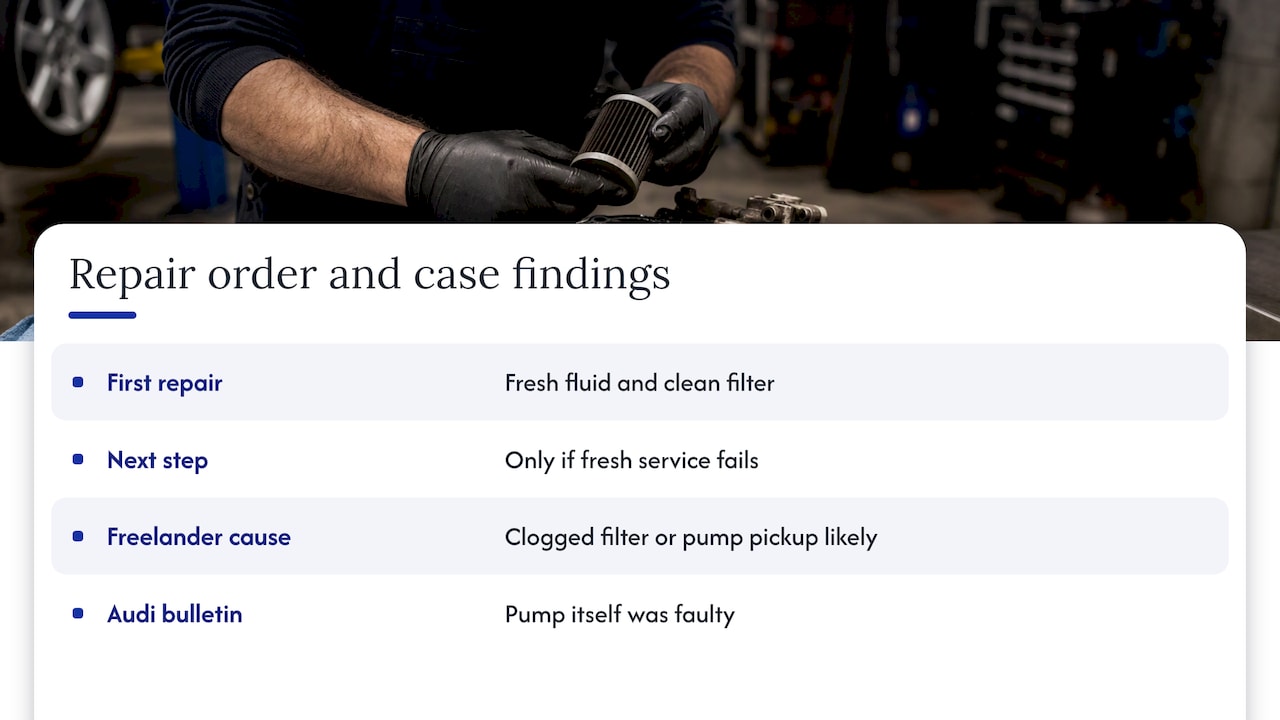
The order of repair is almost always fluid and filter first. The pump or clutch pack comes into question only if fresh oil and a clean filter or strainer do not restore normal engagement.
Two real cases show how this plays out. On a 2013 Freelander 2 with 78,000 miles, a reported fault of reduced traction with low pressure in the coupling put the car in front-wheel drive; the most likely cause was a clogged main filter or blocked pump pickup. In the Audi bulletin above, the pump itself was the fault.
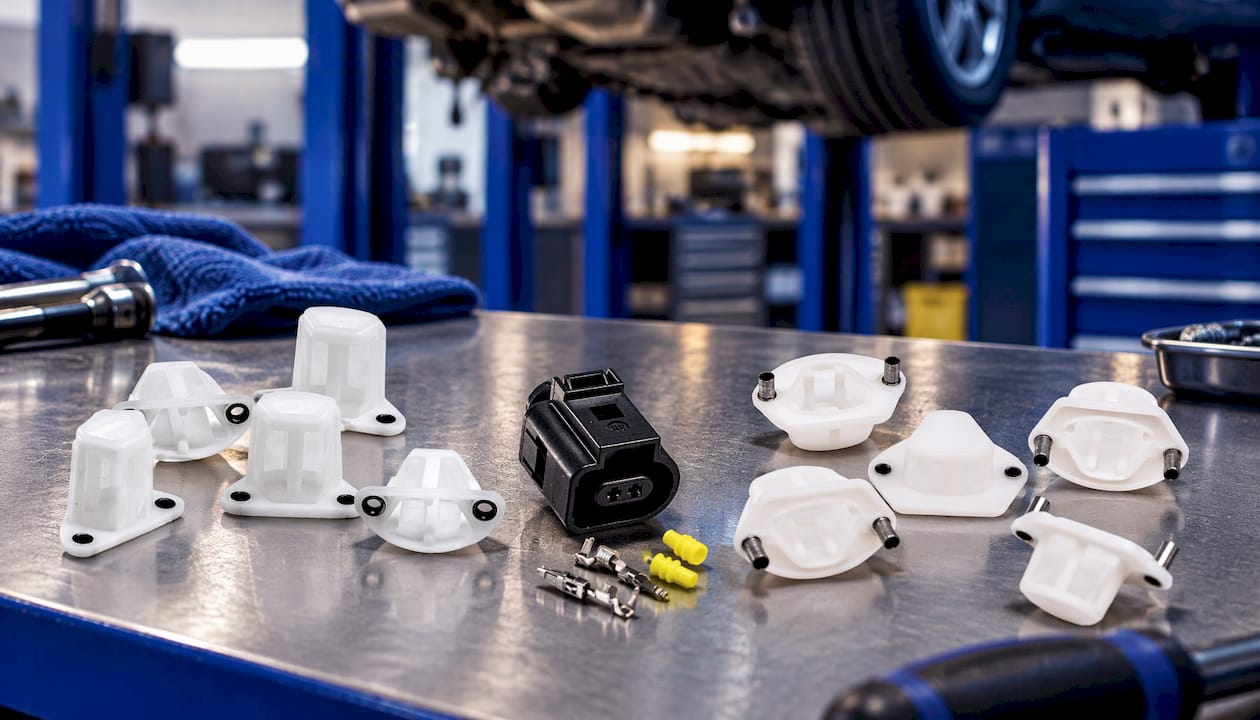
We do not quote a replacement cost here, because it varies widely by generation, vehicle and who does the work. Getting the diagnosis right before buying parts is what keeps the bill down. When a pump is the confirmed cause, our service pages cover the wear parts for it: nose replacement tips for 1st and 2nd generation pumps, connector plug sets and the 5th generation tip set.
How often to change the fluid
Intervals depend on the vehicle. Cars.com says Haldex fluid and filters should be changed periodically on many vehicles, as often as every two years, though some recent models have a lifetime filter. For a Gen 5 Tiguan, one US-market guide cites Volkswagen’s schedule of about every 3 years or 30,000 miles, and shorter for towing or harsh climates. For fleets and workshops, set the interval per model and per duty cycle, and keep the oil and filter stock matched to it.
Getting the right parts
We supply OEM-grade Haldex pumps, oils, filters, ECUs, control units and complete service kits for Audi, VW, Ford, Land Rover, Volvo, Škoda, Seat, Opel, Saab and Vauxhall, selectable by brand and by Haldex generation. Bulk and B2B orders are available for workshops, fleets and wholesalers, and orders over £150 ship free.
Browse the Haldex pumps, oils, filters and service kits and pick your brand and generation, so the quantity and parts you fill with match the unit.
Perspective
Most underfill cases we hear about are not dramatic. The car still drives, no light comes on, and the owner only notices that the rear never seems to help. That is the nature of Haldex: a small amount of oil does all the work, so a small error in level, oil type or filter condition is enough to change how the whole system behaves.
Our advice is to treat the service as one job rather than three: the right oil, filled to the level plug, with the filter or strainer dealt with and the pump routine run afterwards. Buying those parts as a kit for the right generation removes the most common mistakes before you pick up a tool.
For workshops and fleets, the same logic scales. Standardise the kit per model, record the interval, and the noise-after-service call-backs largely disappear.
Mindaugas
FAQ
Can a Haldex run with low oil without a warning light?
Yes. The car can keep driving normally while the rear axle gets less torque than expected, and Haldex faults are not always obvious in daily use. A diagnostic scan for stored pump or control-unit codes is the reliable check.
Why does my Haldex whine or crunch when I turn at full lock?
Usually because the oil is worn or contaminated, the filter or strainer is blocked, or the level is wrong, so the clutch pack grabs unevenly. Check oil colour and smell, level and tyre matching first.
Is noise straight after a Haldex service normal?
No. Re-check that the correct chamber was filled, the quantity matched the specification, the right oil was used and the pump setting routine was run to clear air.
Do I need a scan tool for a Haldex oil change?
On many models, yes. Audi’s guidance calls for resetting the stored oil-deterioration values with a scan tool, and Gen 5 procedures finish with the pump basic setting to purge air.
Sources
- Audi of America training document on Haldex oil and service
- Audi technical service bulletin MC-10118340, Haldex pump leak
- Cars.com, Haldex fluid and filter
- Haldex coupling noise: symptoms and diagnosis
- VW Tiguan 4Motion Haldex service guide, Gen 5
- Spot AWD coupling wear: VW/Audi Haldex unit guide
- How to diagnose Quattro drivetrain noise
- Maintain a Freelander 2 Haldex coupling